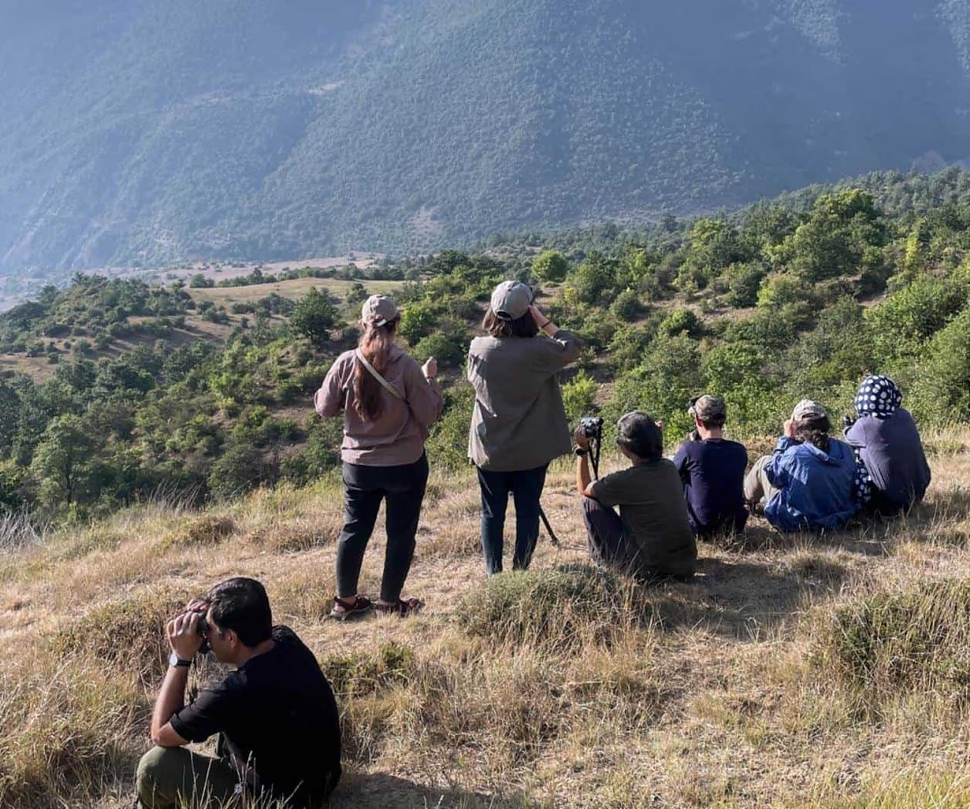
Just days after fighting between the United States, Israel and Iran began, veterinarian Reza Kiamarzi climbed cliffs near Isfahan. He was looking for nests of saker and peregrine falcons, threatened birds whose breeding season coincided with the bombings. “It’s a long climb. Then we climb rocks to get to the nests,” he said.
Iran is home to unique biodiversity: from humid Caspian forests to arid areas of the Persian Gulf. At least 86 species are at risk, according to the Department of the Environment: the Asiatic cheetah, the Persian fallow deer, the leopard, the brown bear and birds of prey, among others. The country is a key migratory stop between Eurasia and Africa.
Iman Ebrahimi, from the NGO AvayeBoom, warned: “It is a great unknown how much more we will be able to work. We are waiting.” The conflict worsens the economic crisis. The Iranian currency lost more than half its value in a year, fueling falcon smuggling into the Persian Gulf. Ironically, in peace the military zones served as a refuge from poachers.
Jamshid Parchizadeh, an expert on large carnivores, fears that airstrikes will damage cheetah and leopard habitats: “They degrade the soil, contaminate the water and destroy vegetation.” He added: “The bombing drives away the bears and leopards forever.”
Conservation despite everything
AvayeBoom has operated for a decade in mountains, deserts and wetlands. But sanctions prevent receiving international donations. “What worries us most is that the economic crisis will make environmental protection no longer a priority,” Ebrahimi said.
A wildlife photographer, who requested anonymity for safety reasons, has stopped taking images in the Persian Gulf. “One of the dangers is that people lose their connection with nature,” he said. He plans to resume his job if the tension does not escalate.
Despite everything, AvayeBoom made progress. In the Arjan protected area, a campaign with workshops and murals of the cinnamon shelduck—an orange-plumed water bird—raised local awareness. “Most people considered the environment and wetlands very important,” said Fateme Kazemi, director of the NGO.
“Our doors have not closed and we have continued with our work,” concluded Ebrahimi.