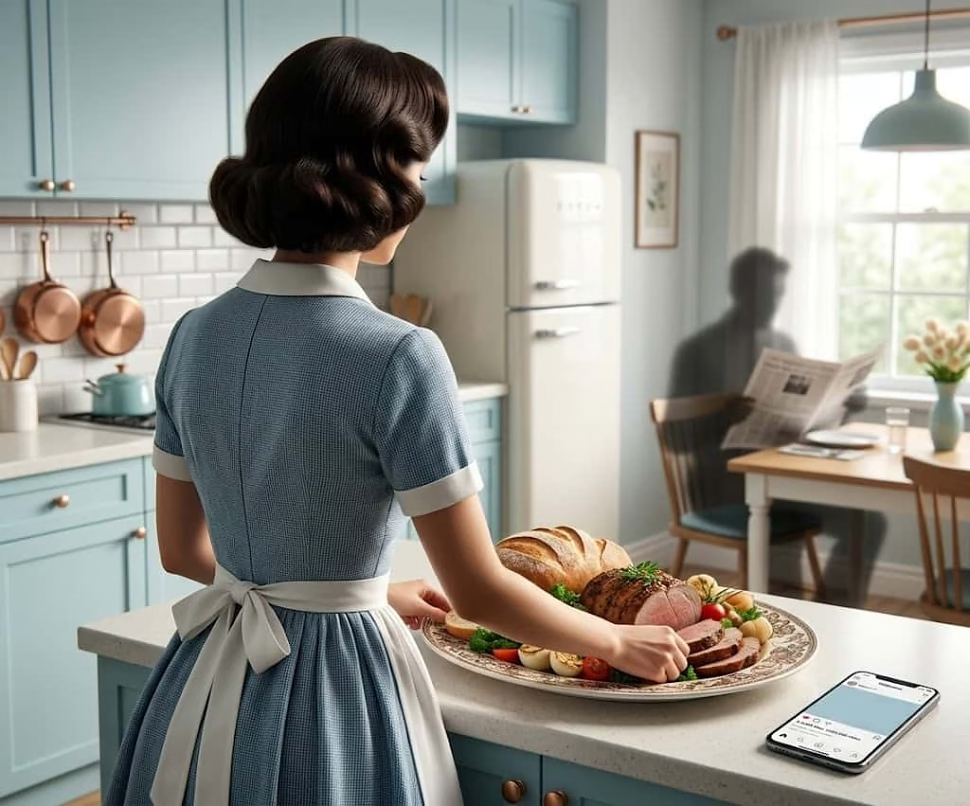
The tradwife phenomenon has found figures such as the Spanish Rocío López Bueno (RoRo) on digital platforms, who promotes an ideal of domesticity, elaborate cuisine and aesthetics of the sixties. Behind this trend, which generates debate about gender roles, husbands—the main direct beneficiaries of this dynamic—remain almost invisible to audiences.
The role of husbands
Specialists in cultural analysis and sociology warn that these digitalized representations are a mirage. Many female creators bill for advertising contracts for amounts much higher than the income of their husbands, whom they claim to serve. The figure of the trad husband is projected as a charitable accessory or secondary financial provider. This rigid script generates mutual dependence and perpetuates the absence of emotional and domestic co-responsibility.
At a global level, the disparity of interest is evident: the profiles of the creators accumulate tens of millions of followers, while the accounts of their partners register a much lower media impact, with speeches classified as flat or boring.
Sociologists and researchers regret that this type of content normalizes unequal relationships between young people and deepens the gender gap in the distribution of care tasks, in a context where the statistics of female job resignations after motherhood continue to rise.