An analysis of the Bad Bunny phenomenon in Mexico City
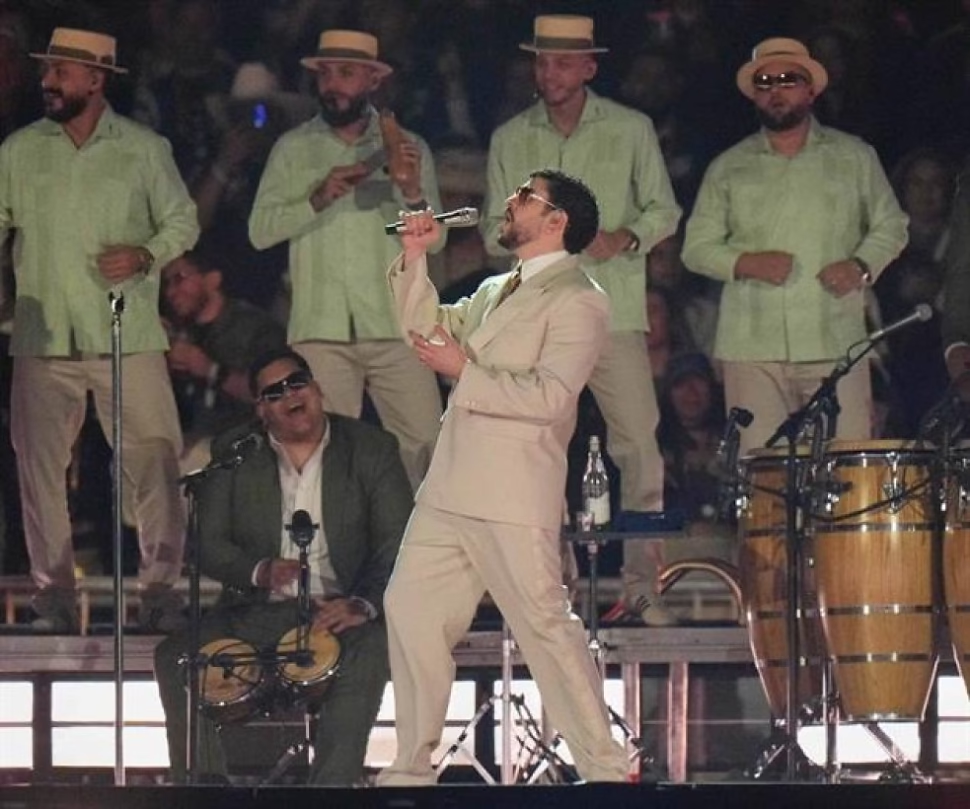
The residency of the Puerto Rican artist Bad Bunny, officially called “I SHOULD THROW MORE PHOTOS World Tour”, at the GNP Seguros Stadium in Mexico City, transcended the purely musical field to consolidate itself as a first-rate sociocultural event. The concert on Saturday, December 20, corresponding to the seventh of eight presentations scheduled in the capital, was a clear example of this dynamic. The recurring presence of prominent figures of national and international entertainment in a specific area of the stage, baptized by the public and the media as “la Casita”, evolved from an anecdote to a central element of the tour narrative, generating media expectation and conversation on social networks before, during and after each performance.
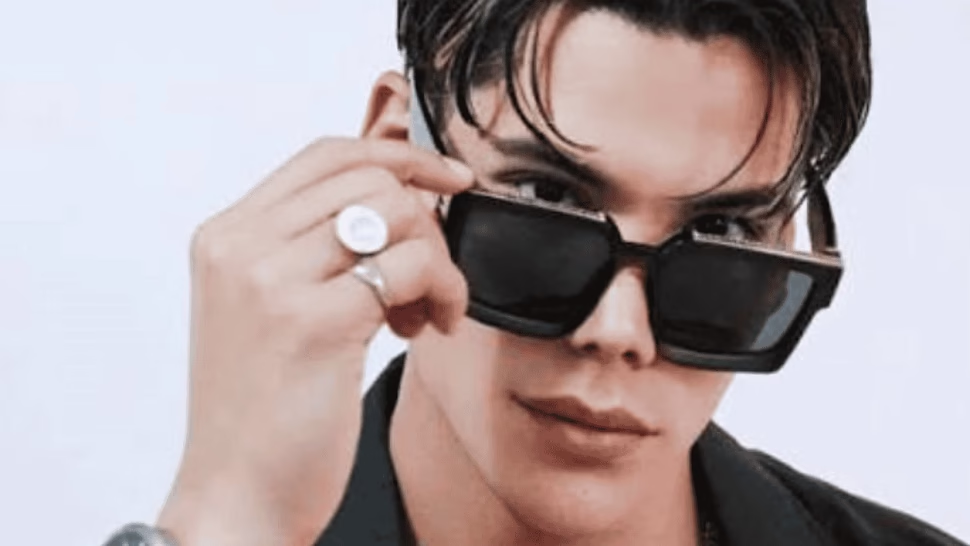
This phenomenon can be analyzed from a perspective of experiential marketing and organic content generation. The “Casita” functions as a validation and amplification mechanism, where the brief but visible interaction of the performer, whose given name is Benito Antonio Martínez Ocasio, with his guests, creates unique and photogenic moments. The list of attendees throughout the different dates—which included Salma Hayek, Bárbara de Regil, Galilea Montijo, Ana de la Reguera, Yalitza Aparicio and digital content creators such as Juanpa Zurita and Luisito Comunica—reflects a cross-audience strategy and a careful selection that covers different generations and sectors of entertainment. On the night of December 20, attention focused on the actress Eiza González, captured in amateur videos, and on the actors Luis Gerardo Méndez and Diego Boneta, the latter establishing himself as a recurring attendee having also been at the performance on December 11.
The single song strategy: scarce value and loyalty
Parallel to the social component, Bad Bunny implemented an element of musical exclusivity that reinforced the value of each ticket. The artist established the tradition of performing a different surprise song at each concert, which would not be repeated in front of another audience. This artistic and commercial decision transforms each night into a unrepeatable event, encouraging attendance at multiple dates among the most devoted followers and generating a constant flow of theories and expectations in the fan community. The list of exclusive tracks, from “25/8” in Santo Domingo to “Mojabi Ghost” on the penultimate Mexican date, acts as a tour diary, adding a layer of depth for analysis by urban music specialists.
The culmination of this series of concerts in one of the most important markets for the urban genre marks a turning point in the conception of massive tours. Bad Bunny not only sold tickets, but orchestrated a continuous narrative of eight chapters, each one with its own protagonists (the guests at the “Casita”) and its unique moment (the surprise song). This structural approach demonstrates a deep understanding of the attention economy in the digital age, where perishable and exclusive content is the currency of greatest value. The success of the residency is measured, therefore, not only in attendance figures, but in the duration and intensity of the cycle of public conversation that it generated, establishing a new standard for large-format shows.
Were you part of this cultural phenomenon or are you following the world tour closely?Share this analysis on your social networks and explore more content about the strategies that are redefining the music industry.