The day the digital world faded like your desire to work on a Monday morning
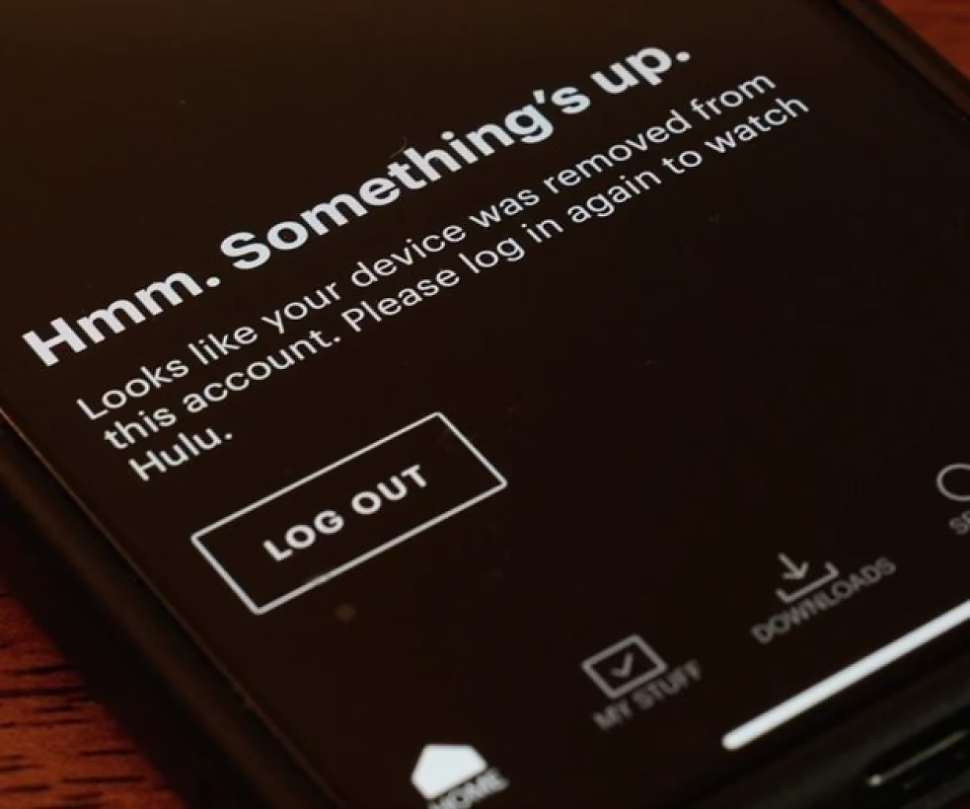
Imagine this: it’s any given Monday. You open your eyes, check your phone to see the memes you missed and… nothing. Snapchat is more inactive than your ex. You try to order a coffee at Starbucks from the app and it’s as if the digital barista has gone to smoke an eternal cigarette. The culprit? It wasn’t an epic cyberattack from a Hollywood movie, but something much more mundane and, therefore, more hilarious: Amazon Web Services (AWS) decided to take an impromptu break, leaving half the planet wondering if their WiFi was the problem.
That’s how it was, friends. The digital backbone of the modern world, that cloud computing provider that holds more than 41% of the market according to the nerds at Gartner, had a moment of “temporary amnesia,” as one expert elegantly called it. And we, the simple mortal users, pay the price. For a few hours, the internet became a strange, silent place, like a shopping center on a Sunday at 7 a.m.
The epicenter of the digital apocalypse: A domain name with a dream
It turns out that the big villain of this story was not an evil hacker, but something called the DynamoDB endpoint in the US-East-1 region. It sounds like a drug name in a medical report, but it is actually a hypercentralized database service. Mike Chapple, a cybersecurity expert, explained it for those of us who are not engineers: it is the “address book” of the Internet. Amazon had all the data secure and saved, but suddenly, that address book was lost. It was as if Google Maps decided that your house no longer exists. The data was there, but no one knew how to get to it.
The company attributed it to a domain name system (DNS) problem. Basically, the translator that turns web addresses we understand (like “netflix.com”) into numbers machines understand took a nap. The result was a domino effect of digital panic. Fortnite, Roblox, Signal, Robinhood… they all became ghosts on our screens. Lyft had intermittent outages, meaning your ride home after work was as uncertain as your financial future. Even DoorDash reported that some of its members had brief interruptions, leaving more than one with an unsatisfied burger craving.
The biggest irony is that the US-East-1 region in Virginia, where the chaos began, is one of AWS’s oldest and most important data centers. It is the grandfather of the cloud. And yesterday, grandpa forgot where he put the internet keys.
It is not the first time and it probably will not be the last: The fragility of our life in the cloud
The scariest thing (or funniest, depending on your level of cynicism) is that this has happened before. In 2021, an AWS outage lasting more than five hours paralyzed everything from airline reservations to streaming services. In 2023, another. And let’s not forget the CrowdStrike disaster in 2024, which showed us that our entire digital ecosystem is built on a glass foundation.
Patrick Burgess, another cybersecurity expert, summed it up perfectly: “The world now runs in the cloud.” We treat it as a public service, like water or electricity. But instead of a few state-owned companies, we have an oligopoly of tech giants – Amazon, Google, Microsoft – holding up the underlying infrastructure of everything. When one of them sneezes, the digital world catches a cold. And we, the users, don’t even see Amazon sneeze; We just watch Snapchat crash and think: “Did I say something wrong in my last snap?”
The good news, according to experts, is that these problems are usually resolved relatively quickly and there is no sign of a malicious cyber incident. The bad news is that this event is a giant reminder, in bold and capital letters, of how incredibly dependent we have become on a behind-the-scenes infrastructure that we don’t even understand. Our social, work and leisure lives depend on a service with a name that looks like a *Matrix* code working perfectly.
So the next time your favorite app crashes, before you curse your carrier or restart your router for the tenth time, remember: the problem may not be in your house, but in a huge, powerful data center in Virginia that simply decided it was a good Monday to have a bad day. Chaos is just a click away, and it’s as relatable as running out of battery on a long trip.
Are you left wanting more digital chaos told with humor? Share this chronicle of the internet apocalypse on your social networks and explore more content about the invisible threads that move our technological world.