Because apparently, the giant of everything salable now also sells water solutions
In a plot twist that not even the most creative Amazon Prime scriptwriter would have dared to dream of, the Secretary of Comprehensive Water Management (Segiagua, for the folks) announced with great fanfare that it has let the e-commerce titan put its hands in the pipes of Mexico City. Yes, the same company that delivers a package of toilet paper to you in two hours is now optimizing the flow of drinking water. Next step? Subscription-based for the shower?
The head of the agency, José Mario Esparza, was as euphoric as a child on a birthday, announcing that, thanks to this public-private alliance (or as I call it, “let the private sector pay”), they have saved the astronomical amount of 70 liters per second. 70! A figure so specific that it could only be measured with the same precision with which Jeff Bezos calculates his profits per nanosecond. This monumental savings, they tell us, benefits 60 thousand people. Because nothing says “philanthropy” like an initial investment of 450 thousand dollars… a tip for the company, but a fortune for the average citizen.
The magic of automation, or how to replace the plumber with an algorithm
And what did this technological marvel consist of? Well, installing specialized valves, state-of-the-art controllers and sensors in the western area. Basically, they put a digital nervous system in the plumbing. Mr. Esparza explained it with a pearl of modern wisdom: “before, a person had to go and open and close [the valves], because there is the human factor that sometimes gets complicated.” Wow, wow… is the human factor complicated? Who would have thought! Thank goodness Amazon’s artificial intelligence, famous for its infallibility and zero bias, is here to save us from our annoying humanity.
The official was very emphatic in clarifying that Segiagua did not put a weight. His contribution was, apparently, the laudable management of allowing a private person to invest. “It is not a private operation scheme at all,” he declared, in a phrase that future linguists will undoubtedly study for their mastery of double language. They propose, Amazon pays, but everything is from the government. Sounds like someone got the perfect deal: all the credit, none of the bills.
And like any good first episode of a series, this comes with a guaranteed second season. Amazon has promised to invest 2 million more dollars this year. The goal is to benefit 500 thousand residents of the capital, mainly from the east. Because, let’s be honest, if there is something that the eastern region has always needed, it is for an American technology conglomerate to manage its water supply. It is the wet dream of any urban planner… never better said.
The jewel in the crown is Xylem Vue, an intelligent management platform that sounds more like a Harry Potter spell than software. Hosted on Amazon Web Services (AWS), this wonder monitors and adjusts water pressure in real time. “Less pressure where it is not needed. Less leakage and more efficiency,” they proclaim. A slogan so catchy that it almost makes you forget that 40% of the city’s water was lost because, apparently, no one had bothered to measure it correctly before. Take note: measurement errors and irregular shots. Or, in Christian terms, a management disaster that now a private company is coming to fix.
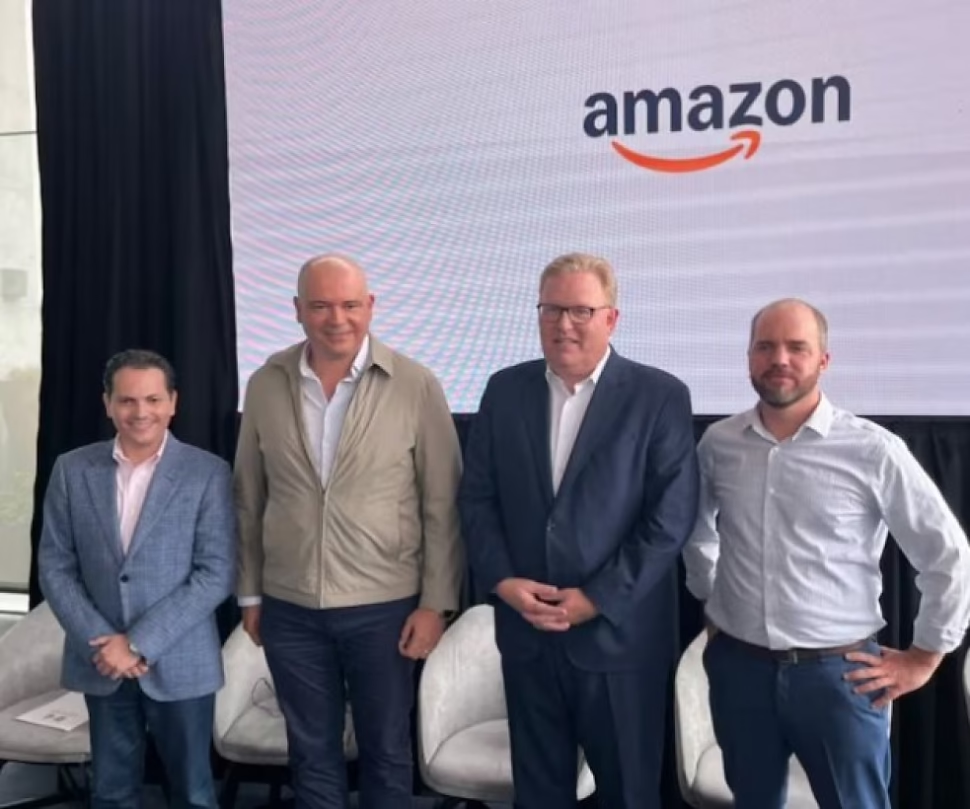
Will Hewes, the Water Sustainability Leader at Amazon (yes, that’s his real title), dropped the pearl of the day: “much of our water ends up leaking.” Tachan! Revelation of the century. Your solution is to optimize pressure in the communities where we operate. A wonderful coincidence, without a doubt. It is not greenwashing, it is… well, it is exactly greenwashing, but with a tangible result of 2.5 billion liters saved per year, equivalent to 131 thousand Olympic swimming pools. Because what better unit of measurement for a water crisis than an Olympic swimming pool?
Monterrey and Querétaro are also in the club. The modernization of public services is advancing at full speed, while we ask ourselves: is this the future or simply the outsourcing of what States can no longer (or want) to do for themselves? It doesn’t matter. At least the water arrives… for now.
Are you surprised that Amazon is after the tap? Share this note and spread capitalist surrealism on your networks. And if you want more analysis on how Big Tech rules us, explore our related content!