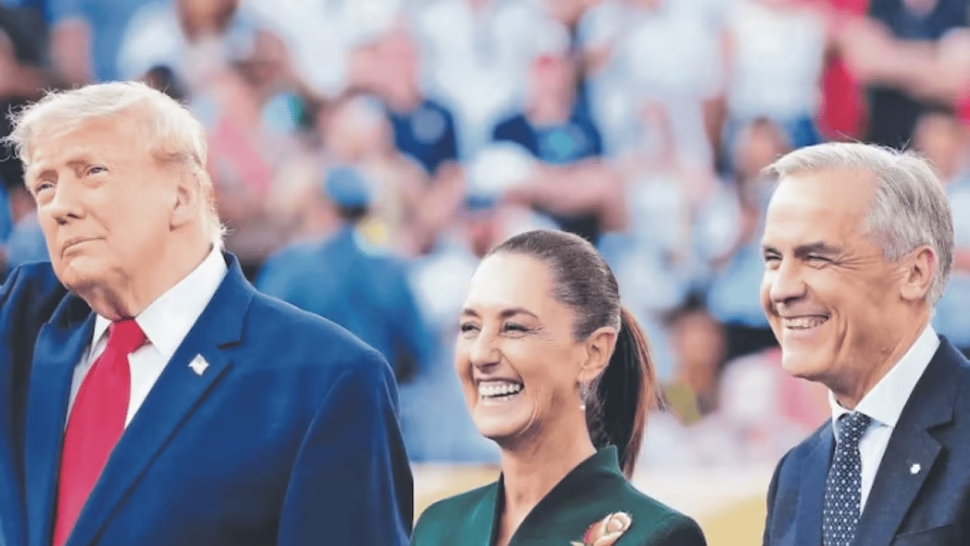
Sheinbaum puts a stop to Trump’s interventionist ‘wet dream’
In a move that reminded us of that friend who says “I’ll help you” but really wants to manage your life, President Claudia Sheinbaum downplayed this Tuesday the most recent occurrence of Donald Trump. The president ruled out with the elegance of someone blocking a former toxic man any possibility of a gringo military intervention on Mexican soil to “stop drug traffickers.” Basically, the geopolitical version of “no thanks, I’m on my own.”
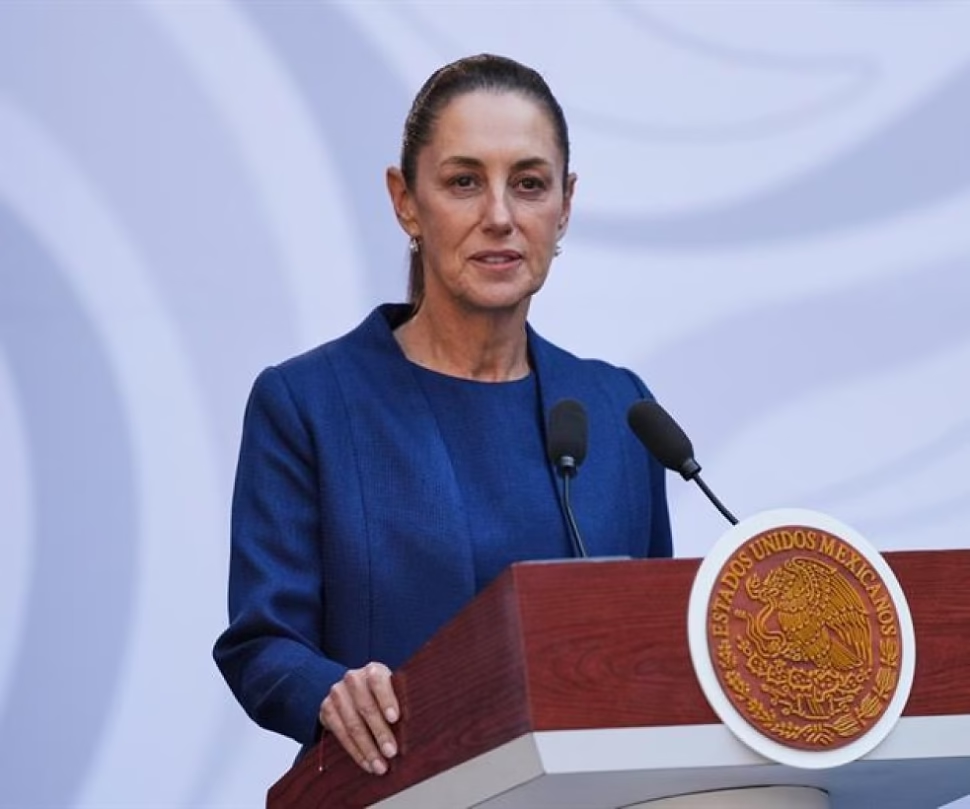
Sheinbaum, in his now traditional morning session (the morning ritual that reminds us that the country is still standing, against all odds), confirmed that there will be collaboration on security with Washington, but added the most important tagline since “it depends”: “without subordination“. In other words, cooperation yes, gringo patrols in Sonora, no.
All this binational drama was unleashed because Trump, in one of his monologues from the Oval Office that seem taken from a very hallucinatory X thread, showed himself more willing than an influencer to accept a collab from a questionable brand. “Would you want attacks in Mexico to stop drugs? That’s fine with me, whatever is necessary,” declared the former president, adding that “he would be proud” to do it to “save millions of lives.” It sounds epic, until you remember that recent history has taught us that American military interventions often end up… getting complicated.
Diplomacy in times of the algorithm
Sheinbaum, with the patience of someone explaining for the umpteenth time how Instagram works to a boomer, recalled that in her conversations with Trump she has offered him support to combat criminal groups, but that she has always closed the door to any foreign intervention. “We do not accept intervention from any foreign government,” he stated, in what could be the subtitle of the Mexico-United States relationship in the Trump 2.0 era.
While the world watches this relationship as dysfunctional as that of the protagonists of ‘Pride and Prejudice’ but with tariffs, other actors try to lower tensions. The Secretary of State, Marco Rubio, has been notably more conciliatory, ruling out a unilateral military adventure. So much so, that the United States embassy in Mexico even published a video on Something like a “calm down, I wasn’t serious” at the international level.
This diplomatic struggle is nothing more than the latest chapter of a particularly tense season in the bilateral relationship. Trump’s claims have been the soundtrack of this year, threatening to overshadow a trade exchange that is around $840 billion annually. An amount of zeros that hurts even to think about.
The situation has become so tense that the historical ties between the neighbors seem like an elastic thread about to break, thanks to the tariffs imposed by Trump on key sectors such as the automotive industry and the production of steel, aluminum and copper. To give you an idea, Washington has imposed a 50% tariff on steel, aluminum and copper, a 25% tariff on cargo trucks, and a 17% tariff on Mexican tomatoes. Basically, you are charging entry into the relationship.
At the end of October, in an attempt to avoid total economic ‘ghosting’, Sheinbaum and Trump agreed to extend trade negotiations for a few more weeks, while the threatening 25% tariff on Mexican products not covered by the T-MEC remains in force. A “let’s talk about it in therapy” at the national level.
In summary, we are facing a geopolitical pulse with overtones of a soap opera, where national sovereignty is defended with forceful statements and diplomacy is exercised between tariffs and veiled threats. A reminder that in international politics, as in social media, sometimes you have to draw clear boundaries.
Are you intrigued by how this diplomatic duel will evolve? Share this analysis with your networks and explore more content about the complex international relationships that shape our reality.