Photography and dissidence, three views in the Historic Center

Three exhibitions at the Photography Archive Museum explore sexual dissidence and ancestral traditions.

The Photography Archive Museum, located at Guatemala 34 in the Historic Center, presents three exhibitions that discuss sexual dissidence, rituals and cultural heritage. Although originally planned for June, sexual diversity month, the protests in the Zócalo and the World Cup programming delayed its opening. Today they seek to install the issue from a more permanent perspective.

Three proposals for collective reflection

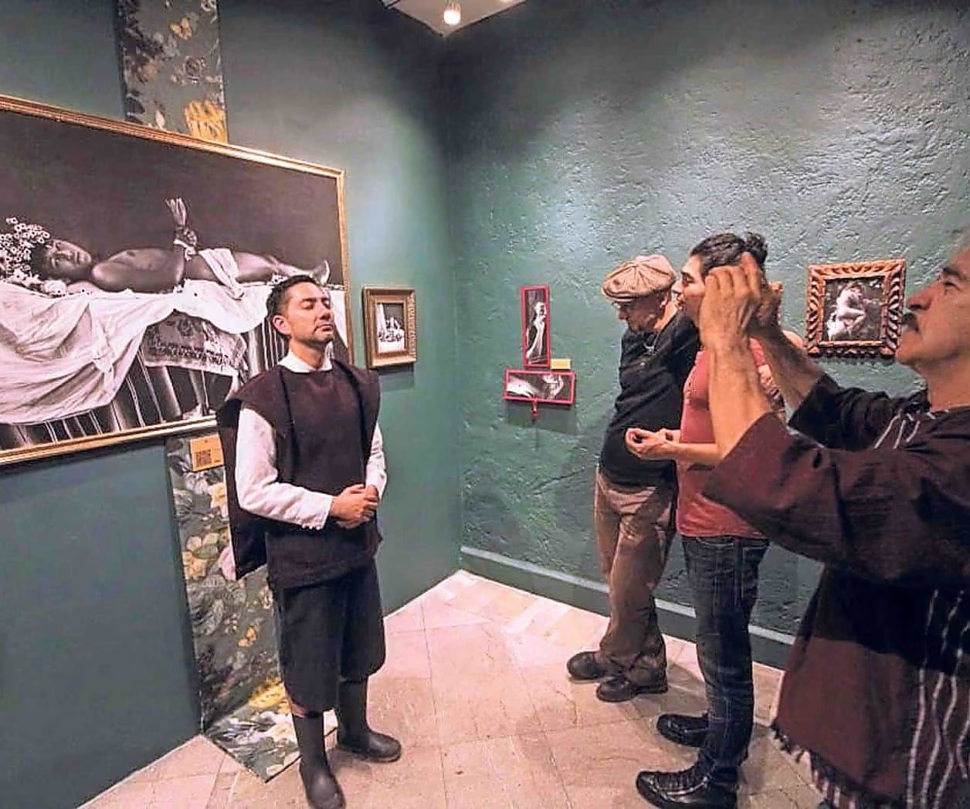
The first exhibition, “El susto enters from behind”, brings together 15 photographs by visual artist Chito Tenorio. The images propose an intimate and collective reading about fear, memory and the emotional traces that persist in bodies. The creator explains:

“The project goes through different forms, filters, contemplations and explorations. Finally it delivers a brief anthology of seven superstitions in which I build a poetics of the image.”

Tenorio points out that the exhibition takes up the construction of the male nude in the history of art. It is, he affirms, one of the few occasions in which male nudes are allowed to be shown in their entirety. Regarding the relationship between body and superstition, he adds:

“The body is the portal between the spiritual and the mystical, the spiritual and the material. Always, in one way or another, we are exposed to this type of practices.”

The photographs include rituals such as cleaning with an egg, the bolillo for fear and the superstition of sweeping the feet associated with bad luck in love.

RelatedSelena stars in historical exhibition at the Grammy Museum

“Ancestral Dissidences” is the second exhibition. It compiles the work of 13 artists and photographers who explore sexual and gender diversity from perspectives rooted in cultural heritage, spirituality, and community experience. Tenorio, also the curator of this exhibition, links it with the previous one by suggesting that rituality is connected to sexual dissidence.

Closes the cycle “Transit. Invocation to Coyolxauqui”, by the artist Roberto Tondopó. This exhibition brings together 17 photographic pieces that cross contemporary photography with Mesoamerican roots, integrating an aesthetic and symbolic dialogue.
Theories about Shakira: was she at the opening of the World Cup?

Users compare Shakira's performance in the final with the opening of the 2026 World Cup.

Two performances, one face… or not?

The halftime show at the 2026 World Cup final left more than music. Shakira, along with Madonna, Justin Bieber, BTS and Coldplay, offered a 12-minute show on Sunday, July 19, during the match between Spain and Argentina. But what the networks commented on most was the comparison with its inaugural presentation in CDMX, on June 11.

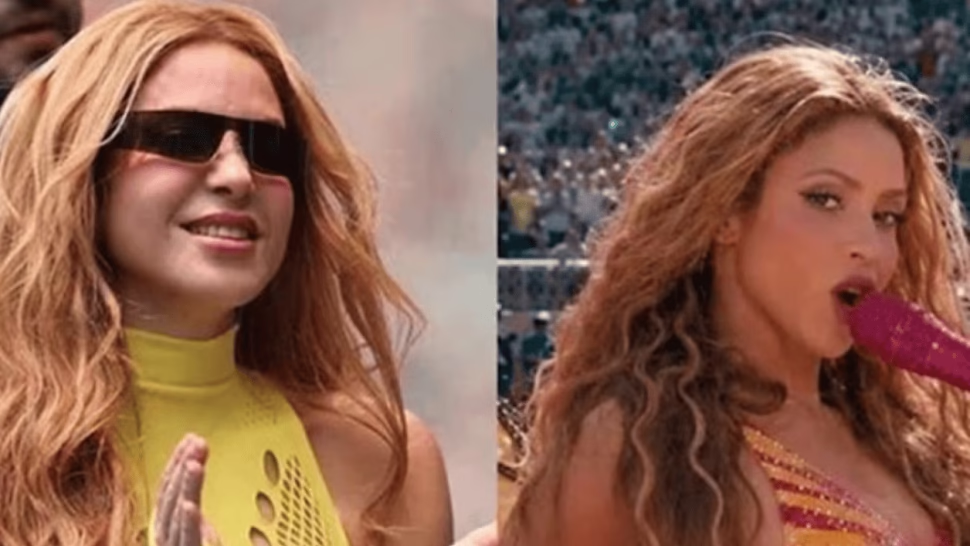
Users noticed notable differences: in the final he appeared without the dark glasses he wore at the inauguration. They also noted changes in her hair, figure, and energy on stage. Some Internet users even questioned whether there was playback at the Mexico City Stadium, while in the final he danced with more intensity.

Phrases like “It was obvious from the first moment that she wasn’t Shakira” and “The original looks like she’s wearing a mask” went viral. The controversy fueled the theory that it was not the same singer on both dates.

Shakira performed “Dai Dai”, the official song of the tournament, accompanied by Burna Boy and the Ghetto Kids. The presentation extended the game’s halftime to 27 minutes. However, the focus of attention was not the music, but the appearance of the Colombian.

The comparisons fueled hundreds of posts. While some defend that it is the same artist, others insist that there are obvious differences. The truth is that the controversy continues to generate reactions on social networks.

Continue reading

Piqué and his children attend the 2026 World Cup final

Gerard Piqué went with his children to the World Cup final, where Shakira offered the halftime show.

Piqué’s assist

Former Spanish soccer player Gerard Piqué and his children attended the New York-New Jersey Stadium for the 2026 World Cup final between Spain and Argentina. The presence of the family generated great media interest, since the Colombian singer Shakira—Piqué’s ex-partner—was in charge of the halftime show this Sunday, July 19.

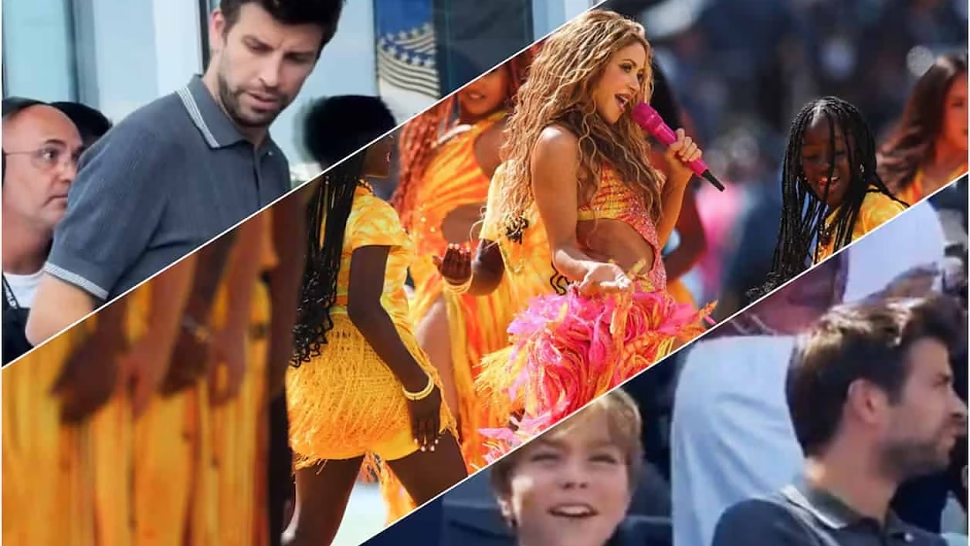
Before the opening whistle, the minors were captured in the stands while “Dai dai” was playing, the official theme of the tournament performed by Shakira. According to reports from attendees, the ex-couple’s youngest son, 11 years old, chanted the song from the stands. Piqué remained at his side, attentive to the preparations on the field.

Shakira and her message after the final

Shakira watched the match from an honor box with actress Anya Taylor-Joy. During the match, he was observed with a hermetic reaction after Ferran Torres’ score, which gave the championship to Spain.

At the end of the match, the interpreter used her social networks to congratulate the Spanish team. He also dedicated special recognition to the Argentine team and its captain, Lionel Messi, whom he described as “the greatest.”

Continue reading

Apio Quijano defends pets after Pedro Sola controversy

Apio Quijano criticizes Pedro Sola for comments against dogs; his dog Ofelia goes viral.

Apio Quijano, a member of Kabah, joined the voices that disapproved of Pedro Sola’s comments about dogs in public spaces. The host of Ventaneando generated outrage by mentioning live his desire to give “poisoned meat” to the animals he sees in restaurants and shopping centers.

“Wanting to throw a piece of poisoned meat… or those who carry three in a stroller. They want to shoot… the owners,” said Sola.

The reaction was immediate. Several brands withdrew their advertising from the program, and TV Azteca issued a statement reaffirming its commitment to animal protection. Apio, owner of the dog Ofelia, responded with a video where he described the statements as irresponsible.

“Clearly he is not a person recognized for giving intelligent information, he never has been, but he continues to have a space where many people see him,” he said.

The singer pointed out that it is valid to debate whether dogs should enter certain places, but talking about poisoning them is cruelty. “What Pedro said was neither humorous, nor responsible nor ethical,” he added.

Ofelia’s response

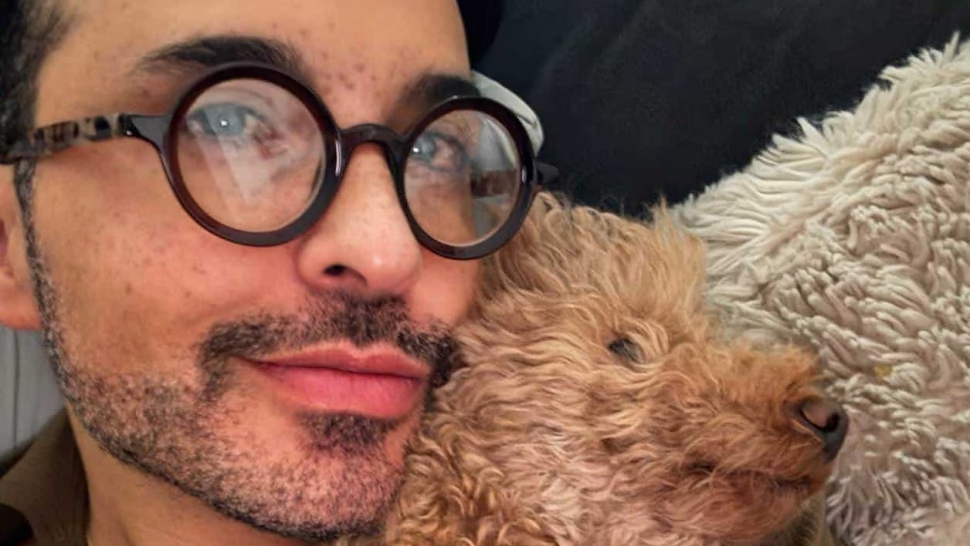
Apio shared on Instagram a photo of his dog Ofelia—with more than 23,000 followers—wearing a t-shirt with the meme “Be careful with Pedro.” The image went viral as a scathing criticism of the driver’s words.

“Now the world has a voice, and everything can end overnight,” Apio warned, calling to measure what is said in public spaces.

TV Azteca, for its part, announced that it will reinforce awareness programs on animal respect among its collaborators. The controversy revealed the impact of the statements in an era where networks amplify every word.

Continue reading