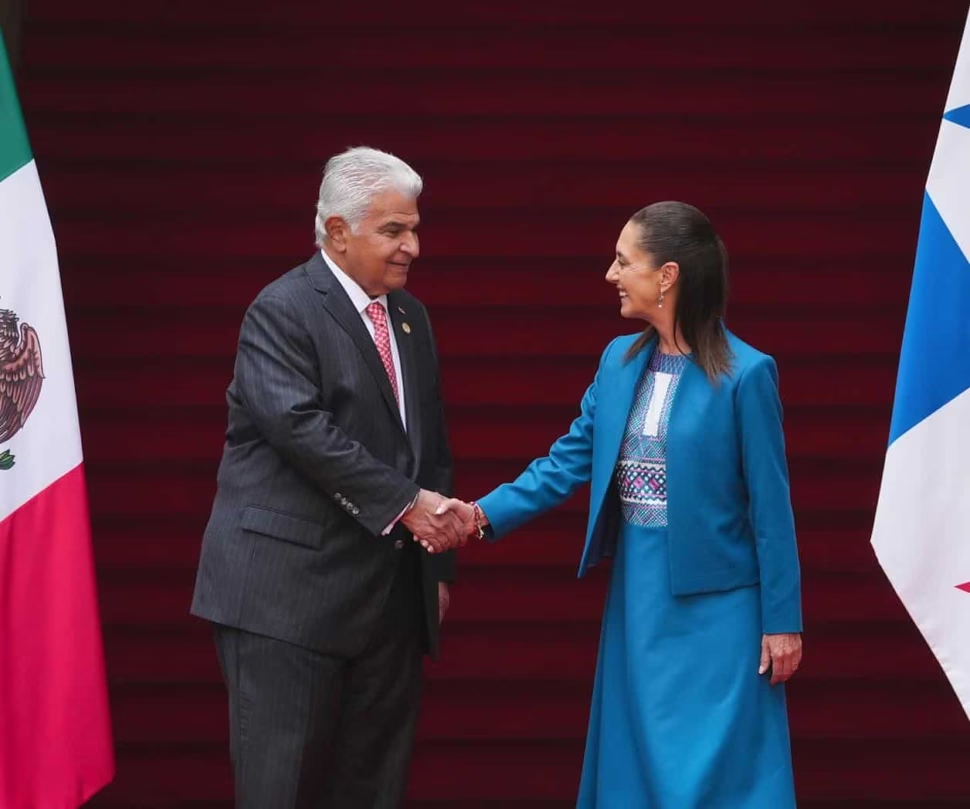
Sheinbaum receives the president of Panama at the National Palace

Sheinbaum and Mulino strengthen bilateral ties in official meeting.

Bilateral meeting between Mexico and Panama

President Claudia Sheinbaum received her Panamanian counterpart, José Raúl Mulino, this Wednesday in the Patio of Honor of the National Palace. The official ceremony included the singing of the national anthems and a joint photograph.

Both leaders met to strengthen the relationship between the two countries. At the end of the meeting, they offered a joint message to the media. The visit underlines the shared commitment in areas such as trade, agriculture and economic development.

RelatedMexico joins the neutrality protocol of the Panama Canal

High-level delegation

Sheinbaum was accompanied by the Secretaries of Foreign Affairs, Roberto Velasco Álvarez; of Economy, Marcelo Ebrard; of Agriculture, Columba López Gutiérrez; and other officials such as the director of the Interoceanic Corridor of the Isthmus of Tehuantepec, Octavio Sánchez Guillén.

The Panamanian delegation included the Ministers of Foreign Affairs, Javier Martínez-Acha; of Commerce and Industry, Julio Moltó; of Agricultural Development, Roberto Linares; and of Panama Canal Affairs, José Icaza, among others. President Mulino’s wife, Maricel Cohen de Mulino, was also present.

Cooperation on the agenda

The meeting highlights the relevance of bilateral relations. Both countries seek to deepen collaboration on strategic issues such as commercial exchange and regional connectivity. Mexico and Panama maintain historical ties that are now renewed with this state visit.


Screwworm plague hits exports and prices

The closure of the border with the US due to the screwworm has caused an oversupply of meat in Mexico.

Impact on the national market

The closure of the border with the United States to Mexican livestock exports, due to the advance of the screwworm, has plummeted beef prices. This was confirmed by representatives of the agricultural sector during the National Congress of Agri-Food Health and Safety, organized by the National Agricultural Council (CNA).

The impossibility of exporting has generated an excess supply of cattle in the country. This is already reflected in lower costs for consumers, but also in losses for producers.

The alert was intensified this week. Chihuahua, a state that concentrates about 40% of national beef production, confirmed its first case of the plague. With this record, only three entities in the country remain free of the screwworm.

“The country’s capacity to face health emergencies has been weakened due to the reduction of more than 50% in the Senasica budget during the last decade,” warned Jorge Esteve, president of the CNA.

The leader pointed out that, although agricultural and livestock production has grown in the same period, resources for surveillance, inspection and sanitary control have decreased. That, he said, represents a risk for the competitiveness of the sector and for access to international markets.

The border closure also affects American consumers, who face reduced availability of meat due to the interruption of trade flow.

Representatives of the sector agreed that it is urgent to reinforce animal health, contain the spread of the screwworm and strengthen Senasica. Only in this way can the trust of trading partners be regained, the border reopened and exports restored.

Continue reading

CNDH demands clarification of deaths of Mexican migrants in ICE custody

The organization asks to investigate deaths of compatriots in US detention centers.

The National Human Rights Commission (CNDH) issued a condemnation for the deaths of Mexican migrants that occurred during operations and in detention centers of the United States Immigration and Customs Enforcement Service (ICE). The organization, chaired by Rosario Piedra Ibarra, demanded prompt, impartial and transparent investigations to clarify the facts and punish those responsible.

Concern about violations of fundamental rights

The CNDH described these cases as “most serious”, since they involve possible violations of the right to life, personal integrity, health, due process and dignified treatment. He expressed his concern about the immigration policies applied in the United States and recalled that the protection of human rights must be guaranteed regardless of nationality or legal status.

Consular assistance and accompaniment

The organization highlighted the need for Mexico to maintain consular assistance, legal accompaniment and humanitarian support for compatriots deprived of their liberty for immigration reasons, as well as for their families. He also reiterated that any death in state custody must be reviewed with the utmost rigor.

The CNDH requested that the investigations allow for determining responsibilities and guaranteeing truth, justice and comprehensive reparation for the victims.

Continue reading

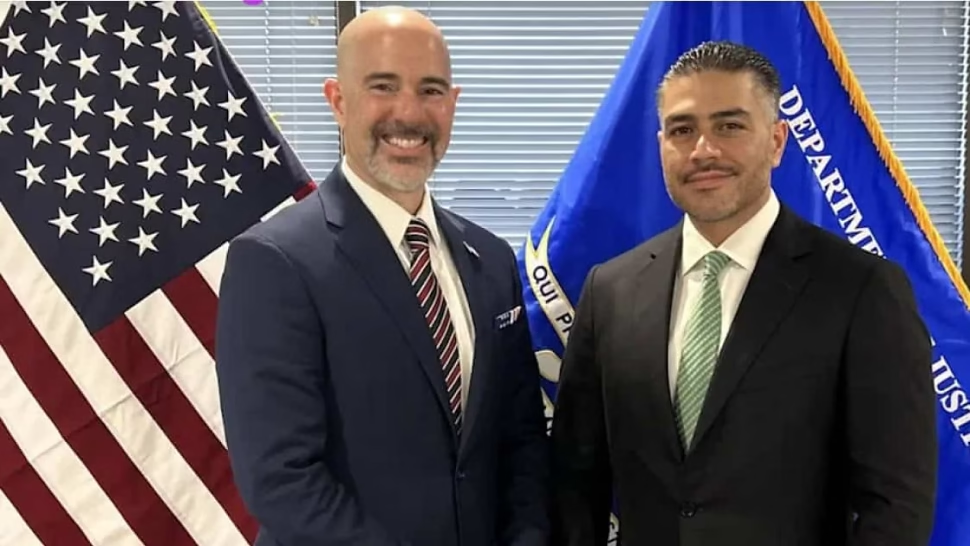
Sheinbaum rejects accusations by the director of the DEA about links to crime

The head of the DEA pointed out an alleged alliance between authorities and cartels. Sheinbaum described it as unsupported.

Diplomatic tension due to DEA statements

The statements of the director of the DEA, Terry Cole, have caused friction in the bilateral relationship with Mexico. The official recently stated that the Mexican government and the cartels maintain a “deadly connection.” He said that combating this alleged alliance is a priority for his agency.

President Claudia Sheinbaum rejected the accusations. He described them as “unfortunate, unsupported and baseless.”

It is not Cole’s first controversy towards Mexico. Since taking office in 2025, his appointment has been questioned. Newspaper reports link him to the leak of sensitive information in 2011 that led to the civilian tragedy in Allende, Coahuila, attributed to the criminal group Los Zetas.

Cole has also supported measures by the Trump administration. Supports classifying Mexican cartels as Foreign Terrorist Organizations. In addition, he has defended the possibility of covert operations by US agencies inside Mexico.

In his most recent statements, Cole pointed to the case of Sinaloa. He suggested that Mexican officials may have collaborated with criminal groups. Sheinbaum insisted that there is no evidence and that his statements damage bilateral cooperation.

Continue reading