Government evaluates the implementation of the digital labor reform
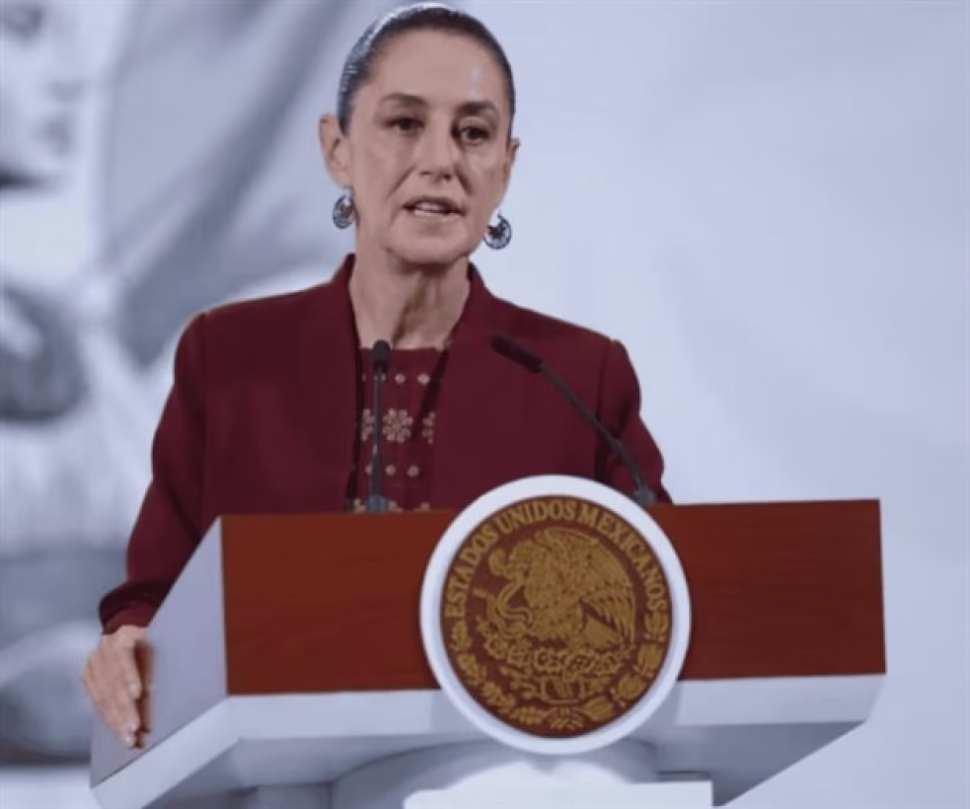
The President Claudia Sheinbaum Pardo stated that the majority of application workers have welcomed the reform regarding work on digital platforms, a legislative modification that guarantees them comprehensive access to social security. During her morning press conference at the National Palace, the federal president stressed that this right not only benefits delivery workers and drivers individually, but also extends to the coverage of their family groups, representing a substantial advance in the protection of this labor sector.
Faced with reports indicating increases in rates for platform services such as Uber, the Chief Executive was emphatic in establishing the government’s position. Sheinbaum Pardo insisted that the cost of this new benefit should not be transferred to the end user through additional surcharges, nor should it be deducted from the direct salary received by service providers. The official proposal is that this cost be absorbed as an additional component by the technology companies themselves, thus safeguarding the purchasing power of workers and the economy of consumers.
Supervision and compliance mechanisms
As part of the strategy to guarantee compliance with these guidelines, the President instructed the Federal Consumer Protection Agency (Profeco) and the Secretary of Labor and Social Welfare to carry out an exhaustive review. The objective is to verify if digital services companies are applying extra charges to their clients under the pretext of financing the social security of their collaborators. “If somewhere they are charging for it, it is not correct,” he declared, making clear his administration’s position on a possible externalization of costs that would violate the spirit of the reform.
This regulatory framework seeks to balance the relationship between large technology companies and their workforce, granting full rights to those who perform their jobs through these applications. The effective implementation of this regulation is being closely watched, as it could establish a significant precedent for the digital economy in the region, promoting a fairer and more equitable business model.
Dialogue with the beverage industry and cooperatives
In another order of ideas, but within the same press conference, Sheinbaum Pardo referred to the concern expressed by soft drink companies and cooperatives, such as the emblematic Pato Pascual, regarding the increase in the Special Tax on Production and Services (IEPS) for sugary drinks. The federal president indicated that the Ministries of Health and Finance and Public Credit will establish a direct communication channel with these economic actors.
He explained that the fundamental purpose of this tax measure is of a health nature, seeking to discourage the consumption of beverages with high sugar content, whose negative impact on public health is widely documented. Recognizing the trajectory and social value of entities such as the Pato Pascual Cooperative, which he described as “a story of extraordinary struggle,” Sheinbaum assured that there will be an open dialogue to address their concerns, without losing sight of the primary objective of protecting the well-being of the population.
Was this analysis of the new labor and tax policies useful to you? Share this content on your social networks to keep your community informed and explore more articles related to economic and digital transformation on our site.