A new judicial dawn, or so they say
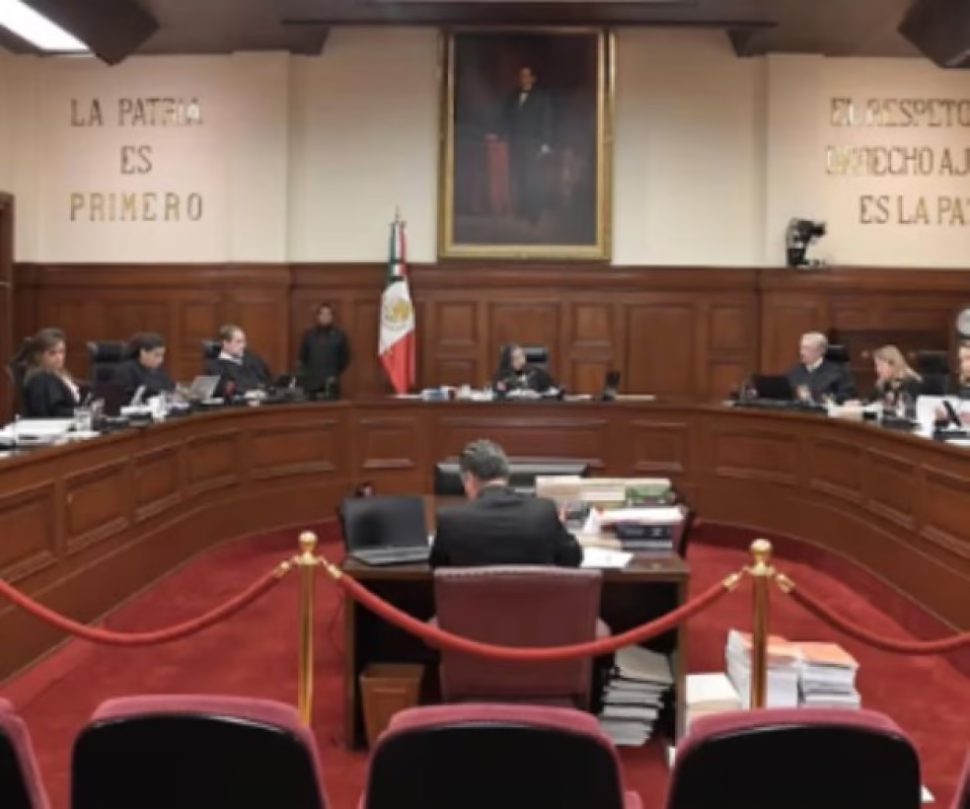
It seems that the Mexican judicial calendar has an expiration date clearer than yogurt. Yesterday, with the solemnity of a funeral at which no one cried, the minister president of the Supreme Court of Justice of the Nation (SCJN), Norma Piña, presented what could well be her last report. And, oh surprise, President Claudia Sheinbaum Pardo wasted no time in nailing the tombstone over what she describes as an era of darkness, corruption and nepotism. Because, what better way to inaugurate a new era than with a good witch burning speech?
In the morning conference, that ritual where the questions are as “express” as the scripts are prewritten, our federal leader stood up on the right foot to announce that September 1 not only begins the rainy season, but also what she calls a new era in the Judiciary. A transformation so profound that, apparently, it will cause rivers to flow backwards and judges to be chosen by… wait, the Mexican people? Are we going to see judicial campaigns with promises of “I will acquit you” and “freedom on bail for all”?
The promised purge and good wishes
Sheinbaum, with the elegance of a bulldozer in a glass shop, declared: “An era of the Court, in the Judiciary, has ended; an era, therefore, highly questioned for its sentences, for corruption, for the defense of privileges, for nepotism.” Wow, how subtle. He didn’t mention names, but we all know who he’s referring to, right? It’s like saying “the party’s over” without pointing out the drunks who broke the vase.
But not everything is destructive criticism. The constructive part also arrived, with the always optimistic Rosa Icela Rodríguez, head of the Ministry of the Interior (Segob), ensuring that they are in the “best disposition” to work with the “new” Judiciary. Of course, because nothing says “collaboration” like announcing that the previous era was a nest of corrupt vipers just before the new ones take over. Rodríguez, with a faith that moves mountains (or at least administrative folders), commented that with this transformation they will be able to attend to “many cases that have to do with amnesties.” Because, obviously, the only thing missing to solve the injustice was a few new judges.
And in case anyone doubted his intentions, he added: “We have a lot of hope and a lot of confidence that we are going to be working with those judges, magistrates, and of course ministers who are interested in seeing that there are truly many people, who remain in prisons and who have been unjustly detained for minor things, sometimes that we can be assisting them.” Wow, what a relief to know that interest in justice is optional for ministers. Will there be any judge who has no interest in the release of unjustly detained people? Let’s hope not, but with Mexican justice, you never know.
To finish off, Rodríguez dropped the pearl that one of the most satisfactory issues for any public servant is to help in all cases where there are injustices. What a revelation! Until now we thought that the most satisfactory thing was the salary at the end of the month or paid vacations, but no, it is helping others. Moving.
So, dear citizens, get ready for a September full of changes. New judges, new hope, and hopefully less nepotism. Because what could go wrong when politics intrudes on justice? Only time will tell. In the meantime, let’s cross our fingers and hope this “deep transformation” isn’t as deep as a puddle after a light rain.
Did you like this gem of national politics? Share it on your social networks and be sure to explore our content for more sarcastic analyzes of current events!