The flag speech: unity, history and… timing
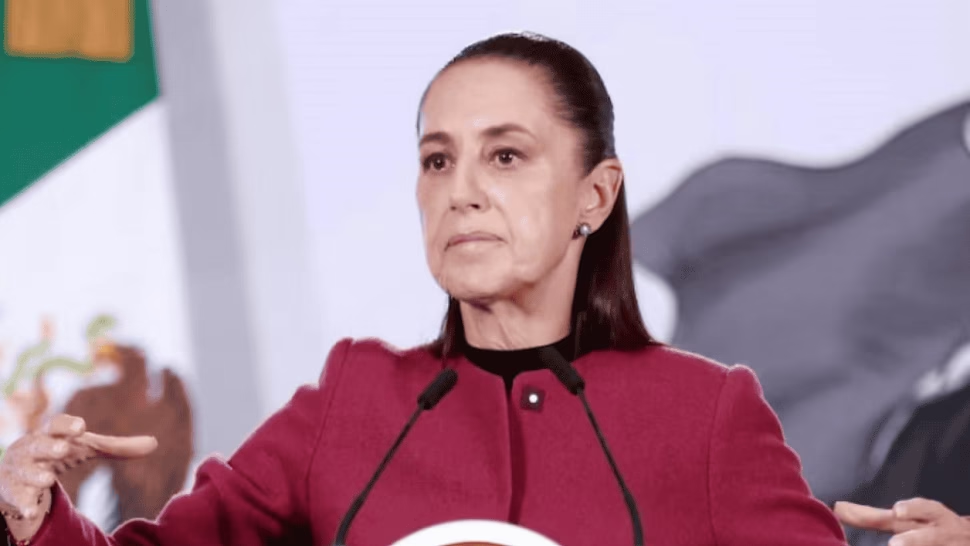
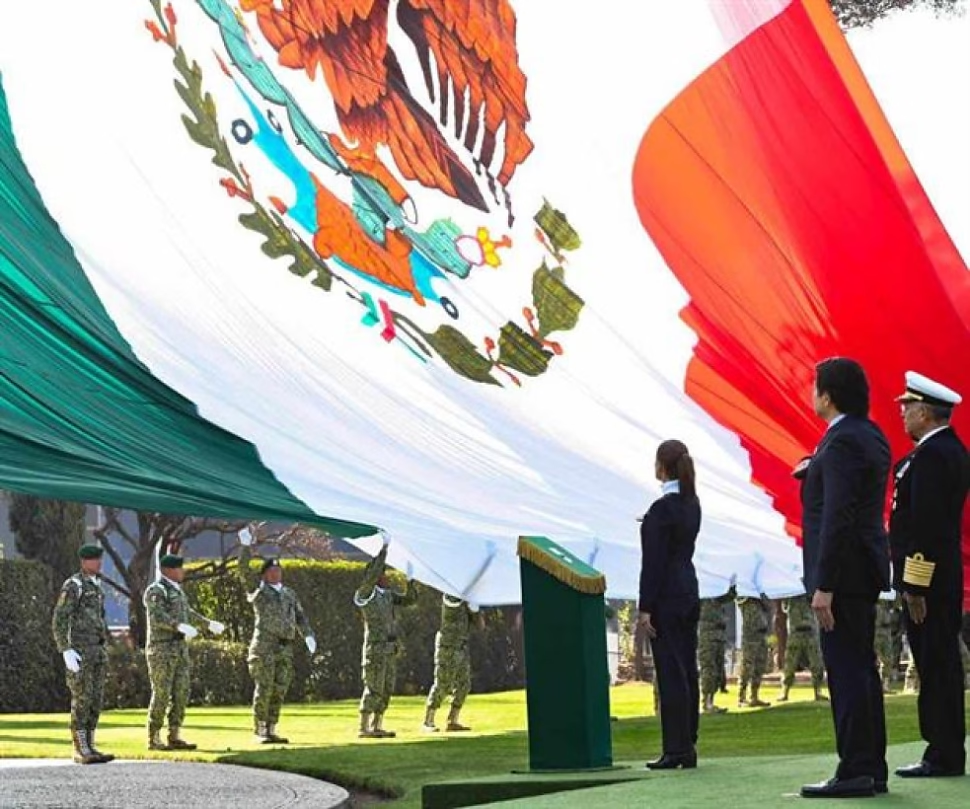
Claudia Sheinbaum took the microphone at Campo Marte for Flag Day. The scene: a thousand youthful escorts, impeccable uniforms, the labarum waving. The message, predictably epic.
“Feel deeply proud to be daughters and sons of this ancient land”
The president woven concepts: dignity, courage, greatness. He stated that the symbol represents all of us “even though we are culturally, politically and socially diverse.” A rhetorical nod to the current polarization.
What was interesting was not what was said, but the context. A politically fractured country receives a speech of unity from a military compound. The irony paints itself.
Three dimensions and a careful narrative
Sheinbaum broke down the official symbolism: indigenous roots, colonial emancipation, independent Mexico. He spoke of the eagle devouring the snake as “victory of determination in the face of adversity.”
“When it waves, it not only represents a territory, it embodies centuries of resistance and transformation”
The Secretary of Defense, Ricardo Trevilla, recalled that his institution organized the first commemoration in 1940. The military is always present in these civic rituals.
High school and high school color guards from all over the country were flagged. Simultaneous ceremony in 31 states. A logistical deployment that speaks of the symbolic—and political—weight of these acts.
The recognition of General Enrique Cervantes for the monumental flags closed the event. The highest in Iguala, Guerrero: 110 meters. Symbols rising while social realities…well, that’s another story.
Every word measured, every historical reference calculated. In turbulent times, national symbols become rhetorical anchors. The question that remains floating: how much does a speech really weigh in the face of everyday divisions?