Russia erases the identity of Ukrainian children to turn them into soldiers

OSCE documents Russian system of indoctrination and militarization of deported Ukrainian children.

An independent mission from the Organization for Security and Cooperation in Europe (OSCE) documented a Russian system designed to erase the national identity of Ukrainian children and turn them into soldiers. The report, prepared through the Moscow Mechanism, reveals systematic practices of indoctrination and militarization from an early age.

Documented practices

According to experts, minors are exposed to compulsory pro-war propaganda from the age of six. Between 13 and 18 years old, they receive training in weapons handling, tactical medicine and drone operation.

RelatedThe EU designs its own peace plan to pressure Russia

In addition, the report points out the elimination of teaching in Ukrainian and the persecution against those who express their national identity. Upon reaching the age of majority, adolescents are forced to join the Russian armed forces to fight against their country of origin.

The investigation also indicates that children forcibly deported to Russia have suffered violations of international humanitarian and human rights law.

Possible crimes against humanity

Experts Hervé Ascensio, Elina Šteinerte and Stefan Wolff concluded that these actions could constitute a crime against humanity in the form of persecution, and identified probable war crimes. They recommend that the return of Ukrainian children be a central element of any peace negotiations, without exchanges, and that Russia be held accountable.

Ukraine’s response

Given this situation, the Ukrainian Foreign Ministry invited Mexico to join the International Coalition for the Return of Ukrainian Children, made up of 47 countries and three international organizations.
Iran hits desalination plant in Kuwait

An Iranian attack damaged a water and power plant in Kuwait, affecting drinking supplies.

Attack on strategic plant in Kuwait

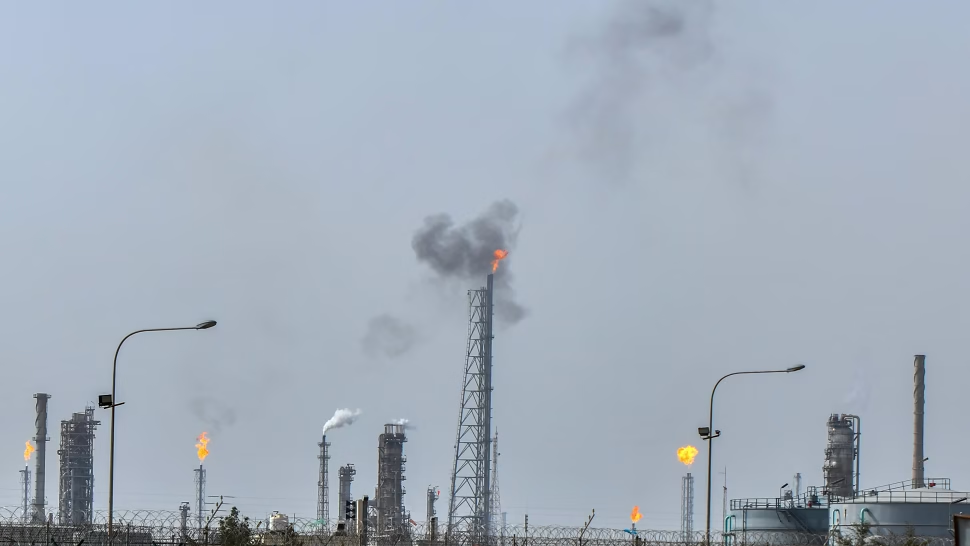
On Friday, an Iranian attack hit a power and desalination plant in Kuwait, causing damage to several power generation units and a fire that was controlled by emergency crews. Kuwaiti authorities activated contingency plans to maintain the supply of water and electricity.

Kuwait relies on desalination for about 90% of its drinking water, similar to other Gulf countries such as Oman and Saudi Arabia. Most of these facilities are on the Persian Gulf coast, making them vulnerable to missile or drone attacks.

This incident highlights the fragility of critical infrastructure in the Middle East amid regional escalation.

Continue reading

Latin America reinforces emergency plans for El Niño

Countries in the region activate protocols in response to the strengthening of El Niño in the Pacific.

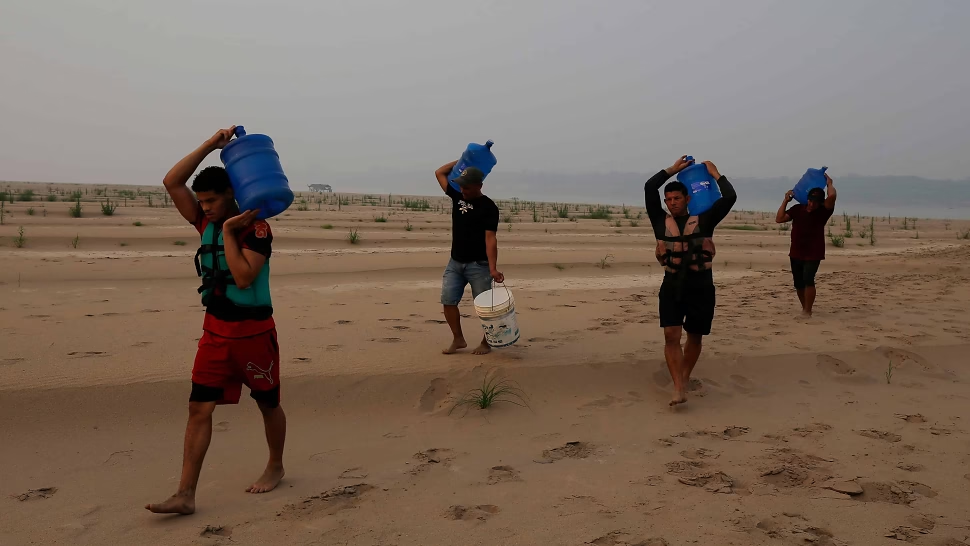
The governments of Latin America are accelerating their emergency plans in the face of the strengthening of the El Niño phenomenon in the Pacific. The World Meteorological Organization (WMO) confirmed that the event is already underway and warned that countries must act early to reduce impacts.

Governments take action

Brazil reinforced its brigades against forest fires. Colombia activated water monitoring systems. Other Central American nations are working on plans to protect vulnerable communities and guarantee basic services. Experts point out that, although the phenomenon develops gradually, authorities usually delay preventive actions until emergencies are already underway.

Expected impact

Droughts, extreme heat, fires, floods and impacts on water, energy and transportation systems are expected. Agricultural production and access to drinking water could be seriously damaged, especially in the most vulnerable communities. The WMO insists that early preparation is key to mitigating the adverse effects anticipated in the coming months.

Continue reading

Xi Jinping calls for global AI governance without unilateral dominance

China proposes international cooperation in artificial intelligence and offers training to developing countries.

China bets on global governance of AI

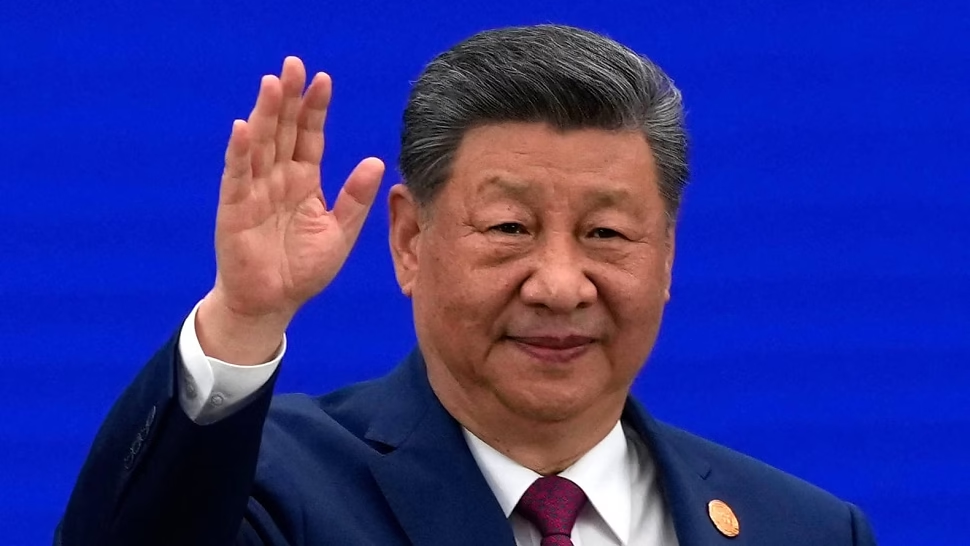
Chinese President Xi Jinping urged the promotion of global governance of artificial intelligence (AI) and stated that its development should not belong to a single country. During the opening of the World Conference on Artificial Intelligence in Shanghai, he questioned what he called an “overreach” of the concept of national security in this area, in clear reference to the technological restrictions imposed by the United States.

“Artificial intelligence must become a symphony of global cooperation, not an isolated competition between nations,” Xi said.

As part of its strategy, China will strengthen AI collaboration with organizations such as ASEAN, the Arab League, the African Union, CELAC and the BRICS countries. In addition, it will offer five thousand training opportunities for developing countries in the next five years.

Multilateral agreement in Shanghai

Before the event, 29 countries—including Russia, Pakistan and Kazakhstan—signed an agreement with Beijing to create a World Artificial Intelligence Cooperation Organization, based in Shanghai. Analysts interpret this initiative as China’s response to the US Pax Silica framework, which seeks to strengthen AI supply chains with its allies.

Continue reading