Violent demonstration in Apatzingán after assassinations of leaders
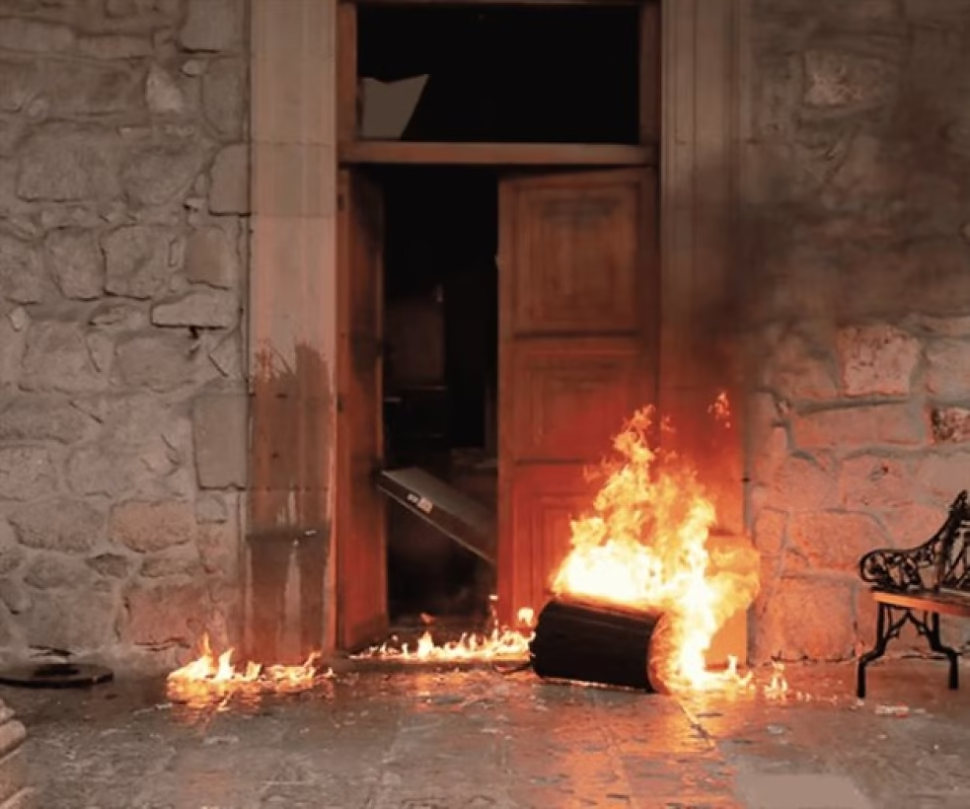
A citizen protest in the municipality of Apatzingán, Michoacán, led to acts of extreme vandalism and the burning of the Municipal Government Palace. The mobilization, which occurred during the night, was a direct response to the recent and high-profile murders of the mayor of Uruapan, Carlos Manzo, and the agricultural leader Bernardo Bravo, a key figure in the region’s lemon industry. The rally began in the main square of the town, where protesters expressed their collective anger through slogans that blamed the government and state authorities for the growing wave of insecurity.
The situation quickly escalated from a peaceful demonstration to a high intensity riot. A sector of the group began to throw stone projectiles against the windows of the government building, and later forced the main access through kicks and pushes. Once inside, the individuals proceeded to destroy the furniture and, in an act of maximum provocation, set parts of the installation on fire. The events represent a direct attack on a symbol of state authority in one of the most complex regions of Mexico.
Police absence and damage to cultural heritage
A critical element that allowed the events to escalate was the notorious absence of the security forces. The lack of a containment or deterrence operation by the police allowed the acts of vandalism to develop without any type of intervention or mediation. This vacuum of authority is a recurring factor in the analysis of regional violence and raises serious questions about the institutional response capacity.
The episode of destruction culminated in the attack on elements of local cultural heritage. The protesters destroyed the decorations installed for the Day of the Dead festivity, and then set fire to these decorations along with the traditional offering that was in the place. This act not only aggravates the material damage, but also symbolizes a deep break with the social order and community traditions.
This event in Apatzingán is not an isolated event, but rather the symptom of an underlying structural problem. It reflects a climate of social tension and deep citizen discontent in the Tierra Caliente region of Michoacán, an area historically affected by violence from criminal groups and precarious governance. Citizens, exasperated by the State’s inability to guarantee security and dispense justice, express their anger in increasingly forceful ways. The demand for answers and justice for the murders of public figures shows the crisis of legitimacy that institutions face.
Does this information seem relevant to you?Share this analysis on your social networks to keep your community informed and explore more content related to the sociopolitical situation in Mexico on our portal.