The national president of lemon producers is murdered in Michoacán

A crime that shakes the agricultural sector and reveals the crudeness of organized crime in the lemon region of the country.

A Tragedy that Shakes the Citrus Valleys

In a twist of fate as bitter as the fruit it represented, the life of Bernardo Bravo Manríquez, the champion of citrus fruits, was uprooted in an act of violence that has plunged an entire industry into mourning and terror. The top leader of the Apatzingán Valley Lemon Producers Association and national president of the lemon trees was found dead, confirmed the Attorney General’s Office of the State of Michoacán, in a statement that resonated like a disastrous drum in the hearts of those who knew him.

The scene of the crime was his own vehicle, a metal sarcophagus that became the mute witness of a tragedy foretold. But history, like an underground river of sadness, began to flow a day before. On Sunday, October 19, his freedom was taken from him by the clutches of armed men, shadows that emerged to deprive him of his freedom in a kidnapping that already foreshadowed the darkest outcome. His lifeless body was located this Monday, abandoned in an area where the shadow of the Michoacán New Generation Cartel (CMNG) lengthens, imposing its law of terror and silence.

RelatedLemon leader Bernardo Bravo is murdered in Michoacán

A Leader who Defied the Shadows

Behind this act of barbarism lies a story of courage and defiance. Bernardo Bravo was not just any man; It was the voice raised against oppression, the banner of resistance for the growers of the green fruit. He had received death threats, letters full of hate that tried to silence his fight. The reason? His unwavering support for the strikes and mobilizations that the lemon producers of Apatzingán carried out as a desperate cry against the extortions they suffered. These tributes of fear were imposed by the criminals of the “Los Via” group, a faction that weaves its network of illegality in the territory.

The municipal government of Apatzingán, in an act that pales before the magnitude of the pain, lamented the events and extended its solidarity with the devastated family. But words, in this drama of blood and power, ring hollow. The loss of Bravo Manríquez is not just another statistic in the nation’s black chronicle; It is a deep wound in the heart of the farming community, a symbol of how bravery is silenced by brute force. His death sends a chilling message to all those who dare to confront the organized crime structures that parasitize the Mexican countryside.

This event places a blinding spotlight on the precarious security in the producing regions of Mexico, where social and business leaders operate under the constant Damocles sword of violence. The lemon industry, a vital economic driver, now finds itself under a blanket of uncertainty and fear, wondering who will be next to receive an anonymous call or find a sinister message on their door. The figure of Bernardo Bravo now stands as a martyr in an unequal struggle, an eternal reminder of the price paid for defending the right to work in peace.

The silence that follows the news is as heavy as the air on a stormy day. Every lemon tree in the Apatzingán Valley seems to bow, mourning the loss of its defender. Crime not only took a man away; He tried to steal the hope of an entire community. But in the sun-beaten faces of the other producers, between the aroma of orange blossom and the fertile soil, the determination not to give in shines with a dim but persistent light. Bernardo Bravo’s story is not over; has just become the legacy that will drive the next battle for freedom and justice in the Mexican countryside.

Are you moved by this story of courage and tragedy?Share this article so that their struggle is not forgotten and helps make visible the critical situation that the agricultural sector is experiencing.Explore more content related to security and social leadership on our portal.

Sheinbaum congratulates Isaac del Toro for victory in the Tour de France

The Mexican won the second stage in his debut in the Tour.

President Claudia Sheinbaum celebrated the triumph of Mexican cyclist Isaac del Toro in the second stage of the Tour de France. Through her official account, the president wrote:

“Congratulations to Isaac del Toro for his victory in the second stage of the Tour de France.”

Victory on the hill of Montjuïc

Del Toro, 21, crossed the finish line first in Barcelona, beating his UAE Team Emirates teammate, Tadej Pogacar, who gave way to give him the win. The Slovenian Remco Evenepoel came third and the Dane Jonas Vingegaard, fourth, maintaining the yellow jersey. Mattias Skjelmose, also Danish, came within three seconds.

The Mexican participates for the first time in the Grande Boucle and his performance generated enthusiasm among national fans. The victory reinforces his projection in international cycling.

Sheinbaum highlighted the achievement at a key moment for Mexican sport, where cyclists gain visibility in high-level competitions.

Continue reading

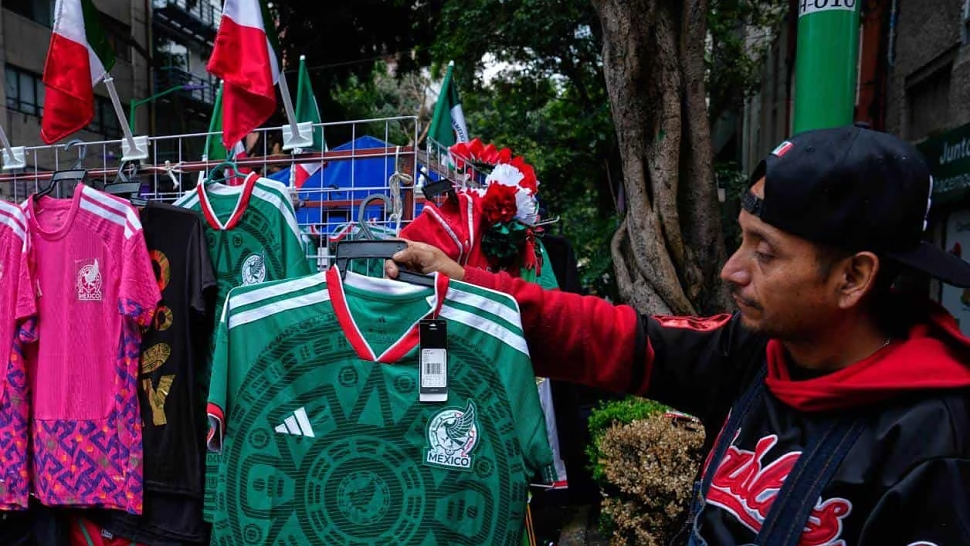
World Cup piracy grows in the heat of 2026

World Cup fever triggers the sale of pirated items in CDMX.

The piracy boom at the 2026 World Cup

The 2026 World Cup fever has boosted the sale of pirated merchandise in Mexico City. Informal merchants offer t-shirts, trophies and mascots at prices well below the official ones. In the Historic Center and markets like La Lagunilla, a Mexican National Team shirt costs around 250 pesos, while an official jersey exceeds 2 thousand pesos.

Specialists point out that the phenomenon is intensified by impunity, corruption in customs and the growth of informal trade. The high cost of original items leads thousands of consumers to opt for unauthorized products, both in markets and on digital platforms.

Francisco Rivas, general director of the National Citizen Observatory, warns that piracy is a growing problem. He points out that, in addition to the lack of controls, organized crime has found a source of income in this market, even putting pressure on formal merchants through extortion.

“Piracy not only affects brands, but also fuels illegal networks,” said Rivas.

According to the report Mapping Global Trade in Fakes 2025 by the OECD and EUIPO, Mexico ranks seventh in the world as a buyer of counterfeit merchandise. This situation is strongly reflected during events with high commercial impact such as the World Cup.

Given this, sports product companies have reinforced their promotional strategies and digital campaigns to encourage the purchase of official merchandise. The federal government has made seizures and promoted reforms to protect intellectual property. However, specialists consider that the fight against piracy requires comprehensive actions: strengthening surveillance, combating corruption and raising consumer awareness about the economic and social impact of this illegal market.

Continue reading

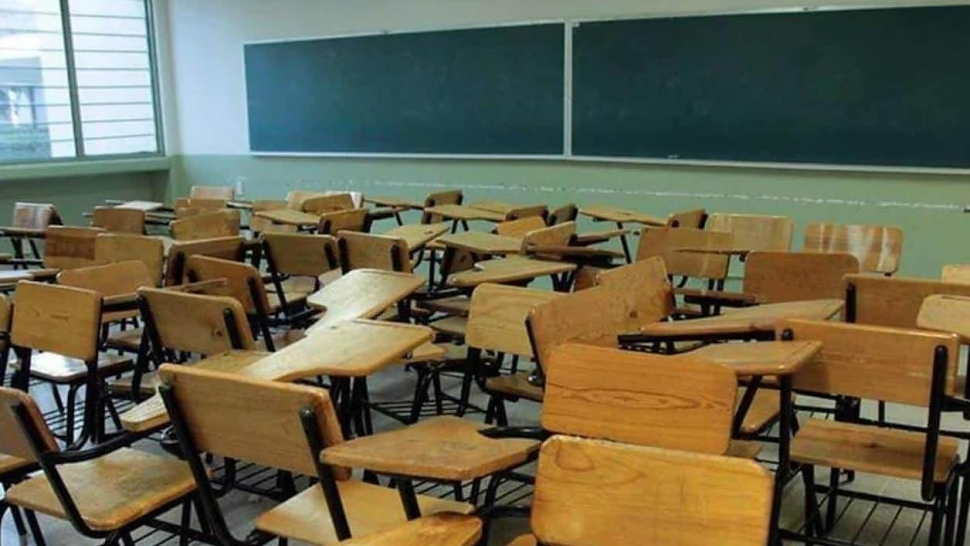
SEP calendar: summer holidays start on July 16

The SEP confirms the end of classes on July 15. When does the next cycle start?

End of the 2025-2026 school year

The official calendar of the Ministry of Public Education (SEP) marks Wednesday, July 15 as the last day of classes for preschool, primary, secondary and incorporated schools.

Starting Thursday, July 16, millions of students will begin summer break. There will be almost six weeks of rest before the new 2026-2027 cycle.

However, the activities do not end for the teaching staff. An intensive continuing training workshop is scheduled for Thursday, July 16 and Friday, July 17. The campuses will remain closed to students from the first day of vacation.

Key dates and recommendations

Report cards will be delivered to parents and guardians on Tuesday, July 14. The SEP has not yet published the 2026-2027 calendar, but it is estimated that the return to classes will occur on Monday, August 31 – tentative date. The agency asks to be attentive to the Official Gazette of the Federation for confirmation.

Tips for the break

Specialists suggest maintaining healthy habits during rest:

  • Regular sleep schedules.
  • Recreational, sports or cultural activities.
  • Reading and learning through games.
  • Limit electronic devices.
  • Family time outdoors with safety measures.

The school year includes 185 effective days of classes, distributed between sessions of the School Technical Council, suspension of work and vacation periods. The SEP reiterates that the official information will be published soon.

Continue reading