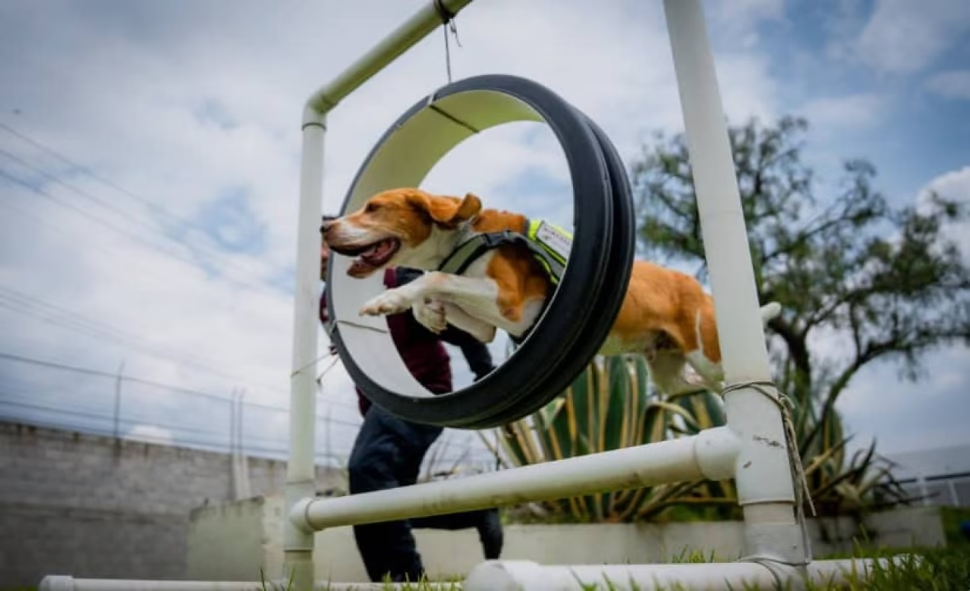
Training of canine pairs for regional health
The Ministry of Agriculture and Rural Development (Sader) began the training of five canine pairs that will participate in health inspection tasks in Central America and the Caribbean. The objective: strengthen the detection of pests and diseases that affect plants and animals, and prevent their spread between countries.
The dogs, members of Generation 82 of the Canine Training Center (Ceacan), were assigned by the National Agri-Food Health, Safety and Quality Service (Senasica) to four officers from the Dominican Republic and one from Belize. For six weeks they will receive specialized training before joining inspection tasks in their respective countries.
At the welcome ceremony, Jorge Bustamante Rojano, director of Strategic Management of Quarantine Services of Senasica, highlighted that this program not only strengthens health protection, but also promotes regional cooperation. The canine teams will be key to identifying products that may represent a phytosanitary risk in ports, airports and borders.
The initiative is part of Mexico’s efforts to share its experience in agri-food health with neighboring nations. Training includes techniques for detecting specific odors of pests and diseases, as well as safe handling of animals during inspections. At the end of the course, the binomials will be certified to operate under the international standards of the International Plant Protection Convention.