Thai woman prosecuted for death of diplomat in Myanmar

Pavinee Supasirivisan appears for immigration violation; He also faces a murder charge.

The judicial process

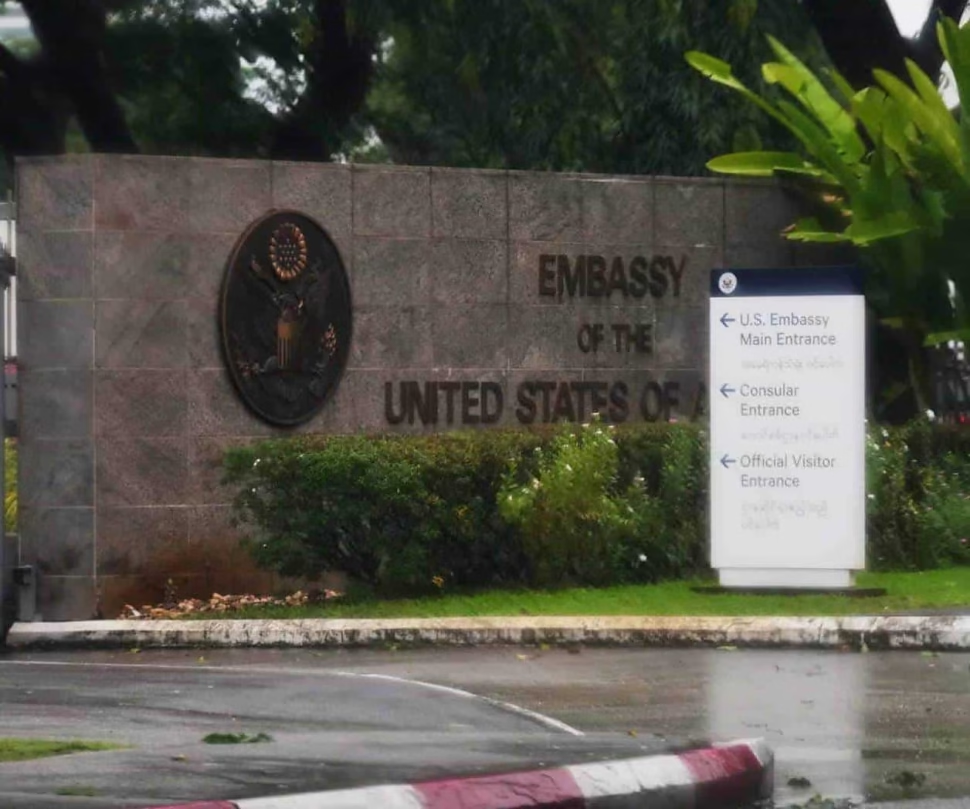
A Thai woman, identified as Pavinee Supasirivisan, appeared in court in Myanmar on Tuesday. She faces a charge of violating immigration laws, linked to the death of her ex-husband, a US diplomat found dead in Yangon in May.

During the hearing, three prosecution witnesses testified, including immigration officials. So far it has not been reported whether the accused pleaded guilty or not guilty.

RelatedDeath is dressed in fame on the altars

Immigration crime has a penalty of six months to five years in prison. In addition, the woman is also being investigated for homicide, which could carry from 10 years in prison to the death penalty, according to local legislation.

The diplomat was found dead on May 11 at the Sakura Residence & Hotel in Yangon, with stab wounds to his head and neck. The US State Department confirmed the death, but has not revealed his identity. The Thai government has provided consular assistance to the accused.

The case is being handled secrecy. Myanmar authorities have restricted access to information, and journalists are prohibited from attending hearings, a common practice since the 2021 military coup. The lack of transparency raises concerns about due process.

1,430 dead and 3,238 injured left by earthquakes in Venezuela

Official balance reports 1,430 deaths and more than 3,000 injured after two earthquakes in Venezuela.

Official figures after the earthquakes in Venezuela

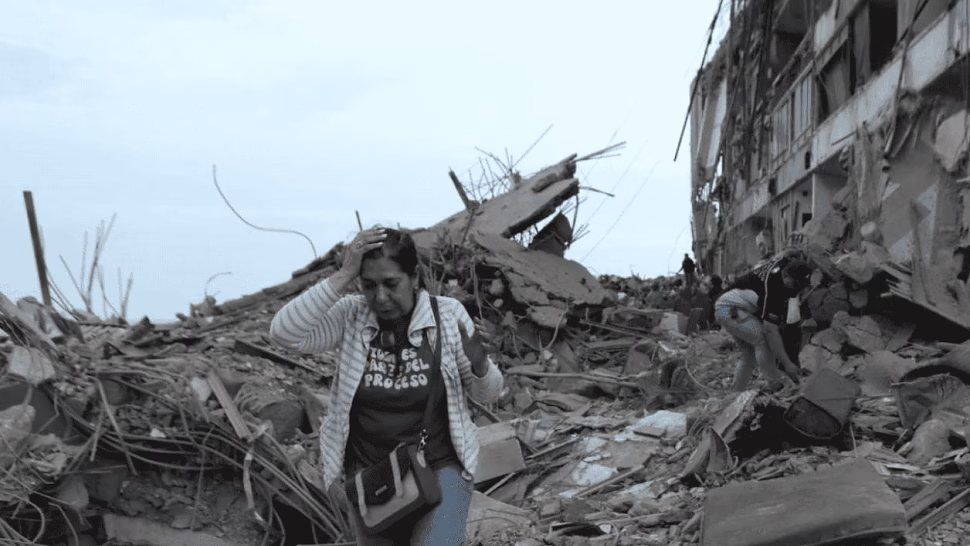
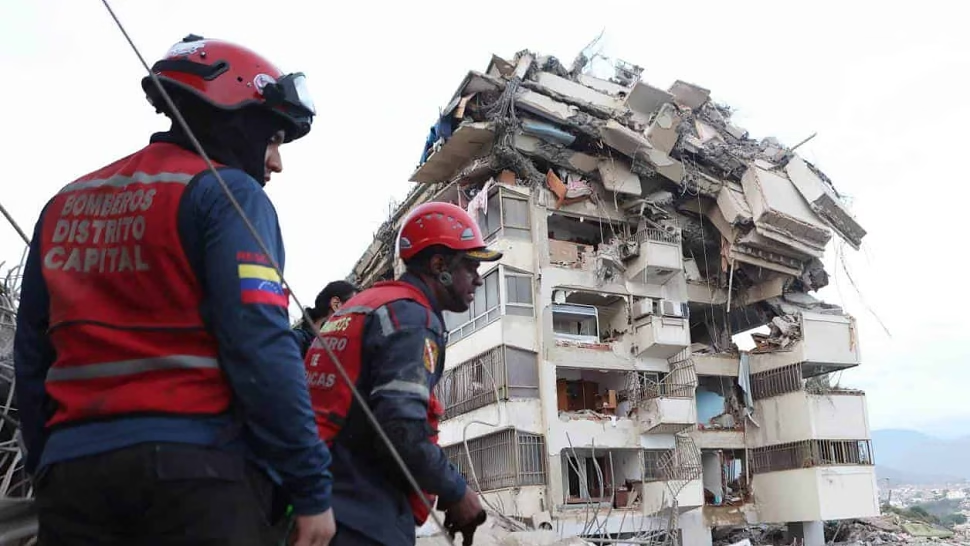
The president of the National Assembly, Jorge Rodríguez, updated the balance of the two earthquakes that shook the country. So far there are 1,430 deaths and 3,238 injuries. Search and rescue efforts continue in the most affected areas.

Rodríguez specified that 3,142 families were affected and are being cared for in shelters distributed in the seven affected states. In addition, 430 aftershocks of the earthquakes have been recorded.

According to the open online platform, the missing number 50,947. The official, brother of interim president Delcy Rodríguez, reiterated the call to citizens not to enter La Guaira and deposit their aid in authorized collection centers.

Continue reading

La Guaira: smell of decomposition and slowness in rescues after earthquakes

After 72 hours of the earthquakes, activists report unrecovered bodies and little official response.

La Guaira: 72 hours after the earthquakes

In Caraballeda, a residential area of La Guaira, the smell of decomposition was clearly perceived on Friday night. The first 72 hours after the earthquakes had passed, a key period for life rescues.

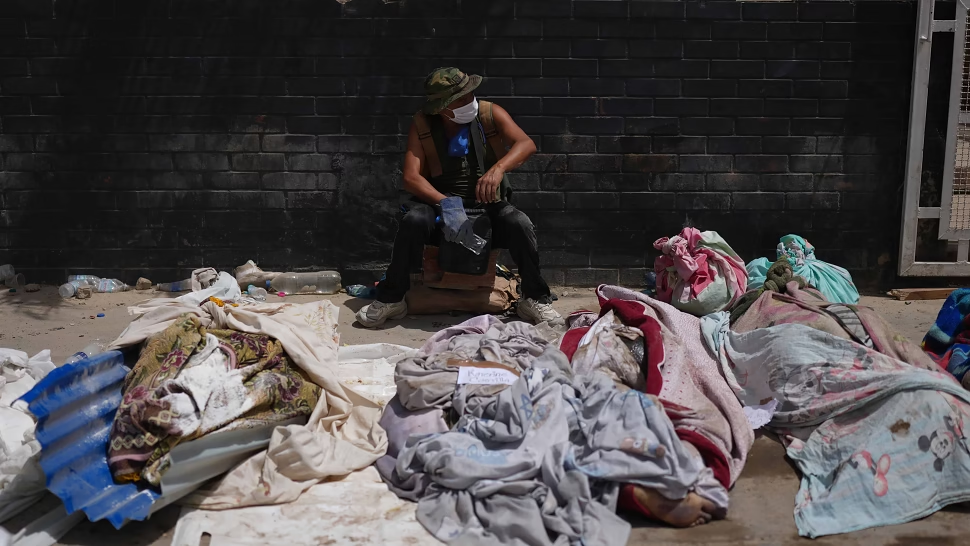
Activists from Provea, the oldest human rights NGO in Venezuela, confirmed to ANSA that during a tour of that area “we smelled decomposition (a sign of unrecovered bodies under rubble).” In addition, they pointed out that “there are few body recovery units.”

72 hours after the two earthquakes that devastated the region, activists observed “bodies that have not yet been transferred with dignity.” They recalled that “the State has the obligation to guarantee dignified recovery operations for each victim and their families.”

The earthquakes, magnitude 7.2 and 7.5, occurred consecutively this Wednesday, according to the United States Geological Survey (USGS). The epicenter was located in Yaracuy, about 300 km west of Caracas, but La Guaira, just 30 km from the capital, suffered the greatest structural impact.

The head of Humanitarian Affairs of the UN, Tom Fletcher, estimated that more than 50,000 people were missing. Journalists and observers indicated that the majority is concentrated in La Guaira, where images on networks show numerous lifeless bodies.

Journalist León Hernández, who was in La Guaira on Friday, told ANSA: “I was there… there are really thousands. This Friday night the key 72 hours for rescues were completed.” He added that “in many collapsed buildings, only civil servants and volunteers have been in charge of continuing to rescue people.” He explained that “the damage is of enormous proportions, thousands of victims. I saw complete buildings from which only one person was taken alive.”

This Saturday, interim president Delcy Rodríguez said that seven states were affected, but that the catastrophe hit La Guaira. The government reported the sending of machinery and military personnel, and the closure of access to La Guaira since Friday night, justifying it for reasons of order and security. However, local activists and journalists question the prioritization and insufficient response in the first 72 hours.

Thousands of victims remain in makeshift shelters or on the streets for fear of aftershocks. The combination of debris, heat (up to 40°C) and unrecovered bodies creates an increasing health risk. The families demand transparency in the figures, dignified access to the bodies and a state response in line with the scale of the catastrophe.

Continue reading

La Guaira: 72 hours of uncertainty after the earthquakes

The smell of decomposition and few rescue teams mark the area most devastated by the earthquakes.

Rescues in La Guaira: 72 hours of uncertainty

72 hours after the two earthquakes that shook northern Venezuela, the La Guaira area faces a humanitarian crisis. Activists from Provea, the country’s oldest human rights organization, report the smell of decomposition and few body recovery units.

“We smelled decomposition—a sign of unrecovered bodies under rubble—and there are also few body recovery units,” they told ANSA after a tour of the area.

The earthquakes, magnitude 7.2 and 7.5 according to the USGS, occurred consecutively. The epicenter was located in Yaracuy, 300 km from Caracas, but La Guaira, just 30 km from the capital, suffered the greatest structural impact. The UN, through Tom Fletcher, estimated that more than 50,000 people were missing.

Journalist León Hernández, present on Friday, described the magnitude of the tragedy:

“I was there… there are really thousands. This Friday night the key 72 hours for rescues were completed. In many collapsed buildings, it has been only civil servants and in many cases volunteers in charge of continuing to rescue people.”

He added that thousands of victims were left in makeshift shelters or on the streets for fear of aftershocks. Temperatures reach 40 degrees Celsius, combining debris and unrecovered bodies, creating a growing health risk.

Interim President Delcy Rodríguez reported damage in seven states, but the tragedy is concentrated in La Guaira. The government announced the sending of machinery and closing access from Friday for order and security. However, activists question the insufficient response in the first critical hours.

The families demand transparency in the figures, dignified access to the bodies and a state response in line with the catastrophe. The search efforts continue, but the slowness and scarce official presence mark the panorama in this coastal region.

Continue reading