Finding of a New Species in the Heart of Mexico City
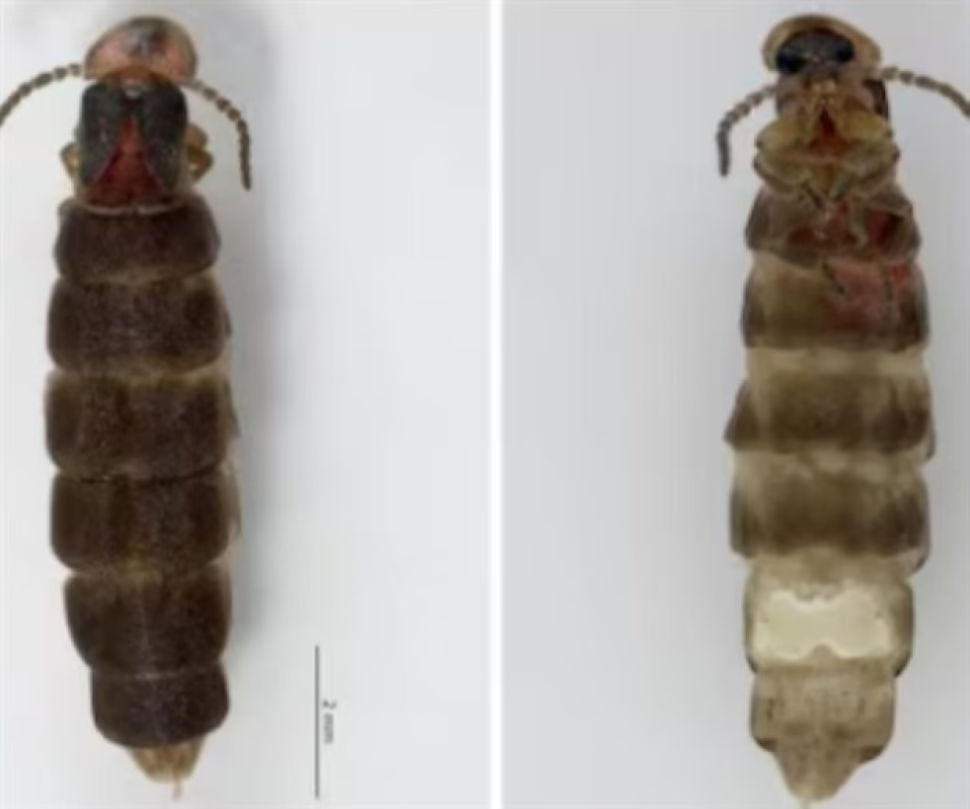
The Ministry of the Environment (Sedema), in an inter-institutional collaboration with the General Directorate of Coordination of Environmental Policies and Culture, the Digital Agency for Public Innovation (ADIP) and the National Autonomous University of Mexico (UNAM), has officially announced the discovery of a new species of firefly (Lampyridae) within the ecosystem of the Chapultepec Forest. This significant finding underlines the biological richness that persists in urban areas and reinforces the importance of environmental conservation.
The discovery occurred by chance on September 2, 2024, within the framework of a BioBlitz, an intensive biodiversity observation and recording event. During this activity in the first section of the forest, UNAM researchers detected a light flash pattern that did not coincide with those of known species. The subsequent laboratory analysis, which included the examination of morphological and probably ethological characteristics, confirmed that it was a taxon not described by science, belonging to the genus Photinus.
The public announcement was made at a press conference titled “Mexican women who illuminate us: let’s name a new species of firefly,” held at the Museum of Natural History and Environmental Culture. This approach not only highlights the discovery itself, but frames it in a context of historical and cultural recognition.
A Participatory and Inclusive Naming Process
In an unprecedented exercise of citizen participation and scientific dissemination, the authorities have decided that the scientific name of this new firefly will be chosen through a public vote. The initiative seeks for citizens to take ownership of the discovery and, at the same time, pay tribute to the legacy of Mexican women whose work has been fundamental in various fields of knowledge and culture.
The participation mechanism is accessible and available on the digital platform plazapublica.cdmx.gob.mx/luciernaga. The process requires simple registration to ensure voting transparency. Participants can consult the detailed profiles of the five proposed candidates before casting their vote. The voting period will be valid from September 26 to October 5, 2025.
Profiles of the Candidates for Scientific Immortality
The proposed scientific nomenclature for each of the candidates follows the standard protocol, adding a Latin suffix to the genus Photinus. The options represent a diversity of contributions to the history of Mexico:
Irene Elena Motts Beal (Photinus irenemottsae): Biologist, teacher and author of French origin who settled in Mexico since 1896. She is recognized as one of the pioneers in the pedagogy of biology in the country, contributing decisively to the creation of natural science textbooks for all educational levels, laying the foundations of modern scientific education in Mexico.
Magdalena Cervantes Castañeda (Photinus cervantesae): Tepehuana educator from Huajicori, Nayarit, distinguished for implementing an innovative teaching methodology. Their work empowers their students, encouraging them to become tutors and delve deeper into their areas of interest. In addition, it actively promotes pride in the Tepehuana language and culture among new generations, strengthening community identity.
Malinalli Tenepal (Photinus malinalliae): Known historically as La Malinche, she was a crucial figure in the period of the Conquest. Equipped with an exceptional command of languages, she acted as translator, interpreter and diplomatic strategist. Her role as a mediator between cultures was decisive in the configuration of the alliances that defined the course of Mesoamerican history, representing the complexity of the encounter between two worlds.
Maria Sabina (Photinus mariasabinae):
Renowned Mazatec healer and wise woman from Huautla de Jiménez, Oaxaca. Her deep knowledge of traditional medicine and the ceremonial use of sacred mushrooms made her a global icon. His legacy has inspired numerous research in ethnomycology and psychotherapy, facilitating a unique dialogue between indigenous ancestral knowledge and contemporary science.
Rosario Castellanos (Photinus rosariocastellanosae): One of the most influential literary voices of the 20th century in Mexico. Poet, narrator, essayist and diplomat, her work acutely addresses topics such as identity, the oppression of indigenous peoples and the condition of women. His work constitutes a profound social criticism and a fundamental pillar of Mexican literature.
Implications of the Discovery and the Initiative
The discovery of this new species of beetle in a space as emblematic and busy as Chapultepec is a powerful reminder that urban biodiversity still holds secrets to be revealed. Fireflies, in addition to their aesthetic value, are bioindicators of the health of an ecosystem; Its presence indicates favorable environmental conditions, with low light and soil pollution. This finding validates the conservation and ecological restoration efforts carried out in the forest.
The strategy of involving the public in choosing the name is a success in terms of science communication. It transforms a technical act, such as the description of a new species, into a collective cultural experience. By linking the name to female historical figures, the underrepresentation of women in scientific nomenclature is partially corrected and the public is educated about their contributions, generating an emotional and intellectual link between the community, its natural heritage and its historical heritage.
This process sets a precedent for future discoveries, demonstrating that science can be participatory, inclusive and a vehicle for gender equality and cultural recognition. The final name will not only identify this firefly in scientific literature forever, but will perpetuate the legacy of an exceptional woman, symbolically lighting the way for future generations.
Would you like one of these pioneering women to name this scientific discovery?Share this news on your social networks so that more people know about this unique initiative and participate in the vote. Explore more content on Mexican biodiversity and conservation projects in our environment section.