A vehicle fleet that smells like old exhaust
Mexico moves with trucks and buses that are, on average, 19 years old. That is almost double that in the United States and Canada, where the fleet is around a decade old. Even Brazil surpasses us, with an average of 12 years.
Only Peru beats us in old age, with units of 20 years. This fact is not a curiosity: it is the perfect recipe for more pollution, more mechanical failures and less safety on the roads.
A plan that smells new… but is it enough?
In late March, the federal government launched a program to try to rejuvenate this outdated park. The idea is simple: give tax benefits to those who buy heavy vehicles made in Mexico and put obstacles on the import of used trucks from the United States.
Rogelio Arzate, president of Anpact, explains it by comparing:
“Well implemented public policies, which help comply within the regulatory perspective of standards, environment and road safety, allow vehicle fleets to be of better quality.”
The core of the program is accelerated depreciation. Now, when purchasing a new truck, you can deduct up to 86% of its value in taxes during the first year. Before it was 25% annually for four years. It is not a check from the government, it is a tax relief to generate liquidity.
Guillermo Rosales, from the Mexican Association of Automotive Distributors, puts his finger on the sore spot by pointing out our main burden:
“Brazil is an important producer… and there is no introduction of used vehicles into its vehicle fleet. This burden that we face in Mexico contributes to obsolescence.”
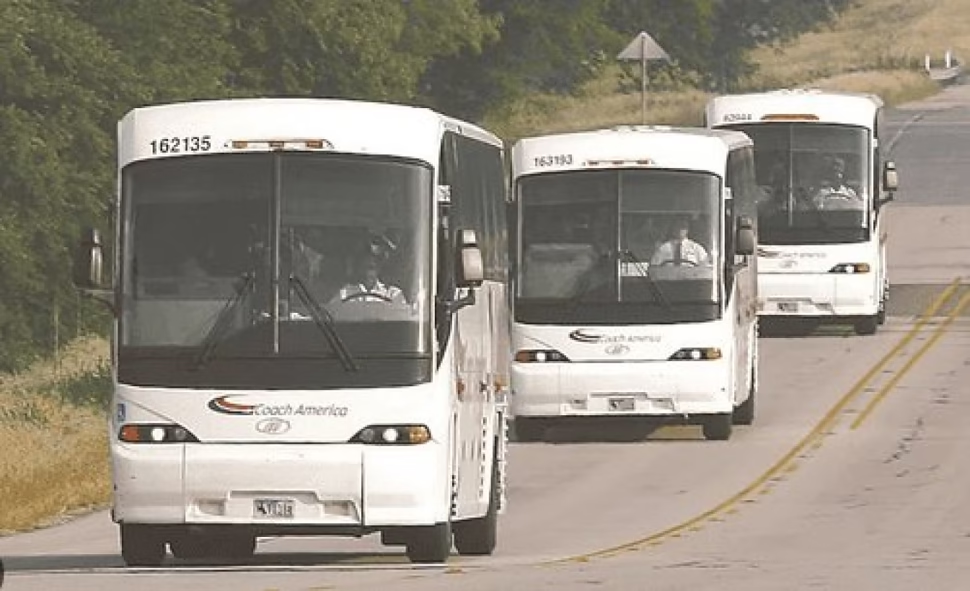
In border cities it is common to see used buses making urban or school routes. The program seeks to stop this practice and stop the collapse in sales: 46% last year and 18% in the first quarter of this year.
The stated goal is clear: newer units, cleaner technologies and safer streets. The real question is whether a tax incentive will be enough to change two decades of inertia.