The warning that comes from the Caribbean
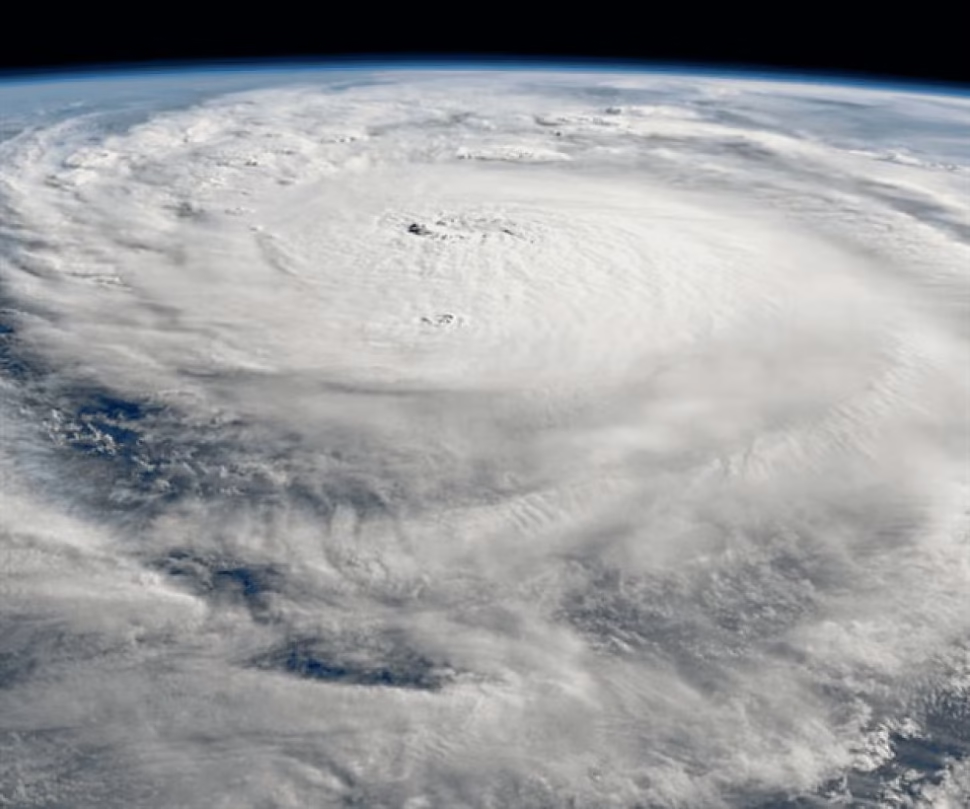
In Mérida, during the International Hurricane Seminar, experts released a piece of information that makes noise. Based on historical records, at least five tropical cyclones could make landfall in next year’s hurricane season.
It’s not an official prediction yet—that will come in April—but the numbers speak for themselves. Fabián Vázquez Romaña, coordinator of the National Meteorological Service, made it clear: we must prepare.
“Historical records between 1964 and 2025 show a constant incidence,” explained Vázquez Romaña.
The pattern is clear: an average of three cyclones hit the Pacific coast and two in the Atlantic each year. The math doesn’t lie, and by 2026 the count could be similar or higher.
Beyond the numbers
What really matters is what we do with this information. The specialist highlighted the urgency of strengthening prevention measures before the season starts in June.
And there is something else: they are developing new technological tools to improve monitoring. In his words, this will allow “more precise models to anticipate trajectories and risk areas.”
In other words, it’s not just about knowing how many are coming, but where and with what force. Because in the end, what counts are the real families on the coasts, the businesses, the schools. The geopolitics of the climate are written house by house.
The key meeting with Civil Protection will be in April. There the official perspectives for both basins will be defined. Until then, the warning is on the table. And the clock is already ticking.