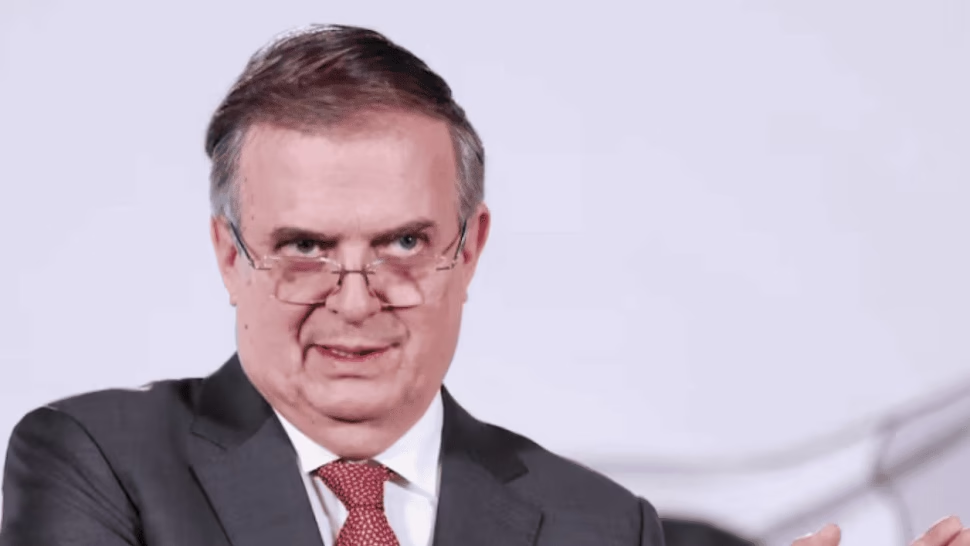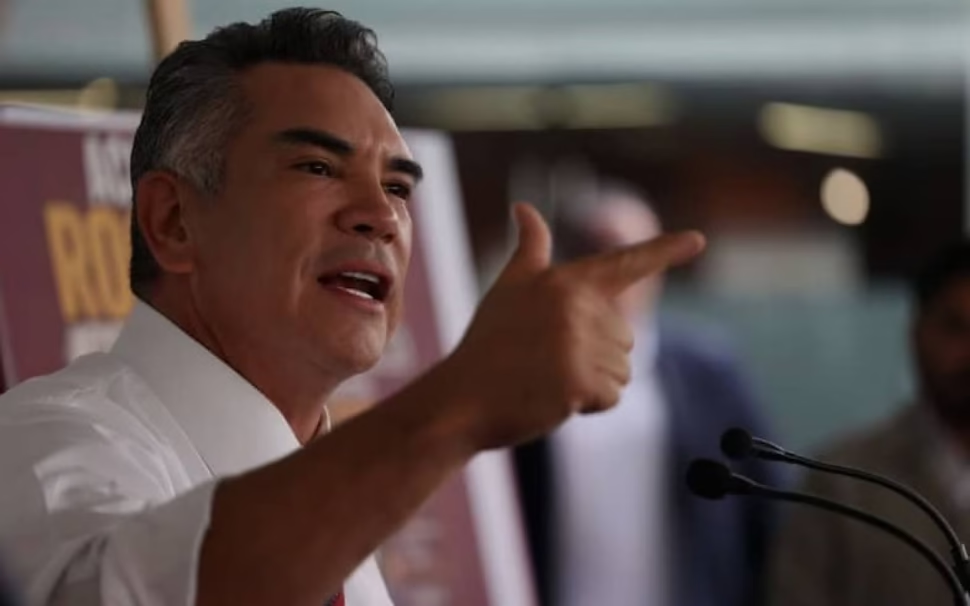
PRI accuses Morena of links to organized crime

The PRI leader launches serious accusations against Morena for alleged criminal ties.

The national leadership of the PRI intensified its attack against Morena by pointing out alleged links of the ruling party with criminal groups and possible investigations in the United States.

Accusations of Alejandro Moreno

During the XLIII Plenary Meeting of COPPPAL, Alejandro Moreno stated that there are elements that could lead to international actions. The PRI leader maintained that Morena could be considered one:

“terrorist organization that finances organized crime”

He pointed out alleged irregularities in electoral processes in Sinaloa, Tamaulipas and Tabasco.

RelatedAlejandro Moreno denounces harassment by Morena and reaffirms the permanence of the PRI

Moreno also mentioned journalistic versions of alleged investigations by US authorities against Morena politicians. He assured that some party actors would be providing information to agencies in that country, which, he said, anticipates new investigations.

The leader stated that for more than five years he has filed complaints in Mexico and before international organizations for alleged illegal acts by Morena officials, including cases of fiscal huachicol and possible links with organized crime. He assured that these complaints are beginning to have repercussions outside the country.
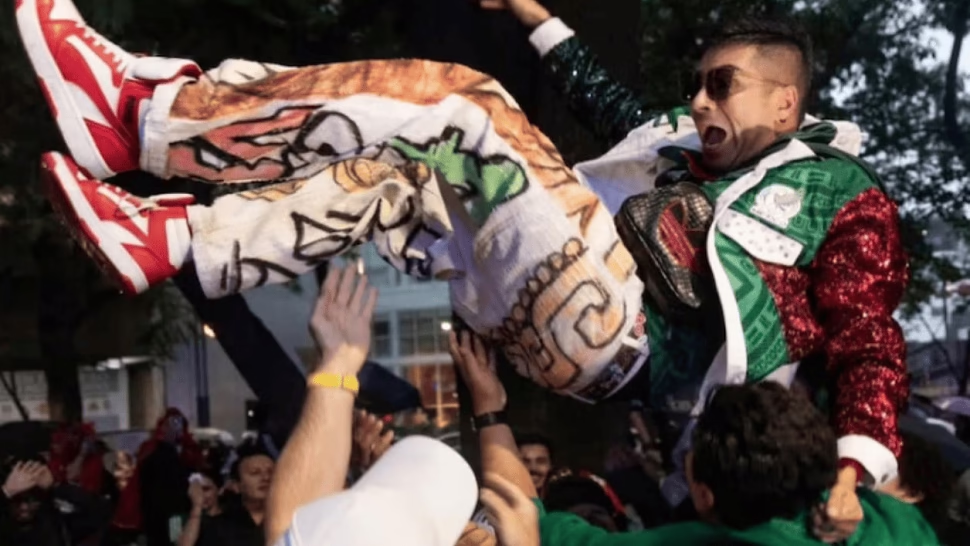
IMSS treated 54 hospitalized during the Soccer World Cup

IMSS treated 54 hospitalized during the World Cup, three foreigners from Taiwan, the US and Morocco.

IMSS medical care during the World Cup

From June 2 to 30, the Mexican Social Security Institute (IMSS) treated 54 people who required hospitalization through its medical network prepared for the Soccer World Cup. Of that total, 10 were not beneficiaries and three had foreign nationality: Taiwan, the United States and Morocco.

On June 2, Social Security installed its Central Command to coordinate medical care for fans and players, with 253 medical units available, focusing on the three host cities. That day, the director of the Institute, Zoé Robledo Aburto, noted:

“The Health sector was prepared with this risk management approach, of being attentive to an eventuality and the massive arrival of people who could increase the high care needs in units, especially in Emergency services.”

The Institute also applied triage to determine risks in each match played in Mexico City, Guadalajara and Monterrey, with a daily monitoring report of adverse events. Dr. Janett Alvarado González, coordinator of Special Health Projects at the IMSS, explained:

“An operational alert traffic light was established to classify health service requirements into four categories, from green (usual operation without incident) to red alert due to massive casualties, hospital impact, critical interruption or major emergency, in order to carry out the necessary institutional deployment.”

The Central Command was installed in the Virtual Center for Emergency and Disaster Operations (CVOED) of the IMSS, described as a key piece to receive, integrate, analyze and process information from medical units in real time during crises, emergencies and disasters, and now also during the development of the World Cup.

Continue reading

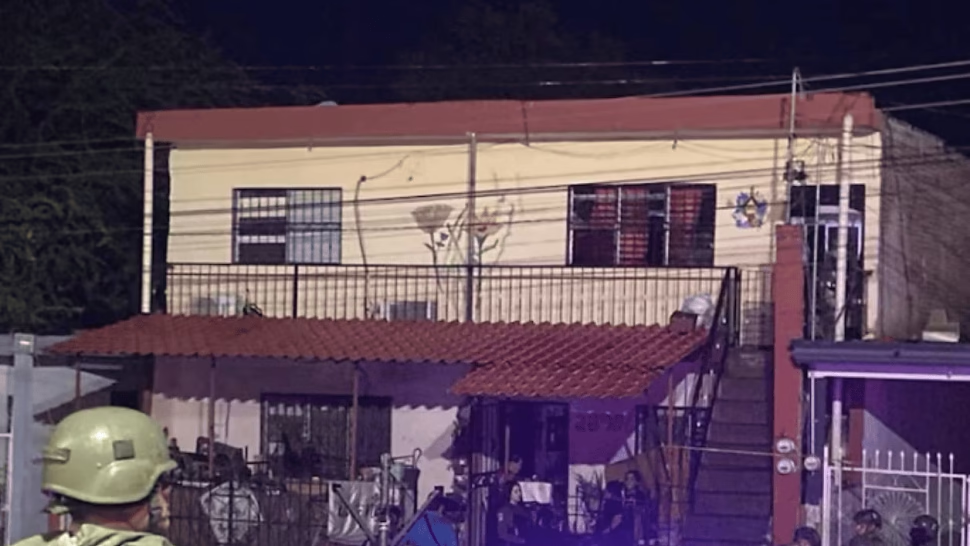
Culiacán begins July with four violent homicides

Four people lost their lives in different armed attacks in Culiacán on the first day of July.

Culiacán: four homicides on the first day of July

The capital of Sinaloa started the seventh month of the year with four homicides in different parts of the city. In all cases, the victims were attacked with a firearm.

The first incident occurred in a taqueria in the Barrancos sector, to the southeast. Jorge “N”, 44, was having dinner at the restaurant when he was shot and died at the scene. A waiter was injured by shrapnel in the leg and was treated by Red Cross paramedics.

Shortly after, in an apartment in the Emiliano Zapata neighborhood, Jesús “N”, 23 years old, was also killed by multiple gunshots. The attackers fled and have not been located.

In front of a secondary school in the Villa Bonita subdivision, authorities found the body of a young man wrapped in plastic and with bullet holes. His identity is still unknown.

The fourth case was recorded on the side of the Culiacán-Eldorado highway, in the Costa Rican administration. Relatives identified the victim as Raúl Francisco “N”, 18 years old, a resident of the area.

The events have generated concern among residents, who demand greater security and concrete actions from the authorities to stop violence in the region.

Continue reading

Ebrard: Mexico must address claims from the US and Canada regarding TMEC

Mexico must address complaints from the US and Canada about the USMCA, says Ebrard.

Concerns at the trilateral table

Marcelo Ebrard, head of the Ministry of Economy, stated that Mexico must respond to the concerns of the United States and Canada regarding the USMCA. The country still depends on others in sectors such as pharmaceuticals, electronics and artificial intelligence.

“The Treaty has probably been the most successful in the world, but they have legitimate concerns. If we want it to remain in force and expand, we must address them and look for spaces for cooperation,” he declared during the morning conference on July 2.

Dialogue to maintain certainty

Ebrard recalled that the three countries agreed to maintain the USMCA until 2036. He explained that the dialogue has been built with arguments, information and patience, as President Claudia Sheinbaum has instructed. “One of our main objectives was for the United States not to withdraw from the Treaty,” he said.

The secretary mentioned that Donald Trump has proposed modifying or canceling the agreement, so annual reviews will be key. “My task is for these revisions to be successful and not affect the content of the Treaty,” he said.

Ebrard highlighted the importance of the trilateral relationship: “Mexico is the United States’ main client. They have a strategic interest in our doing well. Reporting our progress on their concerns limits the scenario for the review.”

President Sheinbaum highlighted that the peso remained stable after the virtual meeting, trading at 17.54 per dollar. “There was no nervousness about the Mexican economy,” he said.

Continue reading