The climb that nobody wanted to see
What for years was a proxy war in Syria, Lebanon or Yemen, transformed this Thursday into something much more dangerous: a direct confrontation. Iran launched a new wave of attacks against Israel and US bases. The response was not long in coming.
The United States and Israel had already bombed Iranian territory, targeting military facilities and the nuclear program. The cycle of action and retaliation accelerated alarmingly. Now, the tension has a new epicenter: the sea.
Iran’s government called the action an ‘atrocity’ and warned that the United States will regret its decisions.
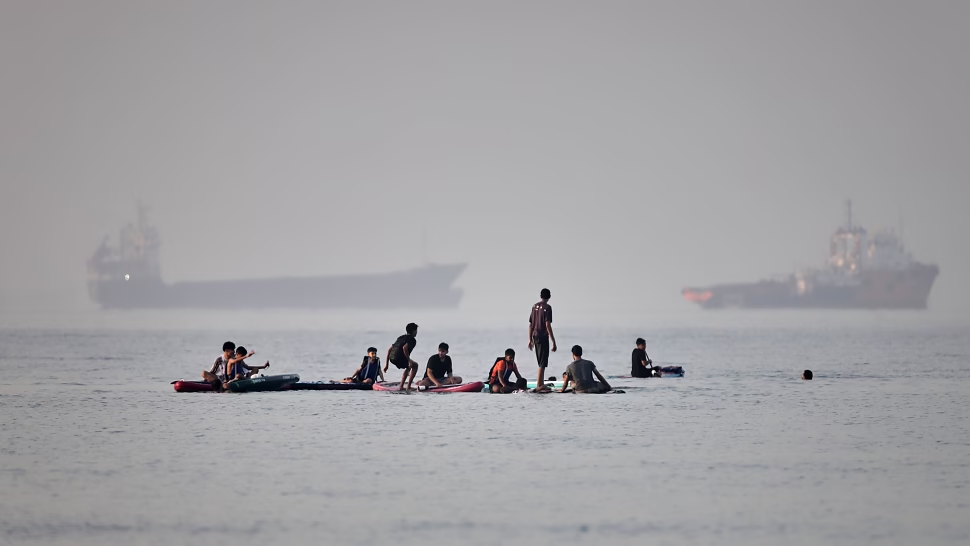
The sinking of an Iranian frigate by the US Navy near Sri Lanka, with dozens of deaths, marks a point of no return. It’s not a cyber attack or a mysterious explosion at a facility. It is an act of conventional war in international waters.
The image of the boy next to the unexploded shell in Qamishli, eastern Syria, is the perfect symbol. The shrapnel of this conflict is already embedded in the ground, ready to explode. The families of the region live again with their eyes fixed on the sky, wondering what will fall tonight.
The historical precedents are gloomy. Every time regional powers measure each other directly, the results are catastrophic and last for decades. Official speeches talk about ‘proportional responses’ and ‘legitimate defense’, but in the countryside only craters and fear remain.
The question now is not if there will be more attacks, but when and where. And, above all, who will be the next to cross another line that already seemed blurred.