Pharmaceutical investment of 21 billion pesos promotes Plan México

Pharmaceutical companies allocate 21 billion pesos for production and export in Mexico.

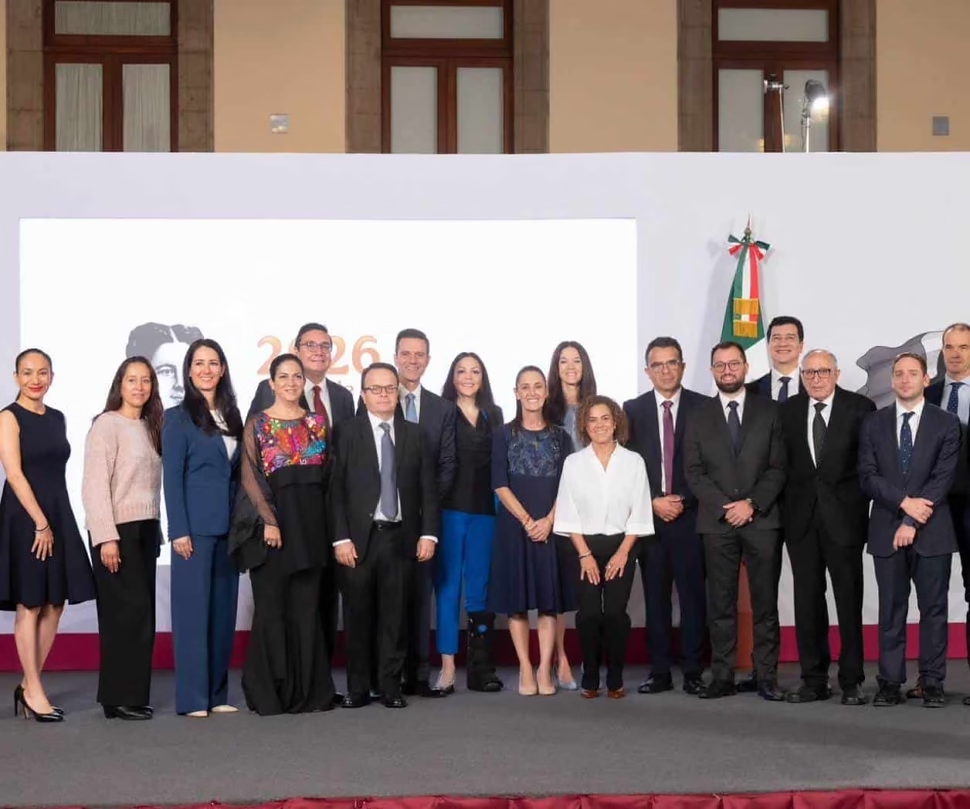
President Claudia Sheinbaum announced an investment of 21 billion pesos by pharmaceutical companies as part of Plan Mexico. The objective is to increase the production of medicines, strengthen the industry and diversify exports.

“There are more than 21 billion pesos of drug production in Mexico, also linked to clinical research. As you know, the objective of Plan Mexico is to produce more in Mexico than we consume in Mexico and also to allow us to export to other countries,” he said at the morning conference.

The Secretary of Health, David Kershenobich, highlighted that these projects encourage industrial development through national pharmaceutical production.

RelatedPharmaceutical industry will invest 12,250 million pesos in Mexico

Announced investments

  • ABBOTT: 3,500 million pesos for a new facility in Querétaro. It will generate 1,200 jobs by 2030, focused on medical devices for the diagnosis of cardiac disorders.
  • Bristol Myers Squibb: 1,000 million pesos for clinical research and local manufacturing of innovative therapies. It will create 380 direct and 65 indirect jobs.
  • Neolpharma Group: 750 million pesos for three pharmaceutical raw materials plants in Toluca, with a capacity of 2,300 tons per year. It will generate 250 direct and 900 indirect jobs.
  • Opella: 2,300 million pesos to expand its plant in Ocoyoacac, with a new line of Enterogermina®. It seeks to convert Mexico into a regional export platform. 50 direct jobs and 450 indirect jobs.
  • Vazol Farma (Kener Laboratories): 5,360 million pesos in three projects, including a biotechnology plant. They add to the 5,180 million pesos announced in July 2025. 220 direct and 550 indirect jobs.
  • Liomont: 4,000 million pesos for a new oral solids plant and expansion of biotechnological injectables and vaccines in Ocoyoacac and Cuajimalpa. 370 direct and 400 indirect jobs.
  • Sanofi: more than 2,000 million pesos to build an insulin plant that will cover 100% of patients. It already generates 900 direct jobs in its vaccine antigen plant.
  • Bayer: reported an advance of 33% of a previous investment of 3,000 million pesos, and announced an additional 150 million pesos for 10 clinical studies in public and private institutions.

These investments reinforce the country’s health sovereignty and export capacity, generating thousands of direct and indirect jobs.
Mayor of Temoac linked to homicides of activists

The Secretary of Security revealed a line of investigation that points to the former mayor.

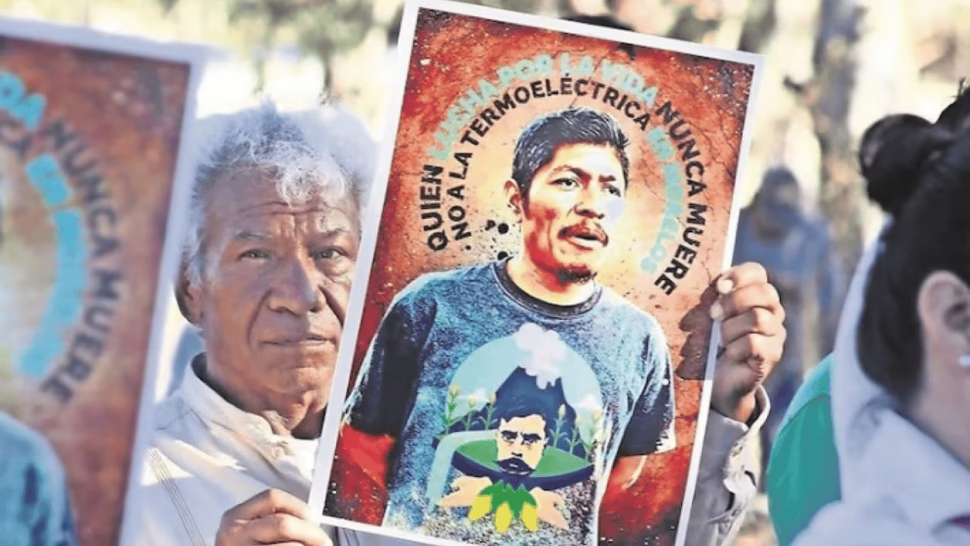
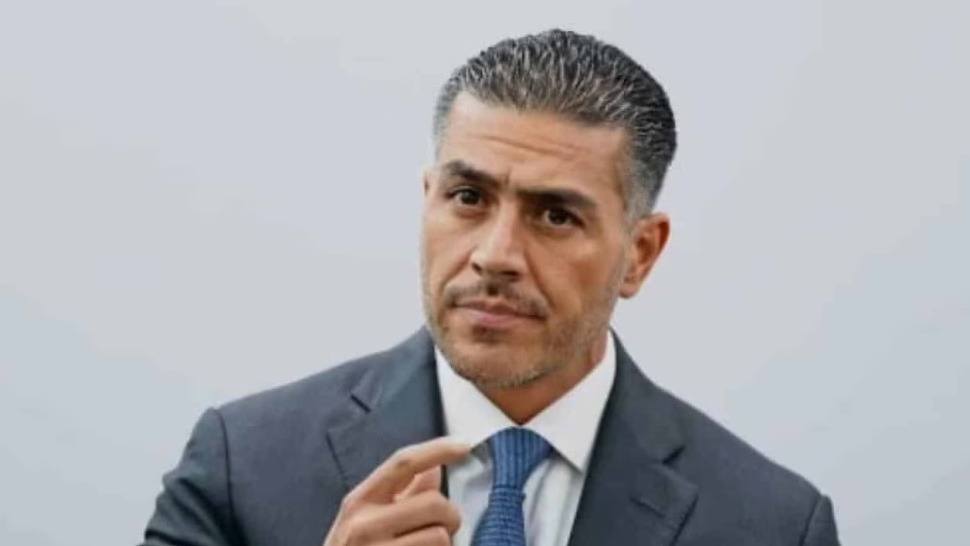
Omar García Harfuch, head of the Secretariat of Security and Citizen Protection (SSPC), reported that the deprived mayor of Temoac, Valentín Lavín Romero, was related to the murders of activists Samir Flores and Sandra Rosa Camacho Flores.

During the morning conference of President Claudia Sheinbaum in Cuernavaca, Morelos, García Harfuch explained that the line of investigation into the Samir Flores case is in charge of the Attorney General’s Office (FGR).

Investigation in progress

When asked about the number of people involved in the murder of the activist in 2019, the secretary pointed out:

“The line of investigation, specifically of these homicides, is carried out by the local Prosecutor’s Office.”

And he added:

“We, with the State Prosecutor’s Office and FGR, together with the National Intelligence Center, this was one of the lines and one of the crimes for which the mayor was being investigated, specifically for these two homicides.”

García Harfuch concluded that the local Prosecutor’s Office will provide more details in due course. The federal investigation focused on the former mayor as the alleged perpetrator.

Continue reading

UIF had already denounced those sanctioned by the US for links with CJNG

The FIU filed complaints before OFAC announced sanctions against 55 people and companies linked to the CJNG.

The Secretary of Security, Omar García Harfuch, reported that the Financial Intelligence Unit (UIF) had already filed complaints against the people and companies sanctioned by the United States for alleged links with the criminal group Jalisco Nueva Generación (CJNG).

In President Claudia Sheinbaum’s morning conference, García Harfuch detailed that the FIU integrated the investigations before the Office of Foreign Assets Control (OFAC) made the designations public.

“Yes, there were 55 subjects: 39 individuals and 16 legal entities. The FIU filed a complaint before the OFAC designation. The FIU had already reported these people,” he stated.

Coordinated actions

The head of the SSPC indicated that OFAC maintains communication with the FIU for these procedures. The sanctions announced by the Treasury Department are part of joint work between both governments.

The Treasury Department called the measures the largest financial offensive against the CJNG. The sanctions include alleged operators, family members and companies that, according to US authorities, protect and manage the organization’s assets.

Continue reading

Sheinbaum: FGR investigates fuel smuggling network with Ruffo Appel

Sheinbaum confirmed that the FGR is investigating a fuel smuggling network linked to Ruffo Appel.

President Claudia Sheinbaum affirmed that the Attorney General’s Office (FGR) continues the investigations against the former governor of Baja California, Ernesto Ruffo Appel, and the Ingemar company for alleged fuel smuggling.

From Cuernavaca, Morelos, during his morning conference, Sheinbaum pointed out that the case involves more companies. “There are many others related to this company,” he said.

Investigation details

According to information published by EL UNIVERSAL, the FGR identified 11 companies that are part of the Ingemar smuggling network, where Ruffo Appel appears as a partner. The report indicates:

“According to the criminal case, the companies participated in fuel trafficking with Ingemar. Four of them are recipients: to whom the hydrocarbon was delivered, stored and marketed. The commercial entities simulated acts to justify the transfer of ownership of the oil products and their illegal distribution.”

Sheinbaum explained that the investigation took a year due to the complexity of the network. “Not only are these tankers that crossed the border without declaring the amount of diesel they were bringing, but there are many others related to this company that also did so,” he stressed.

The president added that the FGR is investigating how fuel was stored and distributed to gas stations, which involves more businessmen and companies linked to smuggling.

Sheinbaum stressed that the FGR keeps the investigation open to clarify all responsibilities.

Continue reading