The app that now also distributes health
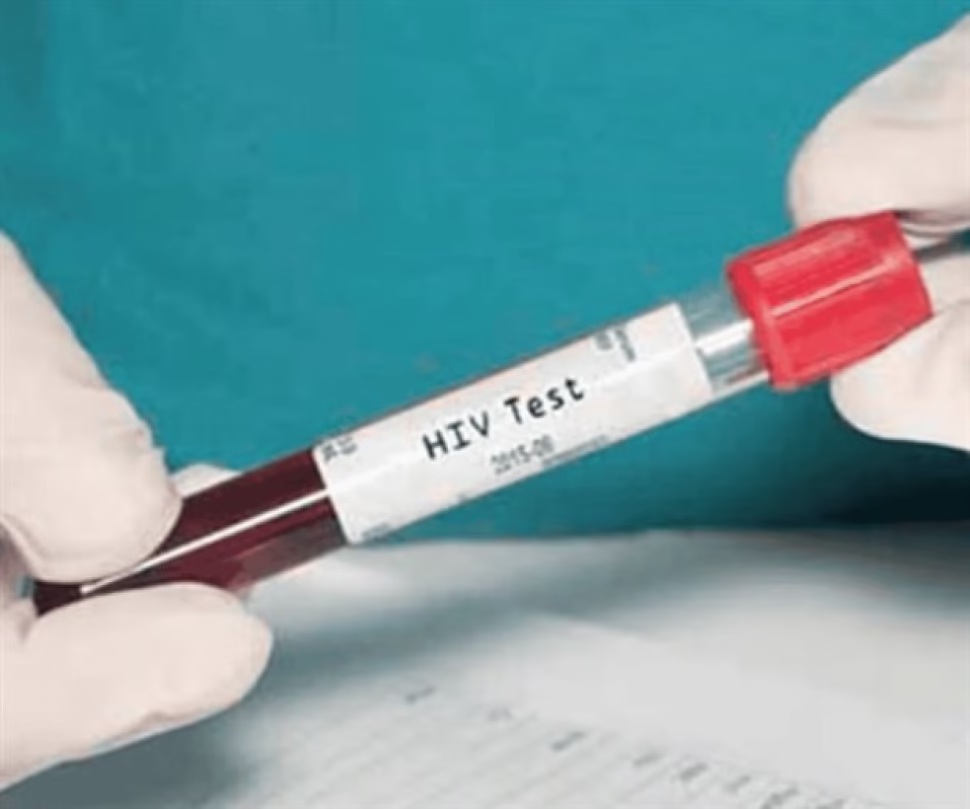
Grindr, that platform that we all know for other reasons, has just chosen Mexico for an interesting experiment. And necessary. Launches a pilot program of completely free HIV self-test kits. They did it first in the United States. Now it’s our turn.
The key cities will be Puerto Vallarta and Guadalajara in Jalisco, and Yucatán. It is no coincidence: they are places with a high incidence of the virus. The application knows this. The data screams it.
What exactly does this digital kit bring?
It comes home discreetly. Includes real-time chat advice and direct link with public health services. If the result is reactive, you are referred to confirmatory tests. If you are a candidate for PrEP (that pill that prevents infection), you are referred to the appropriate services. There is also emotional support. Because news like this never comes alone.
“Stigma and structural barriers continue to limit access to testing,” Grindr said in its statement.
That’s the crux of the matter. Fear, discrimination, bureaucracy… all of this keeps people away from health centers. A discreet little box in your mailbox can bypass many of those obstacles.
The justification for why Mexico is compelling: Latin America is one of the two regions where the incidence of HIV has grown since 2010. About 17 thousand new cases are registered here every year. They are official figures, which always know little.
“Digital platforms have a very important role to play in expanding access to HIV testing, especially among populations that face stigma,” said Alicia Piñeirúa Menéndez, a specialist who collaborates with CISIDAT.
Precisely, the collaboration with the Public Health Research Center (CISIDAT) gives an institutional veneer to the project. Mohan Sundararaj, CEO of Grindr for Equality, said it clearly:
“Expanding this model to Mexico, in collaboration with a prestigious institution like CISIDAT, allows us to take advantage of that momentum.”
Translation: they need local allies with credibility for this to work and not be seen as just another advertising campaign.
It’s curious. An application designed for meetings now distributes tools to take care of yourself before and after. The irony is almost perfect. But if it works to break the stigma and lower those stubborn numbers, any help is welcome.