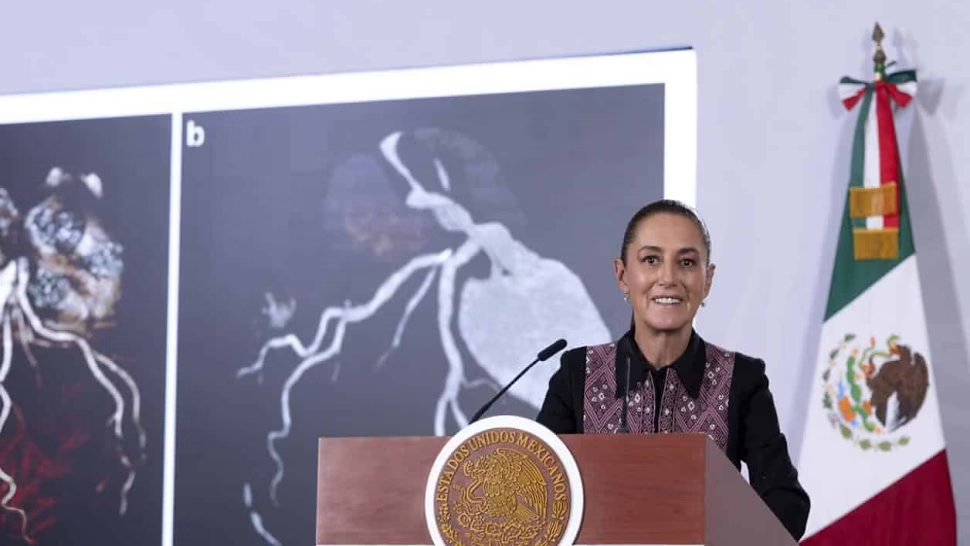
Start of the National Winter Vaccination Campaign 2025-2026
The arrival of multiple cold fronts to Mexican territory starting in September has marked the formal start of the 2025-2026 winter season. This meteorological phenomenon constitutes a significant epidemiological risk factor, since it promotes favorable environmental conditions for the circulation and transmission of various pathogenic agents that affect the respiratory system. In response to this situation, health authorities have implemented a structured prevention strategy based on scientific evidence.
With the fundamental objective of strengthening herd immunity during the winter season, the federal Secretary of Health has launched the National Winter Vaccination Campaign 2025-2026. This public health initiative has the main purpose of protecting the population against acute respiratory infections and preventing serious complications, as well as containing massive epidemiological outbreaks caused by the influenza viruses, SARS-CoV-2 and the bacteria Streptococcus pneumoniae (pneumococcus). The application period of this immunization campaign began on October 24, 2025 and will extend until April 3, 2026, with vaccines available for free in all public sector medical units.
Target population and vaccination coverage goals
In accordance with the technical guidelines established by the Secretary of Health, biologicals against influenza, pneumococcus and COVID-19 have as a priority population those demographic groups with greater biological vulnerability or occupational exposure. The target population identified by epidemiology specialists specifically includes:
Girls and boys under five years of age, whose immune system is developing; people aged 60 years and over, who frequently present immunosenescence and associated comorbidities; individuals with underlying chronic diseases that compromise their immune response, and health personnel with high occupational exposure. Additionally, pregnant people are considered, with the exception of the biological against pneumococcus, due to the transfer of maternal antibodies to the fetus.
Doctor Enrique Alcalá Martínez, coordinator of Medical Programs in the Area of Vaccine-Preventable Diseases, provided precise data on the sectoral immunization goals for the 2025-2026 cycle. The projections establish the objective of applying 35.4 million doses against influenza and 10.9 million doses against COVID-19. The specialist emphasized the relevance of receiving these vaccines within the period established by the campaign, since this timing coincides with the maximum viral circulation and represents the most effective opportunity to prevent and reduce the incidence of cases that evolve into serious forms, as well as the complications associated with these pathologies in the most susceptible population segments.
Institutional articulation of the National Health System
It is important to highlight that the execution of this vaccination campaign involves the coordinated participation of all the institutions that make up the National Health System, which guarantees extensive and accessible coverage throughout the national territory. Participating entities include: the federal Ministry of Health, the Mexican Social Security Institute (IMSS), the IMSS-BIENESTAR program, the Institute of Security and Social Services of State Workers (ISSSTE), the health system of Petróleos Mexicanos (Pemex), the medical services of the Secretary of National Defense and the Secretary of the Navy, as well as the Ministries of Health of the federal entities and the National Center for Child and Adolescent Health (CENSIA). This inter-institutional coordination reflects a comprehensive approach to face the public health challenges that the winter season represents.
The implementation of this vaccination strategy represents a public health intervention based on the precautionary principle and the accumulated scientific evidence on the effectiveness of immunization to reduce morbidity and mortality associated with seasonal respiratory infections. Coordination between different levels of care and the precise definition of priority groups maximizes the impact of available resources and contributes significantly to community protection.
Share this crucial information on your social networks to help more people know the details of the winter vaccination campaign and protect their health. Explore more content related to prevention and health care in our specialized section.