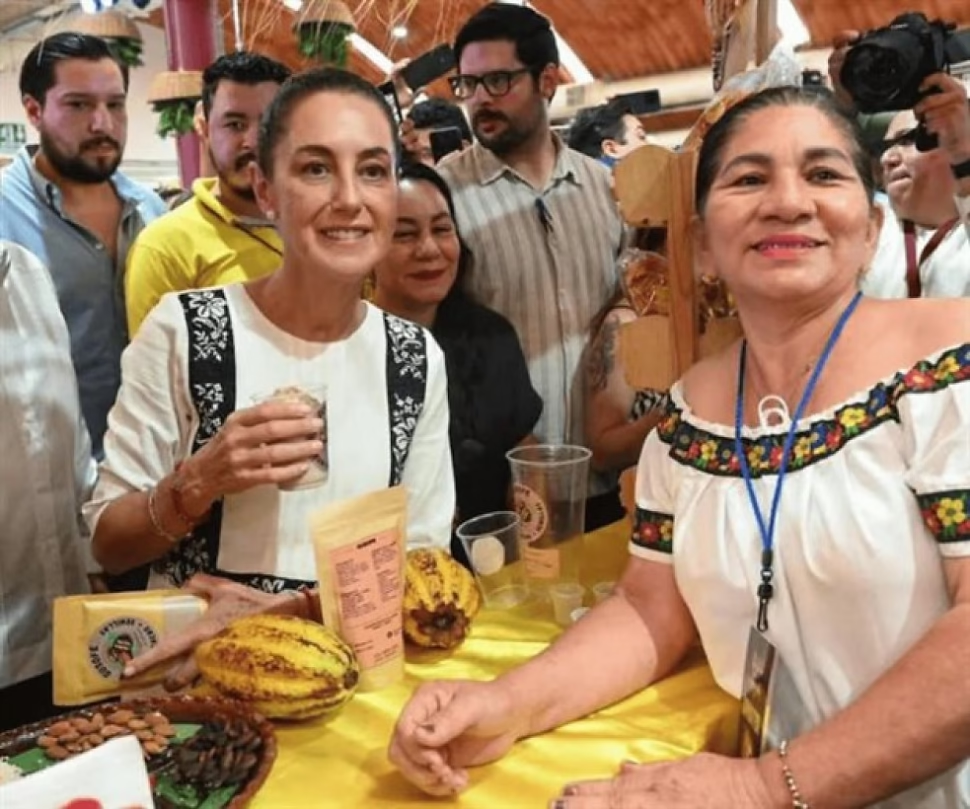
Analysis of the Bienestar Chocolate Plant Project in Tabasco
President Claudia Sheinbaum Pardo has officially announced the construction of a Chocolate Bienestar processing plant in the municipality of Comalcalco, Tabasco. This project, which represents a federal investment of 80 million pesos, constitutes a strategic initiative designed to strengthen the cocoa value chain in its region of origin. The main objective is to establish a marketing mechanism that guarantees fair prices for local producers, thus avoiding intermediaries and promoting the primary processing of the grain.
The announcement was made in the context of the 14 Tabasco Chocolate Festival 2025, where the president explained that the initiative will be developed in direct collaboration with the cocoa communities. Sheinbaum Pardo emphasized that the preliminary work has already borne fruit, with the implementation of collective dryers that allow farmers to process their harvest in a community manner and sell it under more favorable market conditions, both in the private sector and for the government program Food for Wellbeing. The president also made reference to external criticism, pointing out that support for farmers will continue “despite the fact that some envious people do not believe that we are working closely with producers.”
Infrastructure and Government Alliances
The general director of Food for Wellbeing, María Luisa Albores, provided the logistical and financial details of the project. He reported that the government of the state of Tabasco will make a fundamental contribution by donating a two-hectare property for the construction of the plant. Albores described the work as an investment whose productive value will exceed the initial investment over the years, projecting it as a new emblem of identity for the people of Tabasco.
From an economic development perspective, the official argued that the plant is indispensable to consolidate a direct and equitable commercial relationship with small cocoa producers, ensuring their long-term benefit. In addition, a positive impact is expected on the tourism sector, since the new infrastructure will enrich the already established Cacao Route, allowing visitors to learn about the origin, culture and comprehensive production process of this ancestral crop.
Integration with National Programs and Future Vision
Governor Javier May expressed his support for the project, highlighting the synergy with other federal programs. He explained that the plant will use high quality cocoa from the agroforestry systems established by the Sembrando Vida program. This interconnection demonstrates a comprehensive agricultural policy where reforestation and food production are intertwined with local industrial development.
May categorized this work as a fulfilled commitment within the framework of the Fourth Transformation, emphasizing that it is a public policy promoted “from dialogue and commitment in favor of our land.” This approach suggests a governance model that prioritizes direct state intervention in the rural economy to modify traditional production and marketing structures, with the stated goal of empowering small producers and retaining a greater portion of the wealth generated within communities of origin.
This analysis concludes that the Chocolate Bienestar plant project transcends the mere construction of infrastructure. It stands as a case study on an economic intervention model that seeks, through targeted public investment, to reactivate an emblematic productive chain, promote gastronomic tourism and, ultimately, reconfigure the relationship between the primary sector and the market.
Do you find this type of investment in the agribusiness sector valuable?Share this news on your social networks to expand the discussion and explore more content on economic development on our site.