A boss behind bars, but the problem is still on the streets
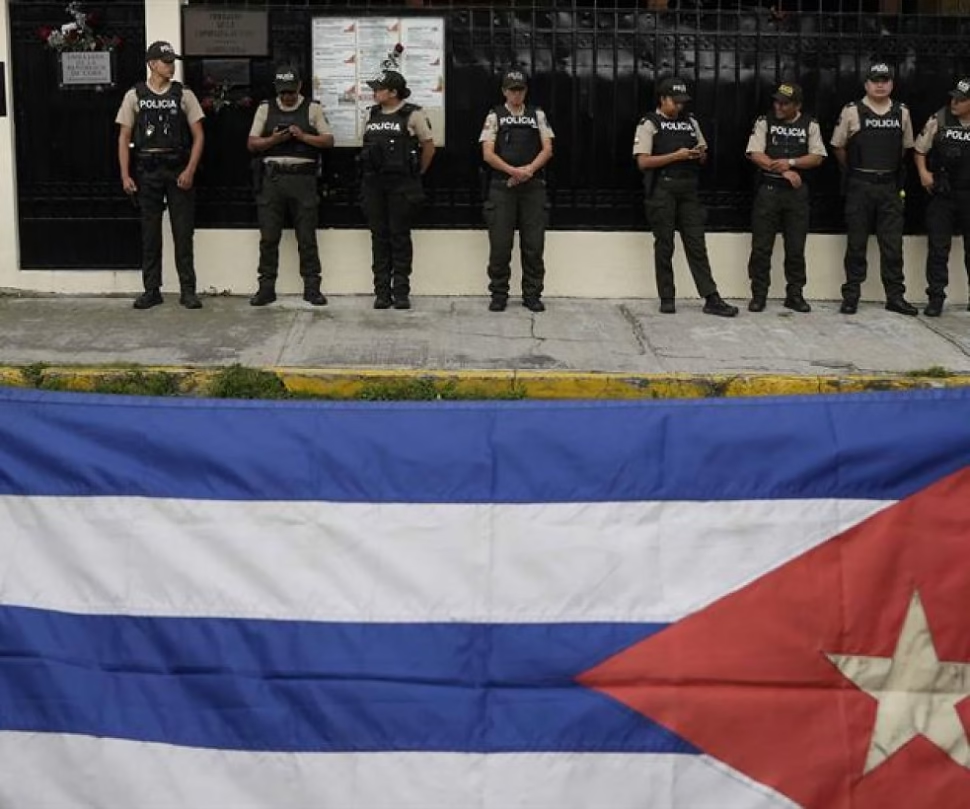
Roberto Álvarez Vera, alias “Manager”, is already in Ecuador. The alleged leader of the violent Border Commandos was extradited from the United Arab Emirates and imprisoned this Tuesday. The Prosecutor’s Office accuses him of organized crime and money laundering.
I have to say it: seeing a boss arrive in handcuffs always makes headlines. But after covering this for years, I know that capturing a man is not the same as dismantling a structure. It’s a step, yes. But only one.
Álvarez Vera, 45, was captured in Dubai and arrived in Guayaquil around midnight on Monday. After the initial procedures, they sent him directly to the maximum security prison “El Encuentro” in Santa Elena. That prison is one of the flags of the current government.
The prosecution indicated that next week his hearing will be held to formally charge him with the charges.
Next week he will have his hearing. Formally, the charges will be brought against you. But look beyond the legal process.
What really weighs on your file
The Ministry of the Interior explains that it has been investigated since 2019 for a submersible intercepted in Spain with three tons of drugs. Several members of his organization, including family members, have already been sentenced to 13 years.
But there is something more serious, something that smells like war, not just an illicit business. The authorities also link it to the ambush last May in Orellana.
Eleven soldiers died when explosives detonated during an operation against illegal mining. The Ecuadorian army attributed that attack directly to the Border Commandos.
This group is a dangerous mix: FARC dissidents operating from southern Colombia, associated with local Ecuadorian groups. They are not ordinary gang members; They are a paramilitary force with logistical capacity.
The extradition marks a significant step, authorities say. And technically they are right. But as we speak, that organization continues to operate. Keep recruiting. Continue controlling territories.
I’ve seen enough spectacular captures to know that the real work begins after the prison doors close. The question is not whether this man will be convicted. The question is: will his imprisonment change anything for the families who live in the areas where his men are still armed?
Investigations continue, promising connections with other groups. The cycle continues: one is captured, another appears. Meanwhile, in the neighborhoods and provinces, life under its shadow continues.