Analysis of the Impact of Typhoon Ragasa on Southeast Asia
Typhoon Ragasa has become one of the most severe meteorological phenomena of the last decade in the Western Pacific basin. Its trajectory, which began in oceanic waters, has consecutively discharged its power over the Philippines, Taiwan, and finally, over the southern region of China, including the nerve centers of Hong Kong and Macau. The main characteristic of this tropical cyclone has been the combination of winds of extraordinary violence and precipitation of historic intensity, factors that have acted synergistically to maximize its destructive capacity.
The system’s approach to the southern Chinese coast activated the strictest emergency protocols. According to data reported by state broadcaster CCTV, Guangdong province, a key economic and demographic center, carried out one of the most massive preventive evacuations on record, with more than a million people relocated from high-risk areas. This prophylactic measure, although disruptive, underlines the severity of the warnings issued by the China National Meteorological Center, which predicted the direct impact of the eye of the typhoon between Taishan and Zhanjiang. The paralysis was almost total: the educational system, industrial activity and land, sea and air transportation networks were suspended in a dozen cities, a testament to the anticipatory nature of the response to the imminent natural disaster.
Evaluation of Damage and Immediate Consequences
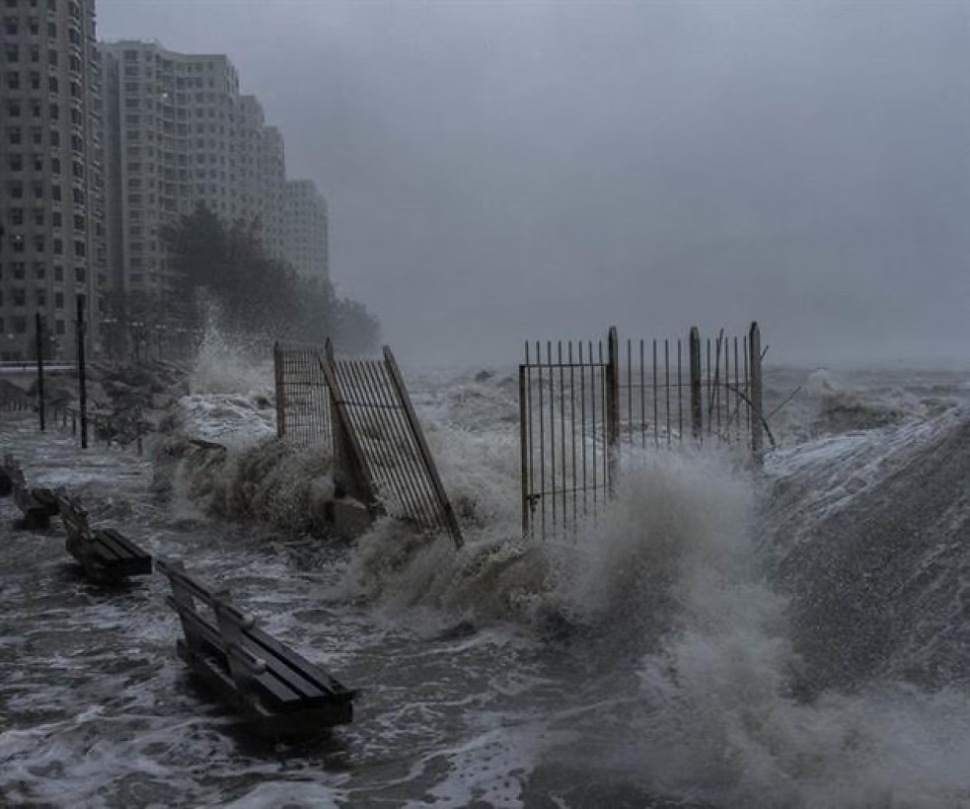
In Hong Kong, the local meteorological observatory recorded maximum sustained winds close to 195 kilometers per hour when the center of Ragasa was located approximately 100 kilometers south of the city. The force of these winds had tangible and dangerous manifestations: the detachment of segments of the roof of a pedestrian bridge and the massive felling of trees and green infrastructure that succumbed to the ferocity of the gusts were reported. The provisional balance of this autonomous city indicated that approximately 13 people were injured and required hospital care. The images that circulated showed a transformed urban landscape, with waves that exceeded the height of the light poles hitting the promenades, a spectacle of natural force that forced hundreds of residents to seek shelter in temporary centers set up by the authorities.
The situation in the neighboring special administrative region of Macau, known globally for its gambling industry, replicated this pattern of preventive closures and socioeconomic disruption. The cancellation of flights and the closure of businesses were the norm, with the addition of at least one person injured as a direct consequence of the extreme weather conditions. The simultaneity of the measures in both cities demonstrates a coordinated regional approach to emergency management.
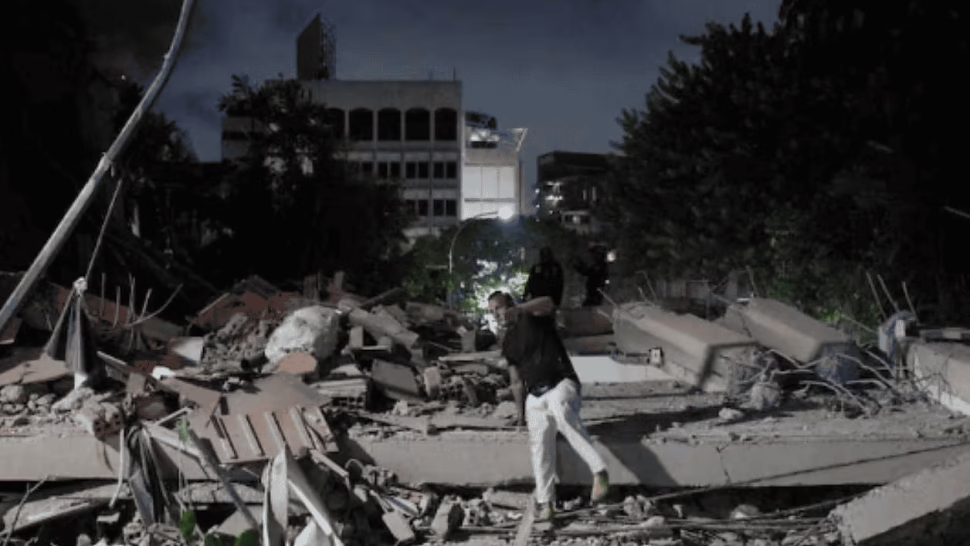
However, to understand the true magnitude of Ragasa, it is necessary to analyze its trail of destruction prior to its arrival on the continent. In Taiwan, the cyclone did not impact fully, but its outer cloud bands dumped torrential rains that caused a significant geohydrological event. In Hualien County, excess precipitation caused a barrier lake to overflow. The sudden release of torrents of muddy water had a catastrophic effect: the complete destruction of a bridge and the transformation of the land roads of Guangfu Municipality into runaway rivers with enough erosive and dragging power to move vehicles and furniture. Taiwan’s Central News Agency provided a tragic toll: 14 deaths and 18 injuries as a direct result of these flash floods.
The first territory to experience the fury of Ragasa was the northern Philippines. It is ironic that the name assigned by the Japan Meteorological Agency, Ragasa, which in Tagalog translates as “fight” or “struggle”, accurately described the experience of its inhabitants. The Philippine authorities reported, in a statement issued on Tuesday, that the passage of the typhoon left a balance of at least three people dead and five missing. More than 17,500 individuals were displaced from their homes due to rain-induced flooding and landslides, secondary but no less dangerous phenomena that usually accompany tropical cyclones of this intensity.
The sequence of impacts—from the Philippines, through Taiwan, to China—allows a clear pattern of Ragasa’s energy and trajectory to be drawn. Each region suffered different facets of its power: rain and flooding in Taiwan and the Philippines, and hurricane-force winds and coastal flooding in metropolitan areas of China. This event reinforces the need for robust early warning systems and efficient evacuation protocols, which undoubtedly mitigated even greater casualties in highly populated areas like Guangdong. Post-event analysis of this magnitude is crucial to refine predictive models and improve the resilience of infrastructure in the face of the recurring threat of extreme weather events, the frequency and intensity of which are being studied in the context of global climate change.
Did you find this detailed analysis useful?Share this report to help spread accurate information about natural disasters and explore more specialized content in our environment and science section.