China mobilizes mass evacuation ahead of Typhoon Matmo

The authorities mobilize massive resources and issue maximum alert before the arrival of the tropical cyclone.

China activates emergency protocols in the face of Typhoon Matmo

The authorities of the People’s Republic of China carried out a massive preventive evacuation, moving approximately 347,000 citizens from the southern coastal provinces in the face of the imminent arrival of typhoon Matmo. This meteorological phenomenon experienced a significant strengthening during the day on Sunday, increasing its impact potential just before its contact with the mainland. The magnitude of the humanitarian operation underlines the seriousness with which the central government addressed the cyclonic threat.

According to technical data provided by the China National Meteorological Center, the storm had developed maximum sustained winds of 151 kilometers per hour (equivalent to 94 miles per hour) during Sunday morning. The extreme weather episode made landfall in the city of Zhanjiang, located in Guangdong province, approximately in the mid-afternoon hours of the same day. In response to the danger of the event, the meteorological agency issued a red level typhoon alert, which constitutes the highest warning within its risk classification system, indicating an imminent and very severe threat.

RelatedTyphoon Ragasa wreaks havoc in Southeast Asia with strong impacts

Contingency and preparation measures in the affected provinces

Hainan Province, located directly in the projected path of the storm system, implemented a comprehensive preparation operation that included the cancellation of air flights, the suspension of public transportation service and the closure order for commercial establishments and non-essential businesses starting Saturday. According to information from the official media The Paper, prevention actions in this jurisdiction led to the evacuation of 197,856 people, a figure that reflects the extent of the areas considered high risk.

For its part, the southeast region of Guangdong, which received the direct impact of the meteor, was the scene of the displacement of another 151,000 people as a civil protection measure. Local media broadcast images illustrating the harshness of the maritime conditions, showing large waves impacting coastal infrastructure and roads in villages belonging to the Zhanjiang area. These visuals corroborated the intensity of the event and the need for preventive actions.

In addition to the hurricane-force winds, meteorological authorities issued specific warnings about torrential precipitation. Rainfall accumulations that could reach between 100 and 249 millimeters (3.93 to 9.8 inches) were forecast in specific sectors of Guangdong and Hainan. This volume of water poses a significant additional risk of flash flooding and landslides, widening the spectrum of dangers associated with the typhoon.

Regional impact and subsequent trajectory of the cyclone

The effects of the tropical system extended beyond the areas of direct impact. In the special administrative region of Macau, which was not in the central route of the typhoon, the adverse weather conditions resulting from the phenomenon led to the cancellation of classes and tutoring sessions, demonstrating the wide radius of influence of these atmospheric disturbances.

The history of Typhoon Matmo includes its passage through the Philippines earlier the same week. Although no fatalities or extremely serious material damage were reported in the archipelago, the storm affected more than 220,000 people in five agricultural plains and mountainous regions in the north of the country. Philippine disaster management officials reported Sunday that about 35,000 of those affected were relocated to emergency shelters or relatives’ homes, in an effort to protect the population of villages with high susceptibility to landslides or flooding.

After passing through southern China, the track projection indicated that the storm would move in a west and north direction, heading towards northern Vietnam and the Chinese province of Yunnan. This pattern of movement is typical of tropical cyclones in this region of the Western Pacific basin, and requires neighboring nations to keep their surveillance and early warning systems activated for a possible sequential response.

China’s management of this event serves as an example of resilience protocols in the face of natural disasters in a geographic region highly exposed to this type of phenomena. The combination of early warning systems, well-rehearsed mass evacuation plans, and interprovincial coordination are critical components to mitigate the loss of life in the face of the overwhelming force of a typhoon. The effectiveness of these measures will be seen in the subsequent assessment of damage and the recovery capacity of the impacted communities.

Did you find this analysis on climate emergency management useful?Share this report on your social networks to keep your community informed and explore more content related to global weather events on our site.
New 4.6 earthquake in Venezuela; international community reinforces aid

New 4.6 aftershock shakes Venezuela while rescue teams continue work.

New aftershock shakes the Venezuelan coast

An earthquake of magnitude 4.6 was recorded this Monday 30 km from La Guaira, in northern Venezuela, according to the United States Geological Survey (USGS). The earthquake, which occurred at 7:01 local time, is the most recent of the aftershocks that follow the devastating earthquakes of June 24. So far, no damage or victims have been reported.

“Here we are on the street again, I don’t know when we are going to have a moment of true tranquility,” declared Concepción Hernández, a 51-year-old housewife, who evacuated a building in Caracas with her husband. “We are blessed, our building held up again,” he added.

International aid underway

Mexico will send water treatment plants, electrical equipment and non-perishable food by air and sea. President Claudia Sheinbaum affirmed that her country will also support the reconstruction phase with construction standards and seismic alert systems.

The United States increased its financial commitment to more than $300 million for humanitarian organizations, bilateral financing and UN common funds.

China pledged 100 million yuan ($14.7 million) in humanitarian aid. Chinese media reported that eight Chinese citizens died from the earthquakes.

Geological impact in Trinidad and Tobago

Geologists confirmed that the two earthquakes raised the southwest coast of Trinidad by up to six meters and moved it about 30 meters to the south. Lifeless fish, crabs and rays were found on Galfa Point beach. Specialist Xavier Moonan explained that the transfer of energy is reflected in the fault along the southern coast of Trinidad.

Slowness in Caracas

In the Venezuelan capital, shops open later than usual and public transportation operates with few passengers. “I’m going to work late, but despite the scare we can’t stay home,” said Johny González, a 22-year-old employee.

Continue reading

Earthquakes in Venezuela: rescues and criticism of the government

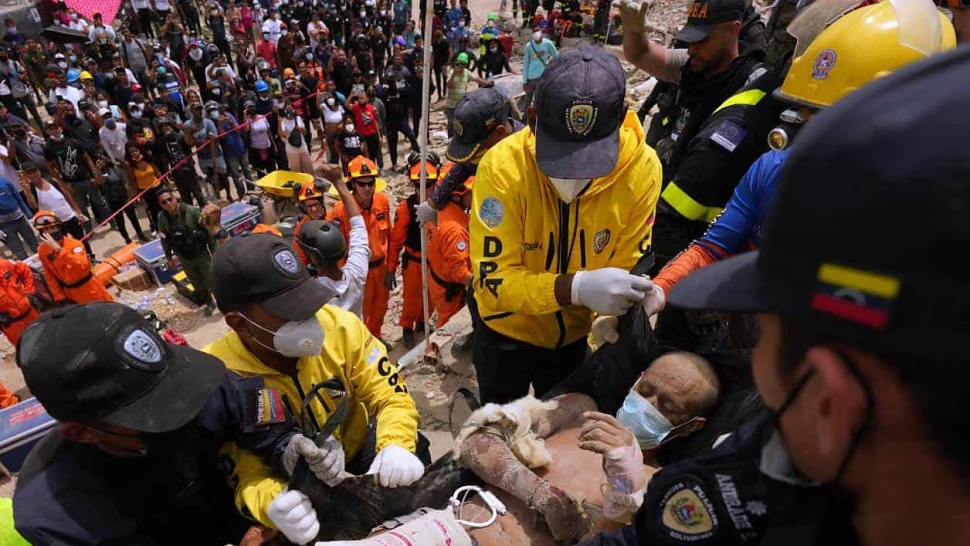
Rescuers manage to save a father and son under the rubble in La Guaira.

Four days after the earthquakes

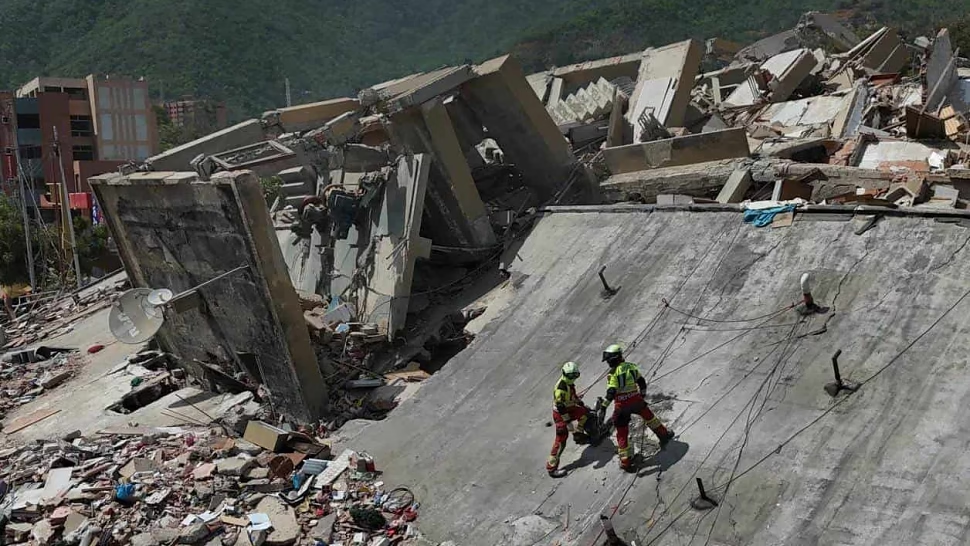
Rescue teams continue to search for survivors in the rubble in La Guaira state, Venezuela. Until now, the official death toll exceeds 1,450 people. Thousands of people remain missing.

Although the chances of finding people alive are reduced as the hours go by, this Sunday rescuers from the United States and France managed to extract a man and his son trapped under a collapsed building. The discovery renewed hope for dozens of families who are still waiting for news of their loved ones.

Criticism of the official response

Residents of the affected areas assure that the first rescue tasks were carried out by volunteers and civilians. The government’s slowness in addressing the emergency has generated strong questions. Authorities report that more than 770 buildings were destroyed or severely damaged.

The United Nations confirmed the participation of more than 2,200 rescuers from various countries in the operations. The International Organization for Migration warned that up to six million people could be affected, including about two million residents of Caracas.

As the aftershocks continue, the risk of new landslides persists. Emergency teams continue searching through the collapsed buildings. The Simón Bolívar International Airport is still in the process of reestablishing operations to facilitate the arrival of international aid.

Continue reading

US Marines reinforce rescue in Venezuela

New contingent of marines arrives in Venezuela for humanitarian aid after earthquakes.

Second military deployment in the midst of the emergency

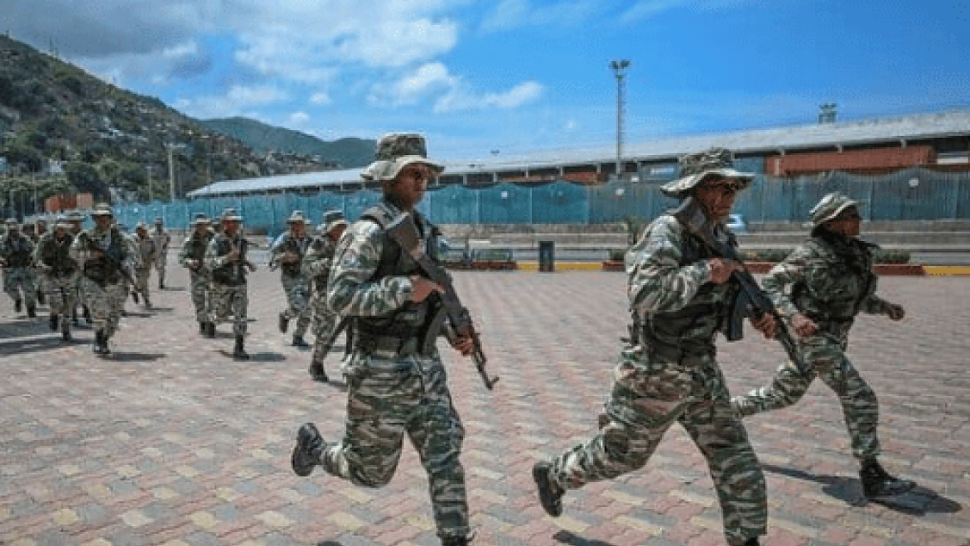
A new contingent of United States Marines arrived in Venezuela this Sunday to join the search and rescue efforts after the two earthquakes recorded last Wednesday. According to the US embassy in Caracas, members of the Litoral Combat Force-24, along with sailors from the USS Fort Lauderdale, disembarked in the port of La Guaira with heavy vehicles and supplies.

Simultaneously, another group of Marines arrived by air in Bell UH-1Y Venom helicopters to work in the most affected areas. It is the second deployment since the emergency began; the first, two days ago, included military engineers and rescue specialists.

Cooperation with the new Venezuelan government

The arrival occurs almost six months after Nicolás Maduro was captured in Caracas by US forces and transferred out of the country. After that event, the then vice president Delcy Rodríguez assumed power and changed relations with Washington.

Rodríguez has publicly thanked the assistance of the United States and confirmed conversations with the Secretary of State, Marco Rubio, to coordinate aid in the face of the humanitarian crisis. Cooperation is managed by the State Department with support from the Southern Command.

On the ground, operations are under the supervision of Marine Major General Kevin J. Jarrard, in charge of facilitating the rescue and distribution of assistance to the affected population.

Continue reading