The Wrath of Heaven Descends on Nepal
In a twist of fate as brutal as it was unexpected, the peaceful hills of Nepal became a nightmare scenario. The torrential rains, like the tears of an enraged god, unleashed their fury with a violence that chilled the blood. It was not a simple storm; It was a relentless onslaught of nature that, in a matter of hours, took the lives of at least 44 souls and left five others missing, swallowed by the earth and water. Sunday will be marked in the memory of this Himalayan nation, a day where the sky gave no respite and the ground literally vanished under the feet of innocent people.
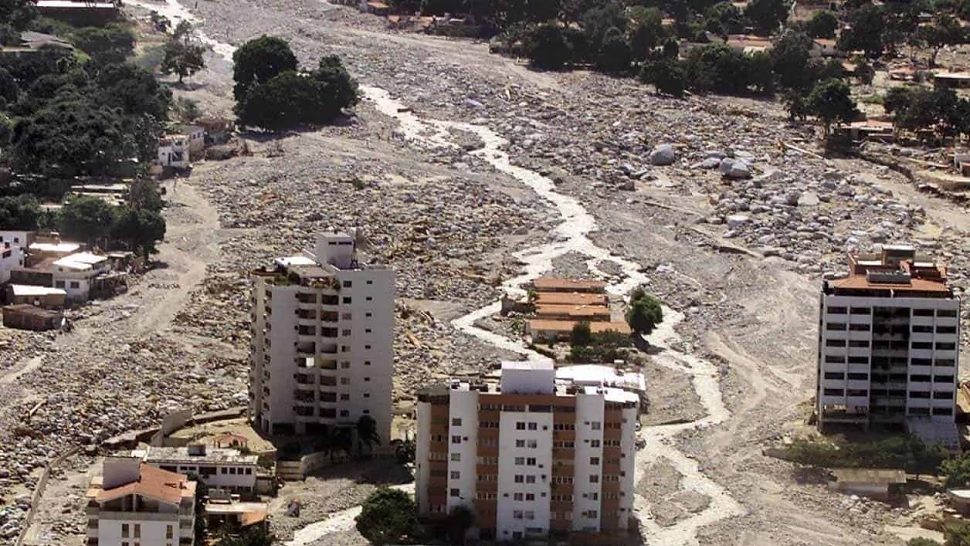
The eastern district of Illam, an earthly paradise famous for its lush tea plantations, became the epicenter of this catastrophe. There, the tragedy reached its highest and most heartbreaking point. At least 37 of the fatalities belong to this region, where landslides of colossal power Between the roar of the storm and the roar of the landslides, personal dramas of unbearable intensity unfolded. In one of the most heartbreaking scenes, six members of the same family saw their dreams cut short forever. A landslide, silent and treacherous, crushed their humble home while they were sleeping, turning their refuge into their grave. There was no time to react, nor a last goodbye. Bholanath Guragai, the district administrative assistant, confirmed this macabre event, a story that encapsulates the magnitude of the human loss. As communities mourned their dead, a race against time was unleashed to save the survivors. However, nature itself sabotaged the rescue efforts. Roads, vital connecting arteries, were swept away or blocked by new landslides, isolating the most affected populations. The persistent rain, a tireless enemy, turned every step into a feat and every minute into an eternity for those waiting for help. Desperation grew at the same rate as the water level. In a display of strength and hope, the Nepalese government mobilized all its resources. Helicopters flew through the gray skies, defying poor visibility, with the sacred mission of evacuating the wounded who required urgent medical attention. On the ground, brave troops and emergency teams worked tirelessly, with their hands in the mud and determination in their souls, to move the terrified population to areas of greater safety. Every life saved was a victory against doom. But the tragedy was not satisfied with a single form. While Illam suffered the onslaught of the earth, in other districts death came from the sky and the water. Three people were struck down by the lethal impact of lightning, a blinding flash that brought an instant end. In the south of the country, three other souls perished swept away by the floods that turned streets and fields into raging rivers. One more man lost his life in a neighboring district, also the victim of a new landslide. The calamity spread like a stain of pain. The chaos was not limited to rural areas. The government, in a bid to prevent further losses, had issued a maximum warning for heavy rains looming over the eastern and central regions of the country. The precautions were extreme. All domestic flights were suspended on Saturday, a closure that strangled air mobility. The main roads connecting the capital, Kathmandu, with the rest of the country were closed; some because they were already blocked by landslides, others as a desperate precautionary measure. By Sunday night, only one route managed to be partially opened, a small thread of hope amid the collapse. This transport stoppage occurred at the worst time imaginable. It coincided with the mass return of hundreds of thousands of people to Kathmandu after having celebrated Dashain, the largest and most significant festival in Nepal. This two-week event has its main day on Thursday, when Nepalese travel to their home villages to reunite with their families. The roads, which days before were full of joy and gatherings, were now congested with stranded vehicles, as the government assessed the situation with growing alarm. The return home became a dangerous odyssey. In Kathmandu itself, the river rose greedily, flooding some areas near its channel. Miraculously, no major material damage or fatalities were reported in the capital, a small respite in the midst of the whirlwind. In recognition of the seriousness of the situation, the government declared a national holiday until Monday, an attempt to keep the population safe and allow emergency teams to do their work. This drama evokes ghosts of the recent past. Last year alone, on similar dates, floods and landslides caused the death of 224 people and left 158 injured. History repeats itself with chilling cruelty, reminding us of the nation’s vulnerability to climate attacks. These heavy weekend rains came late, at the end of the monsoon season that normally governs the weather between June and mid-September. It was like a last, violent stab from a station that refused to leave. The earth has stopped shaking and the water begins to recede, but the pain and reconstruction are just beginning. Nepal, a country of proven resilience, faces once again the titanic task of rising from the ruins, of healing its wounds and of honoring those who left too soon in the midst of a natural fury that no one could stop. This story of survival and loss should be known to everyone. Share it on your social networks to keep awareness about this emergency alive and explore more content related to the force of nature and human resilience on our site.Horror in the Night: Entire Families Buried
Chaos and Paralysis in the Heart of the Nation