Federal investigation for publication on social networks
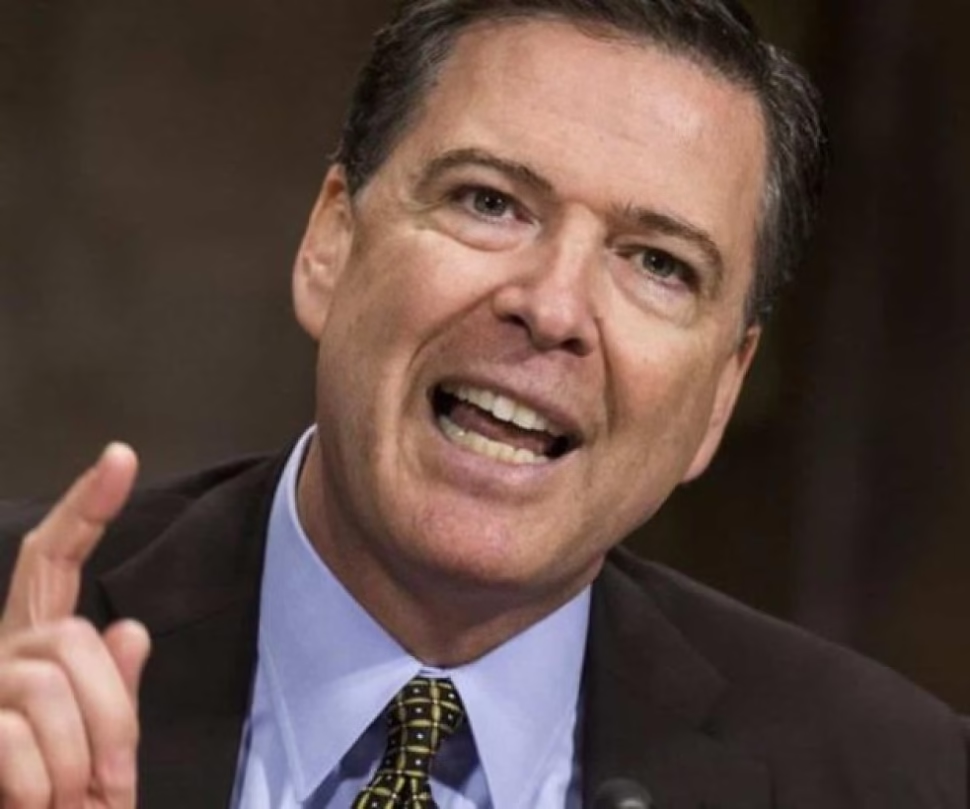
Former FBI Director James Comey faces a formal interview with the Secret Service this Friday, following a post on Instagram that some Republicans interpreted as a call for violence against former President Donald Trump. According to an official not authorized to reveal his identity, the investigation seeks to determine whether the message contained a veiled threat.
Context and controversy
The publication in question showed a photograph of seashells arranged in the shape of the numbers “86 47”, accompanied by the text: “Cool shell formation during my walk on the beach”. Although seemingly innocuous, the numerical combination sparked speculation due to the colloquial meaning of “86” in American slang, which can imply “eliminate” or even “murder.” The number 47 coincides with Trump’s position on the list of presidents of the country.
The Merriam-Webster dictionary, cited by The Associated Press, clarified that the term “86” does not officially include the meaning of “kill”, although it recognized its emerging use in that context. Despite this, figures close to Trump, such as Homeland Security Secretary Kristi Noem, accused Comey of inciting the assassination. The current director of the FBI, Kash Patel, confirmed that the agency is collaborating in the investigation.
Legal positions and procedures
During an interview on Fox News, Trump stated: “He knew exactly what that meant […] it meant murder.” However, legal experts emphasize that for a publication to constitute a criminal threat, it must meet specific criteria, such as intentionality and imminent danger. The Secretary of Justice, Pam Bondi, will be in charge of deciding whether charges will be filed, after evaluating the evidence collected.
The Secret Service procedure is routine in cases of alleged threats to protected figures, but the political relevance of those involved has intensified media scrutiny. Comey, who has had a contentious relationship with Trump since his dismissal in 2017, categorically denied any violent intent.
Implication analysis
This case reflects the growing polarization in the United States, where social networks have become rhetorical battlefields. It also raises questions about the boundaries between freedom of expression and incitement, especially when ambiguous linguistic codes are involved. Legal experts agree that, without clear evidence of malicious intent, it would be difficult to sustain formal accusations.
Are you interested in the impact of social networks on politics? Share this analysis and discover more content on federal investigations in our current affairs section.
Explore more: Subscribe to receive updates on this and other cases of national relevance.