Historic drop in US consumer confidence
The University of Michigan’s consumer confidence index registered its second lowest level in 75 years in May, standing at 50.8 points, a decrease of 2.7% compared to the previous month. This data reflects a cumulative drop of 30% since January, surpassed only by the historical low of June 2022. The erosion in economic perception is attributed to the uncertainty generated by trade tariffs, persistent inflation and political polarization.
Key factors behind economic pessimism
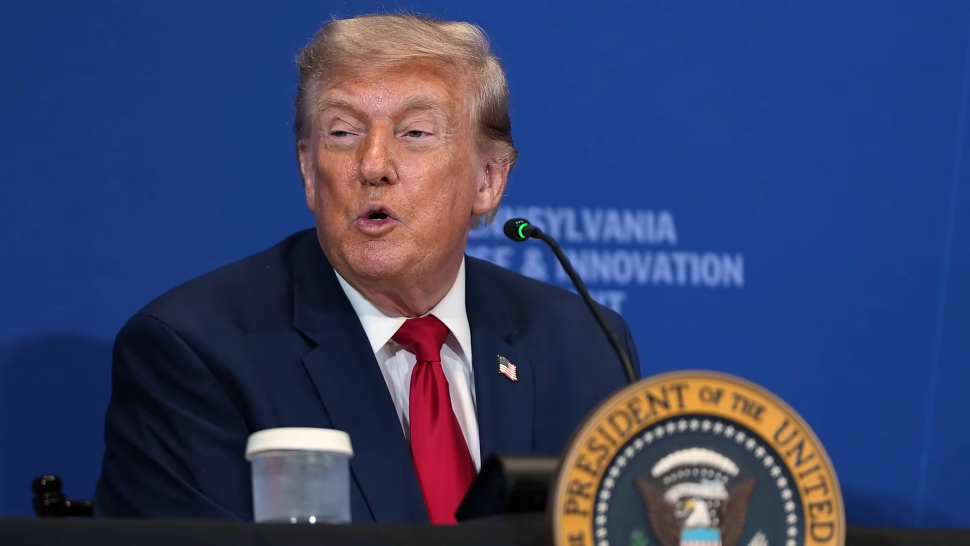
The imposition of 145% tariffs on Chinese imports during the Trump administration – reduced to 30% after a recent agreement – raised concerns about the rise in the cost of goods. Companies like Walmart have already announced price increases, affecting 90% of American households. At the same time, 12-month inflation expectations reached 7.3%, the highest figure since 1981, despite the fact that real inflation was 2.3% in April.
The survey, conducted between April 22 and May 13, also revealed an unprecedented partisan gap: Democrats registered a confidence of 33.9 points (lowest since 1980), while Republicans stood at 84.2. Analysts warn that the methodological change – only online responses from 2023 – could have exacerbated this bias.
Implications for the economy and consumption
The combination of inflationary pressure and lower optimism threatens economic growth, especially in sensitive sectors such as retail and electronics. Although the White House has eased some measures, average tariffs remain high compared to historical standards. This context coincides with families preparing for the back-to-school season, where price adjustments could further impact discretionary spending.
Experts emphasize that, although inflation expectations usually exceed reality, their persistence affects purchasing and saving decisions. “When consumers anticipate higher prices, they reduce non-essential expenses, creating a vicious circle for the economy,” explained one analyst consulted.
Are you interested in understanding how economic policy affects your pocketbook? Share this analysis on your social networks and explore more content on financial trends in our specialized section.
Sources: University of Michigan, US Department of Commerce, corporate reports.