Deputies and tenants agree on measures to strengthen public markets

Authorities and merchants seek to revitalize traditional markets in the face of security and competition challenges.

Initiative to revitalize the traditional markets of CDMX

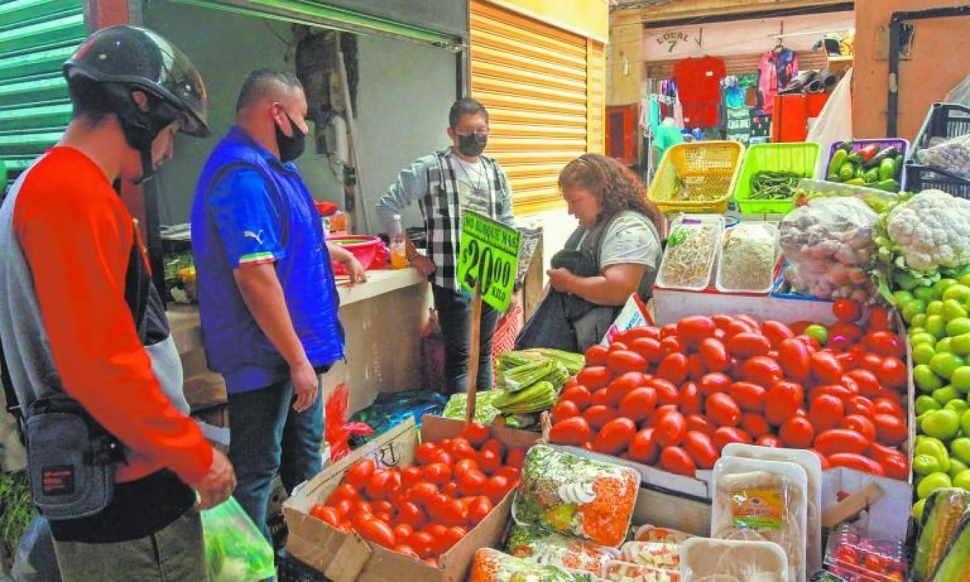
The Permanent Commission of the Congress of Mexico City issued an urgent call to the capital authorities to implement strategies that strengthen the operability and security of public markets. This agreement arises after a dialogue between legislators and representatives of merchants, who highlighted the need to protect these vital spaces for the local economy.

Key actions to ensure sustainability

Among the agreed measures, the 16 mayors were requested to:

RelatedAntigentrification march in CDMX concludes without serious incidents
  • Implement protocols against extortion and crimes that affect tenants.
  • Update the Civil Protection Plans in these supply centers, with special attention to electrical and gas risks.

In addition, the Superior Audit must present a detailed report on the actions carried out between 2022 and 2024 for the infrastructural improvement of these spaces.

Deputy Brenda Ruiz emphasized that these markets supply 33% of households and are part of the city’s cultural heritage. “Its historical and social value requires comprehensive interventions,” he said during his speech.

Conflicts and solutions underway

The tension between tenants and deputies over popular supplies—events where products are sold at low cost—was another critical point addressed. Merchants argue that this practice represents unfair competition, while legislators defend its welfare nature. As a solution, it was agreed to review the issue in Jucopo to balance both interests.

This agreement marks a step towards the regulated modernization of markets, combining security, cultural preservation and commercial equity. According to official data, risks such as obsolete electrical installations and inadequate waste management were identified in 2021, which underlines the urgency of these actions.

Are you interested in learning more about public policies for traditional businesses? Share this article and explore our local economy section to stay informed.

Share this note and help us make visible the importance of public markets! Follow our content for more analysis on urban development and culture.

FGR identifies the pilot who transferred ‘El Mayo’ Zambada to the US

Fingerprints and voice recordings confirmed the pilot's identity.

The Attorney General’s Office confirmed that Mauro Alberto Núñez Ojeda, alias “Jando”, was the pilot who transported Ismael “El Mayo” Zambada from Mexico to the United States in July 2024. The identification was achieved after comparing his fingerprints and voice records with the investigations.

Núñez Ojeda was arrested in February 2025 during an operation in Jesús María, Culiacán, Sinaloa. In that confrontation, an armed group attacked elements of the Army and the National Guard. One soldier died and five were injured. Upon being captured, the pilot would have provided a false identity.

The FGR identified him as a member of the Sinaloa Cartel with a high level of danger. He remained in Mexican custody for six months until he was handed over to the United States in August 2025, along with 25 other alleged criminals considered highly dangerous.

Among those extradited were Abigael González Valencia, alias “El Cuini”; Servando Gómez Martínez, “La Tuta”; and Juan Carlos Félix Gastélum, “El Chavo Félix”, linked to the Sinaloa, Jalisco Nueva Generación and Los Zetas cartels.

The Prosecutor’s Office indicated that the identification of the pilot occurred due to coincidences in voice recordings, fingerprints and other elements. He added that the delivery does not close the investigations and keeps the processes open through international legal cooperation.

Núñez Ojeda piloted the Beechcraft King Air 200 aircraft that transported “El Mayo” Zambada to the United States on July 25, 2024. This fact triggered an internal dispute in the Sinaloa Cartel between the factions of “Los Chapitos” and followers of the historic leader.

Continue reading

Screwworm plague hits exports and prices

The closure of the border with the US due to the screwworm has caused an oversupply of meat in Mexico.

Impact on the national market

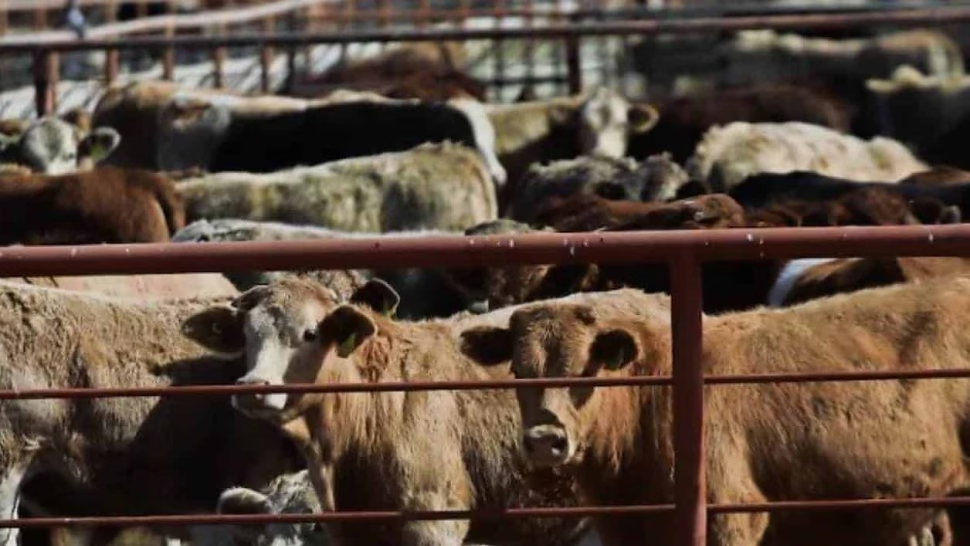
The closure of the border with the United States to Mexican livestock exports, due to the advance of the screwworm, has plummeted beef prices. This was confirmed by representatives of the agricultural sector during the National Congress of Agri-Food Health and Safety, organized by the National Agricultural Council (CNA).

The impossibility of exporting has generated an excess supply of cattle in the country. This is already reflected in lower costs for consumers, but also in losses for producers.

The alert was intensified this week. Chihuahua, a state that concentrates about 40% of national beef production, confirmed its first case of the plague. With this record, only three entities in the country remain free of the screwworm.

“The country’s capacity to face health emergencies has been weakened due to the reduction of more than 50% in the Senasica budget during the last decade,” warned Jorge Esteve, president of the CNA.

The leader pointed out that, although agricultural and livestock production has grown in the same period, resources for surveillance, inspection and sanitary control have decreased. That, he said, represents a risk for the competitiveness of the sector and for access to international markets.

The border closure also affects American consumers, who face reduced availability of meat due to the interruption of trade flow.

Representatives of the sector agreed that it is urgent to reinforce animal health, contain the spread of the screwworm and strengthen Senasica. Only in this way can the trust of trading partners be regained, the border reopened and exports restored.

Continue reading

Sheinbaum receives the president of Panama at the National Palace

Sheinbaum and Mulino strengthen bilateral ties in official meeting.

Bilateral meeting between Mexico and Panama

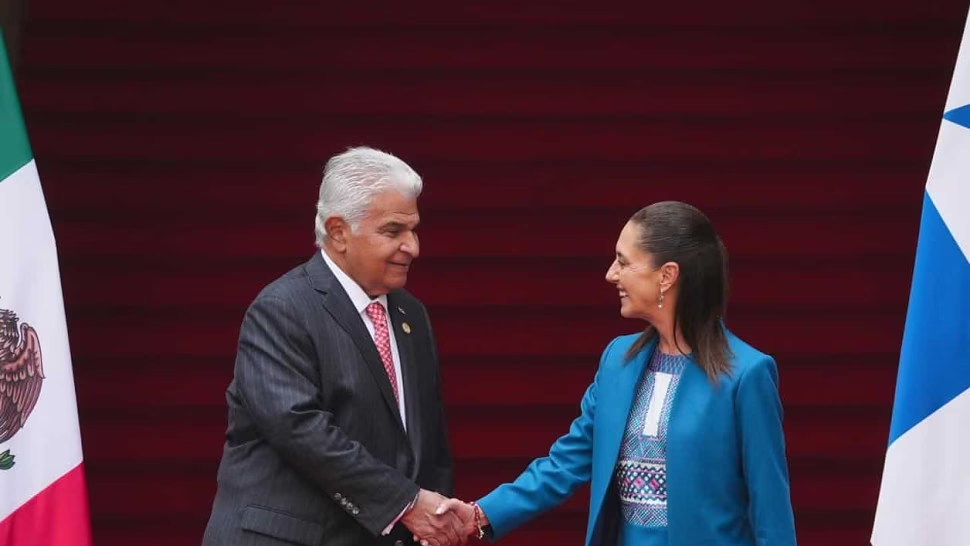
President Claudia Sheinbaum received her Panamanian counterpart, José Raúl Mulino, this Wednesday in the Patio of Honor of the National Palace. The official ceremony included the singing of the national anthems and a joint photograph.

Both leaders met to strengthen the relationship between the two countries. At the end of the meeting, they offered a joint message to the media. The visit underlines the shared commitment in areas such as trade, agriculture and economic development.

High-level delegation

Sheinbaum was accompanied by the Secretaries of Foreign Affairs, Roberto Velasco Álvarez; of Economy, Marcelo Ebrard; of Agriculture, Columba López Gutiérrez; and other officials such as the director of the Interoceanic Corridor of the Isthmus of Tehuantepec, Octavio Sánchez Guillén.

The Panamanian delegation included the Ministers of Foreign Affairs, Javier Martínez-Acha; of Commerce and Industry, Julio Moltó; of Agricultural Development, Roberto Linares; and of Panama Canal Affairs, José Icaza, among others. President Mulino’s wife, Maricel Cohen de Mulino, was also present.

Cooperation on the agenda

The meeting highlights the relevance of bilateral relations. Both countries seek to deepen collaboration on strategic issues such as commercial exchange and regional connectivity. Mexico and Panama maintain historical ties that are now renewed with this state visit.

Continue reading