Attacks in Iran: no one claims them and tension grows

New airstrikes in southern Iran without claim increase regional uncertainty.

New bombings in Iran

A series of airstrikes hit parts of southern Iran on Thursday, just as the country prepared to pay tribute to the late Supreme Leader Ayatollah Ali Khamenei. The explosions were recorded in the provinces of Bushehr and Sistan and Balochistan, as well as in the cities of Ahvaz and Chabahar.

So far, no country or group has claimed responsibility for these bombings. Hours earlier, the United States Central Command had reported the end of a military operation that impacted 90 strategic objectives, but avoided commenting on the new attacks.

RelatedThe United States carries out a military operation and captures Maduro in Venezuela

Iran responded with a missile offensive against Bahrain, Jordan, Kuwait and Qatar. The anti-aircraft alarms were activated and the population sought refuge. Kuwaiti authorities reported at least one person injured, while defense systems intercepted projectiles at different points.

The escalation puts the fragile ceasefire between Washington and Tehran at risk. President Donald Trump reiterated that the military conflict had ended and that negotiations for a permanent agreement would continue.

Tension in the Strait of Hormuz

The situation keeps the countries of the Persian Gulf on alert through the Strait of Hormuz, a route through which nearly a fifth of the world’s oil and gas trade transits. Iran insists on exercising exclusive control and even proposes charging fees to vessels. The United States recommends an alternative route through Omani waters. Maritime traffic has decreased significantly in recent days.

Israel did not claim responsibility for the attacks, although Defense Minister Israel Katz warned that his country is prepared to act again if it deems necessary. From Tehran, legislator Esmail Kousari accused the United Arab Emirates of collaborating with the United States and assured:

“He will pay the price”

With crossed threats, attacks without a confirmed perpetrator and the dispute over the Strait of Hormuz, the Middle East faces a scenario of high tension despite diplomatic efforts.
Iran hits desalination plant in Kuwait

An Iranian attack damaged a water and power plant in Kuwait, affecting drinking supplies.

Attack on strategic plant in Kuwait

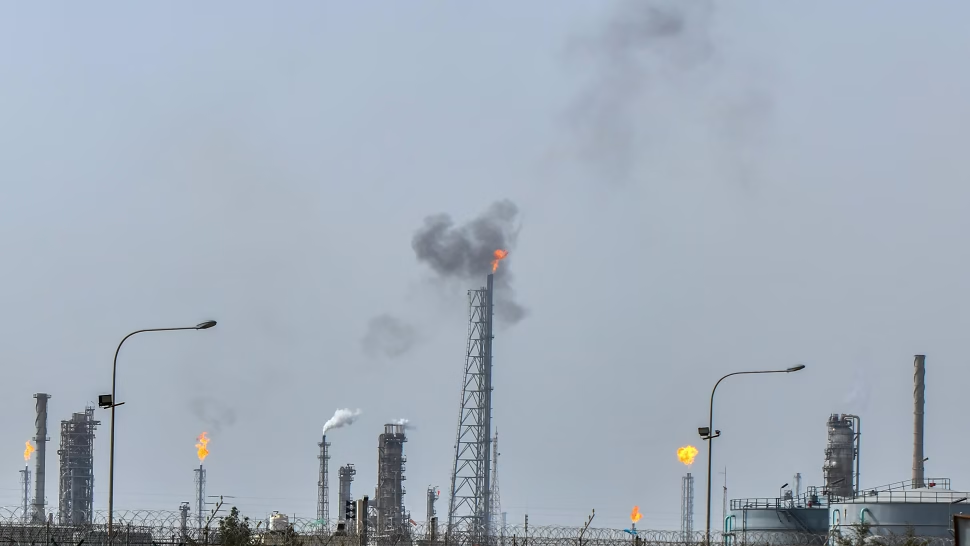
On Friday, an Iranian attack hit a power and desalination plant in Kuwait, causing damage to several power generation units and a fire that was controlled by emergency crews. Kuwaiti authorities activated contingency plans to maintain the supply of water and electricity.

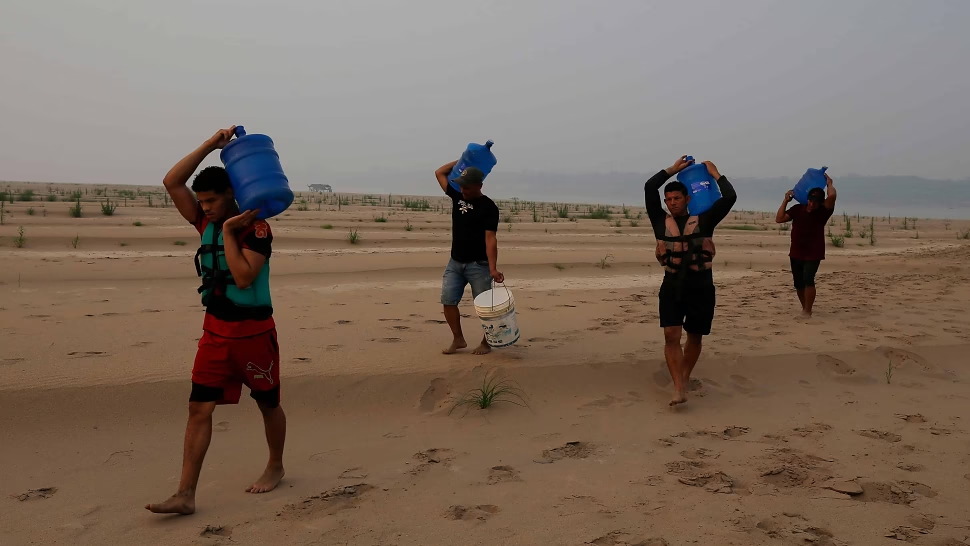
Kuwait relies on desalination for about 90% of its drinking water, similar to other Gulf countries such as Oman and Saudi Arabia. Most of these facilities are on the Persian Gulf coast, making them vulnerable to missile or drone attacks.

This incident highlights the fragility of critical infrastructure in the Middle East amid regional escalation.

Continue reading

Latin America reinforces emergency plans for El Niño

Countries in the region activate protocols in response to the strengthening of El Niño in the Pacific.

The governments of Latin America are accelerating their emergency plans in the face of the strengthening of the El Niño phenomenon in the Pacific. The World Meteorological Organization (WMO) confirmed that the event is already underway and warned that countries must act early to reduce impacts.

Governments take action

Brazil reinforced its brigades against forest fires. Colombia activated water monitoring systems. Other Central American nations are working on plans to protect vulnerable communities and guarantee basic services. Experts point out that, although the phenomenon develops gradually, authorities usually delay preventive actions until emergencies are already underway.

Expected impact

Droughts, extreme heat, fires, floods and impacts on water, energy and transportation systems are expected. Agricultural production and access to drinking water could be seriously damaged, especially in the most vulnerable communities. The WMO insists that early preparation is key to mitigating the adverse effects anticipated in the coming months.

Continue reading

Xi Jinping calls for global AI governance without unilateral dominance

China proposes international cooperation in artificial intelligence and offers training to developing countries.

China bets on global governance of AI

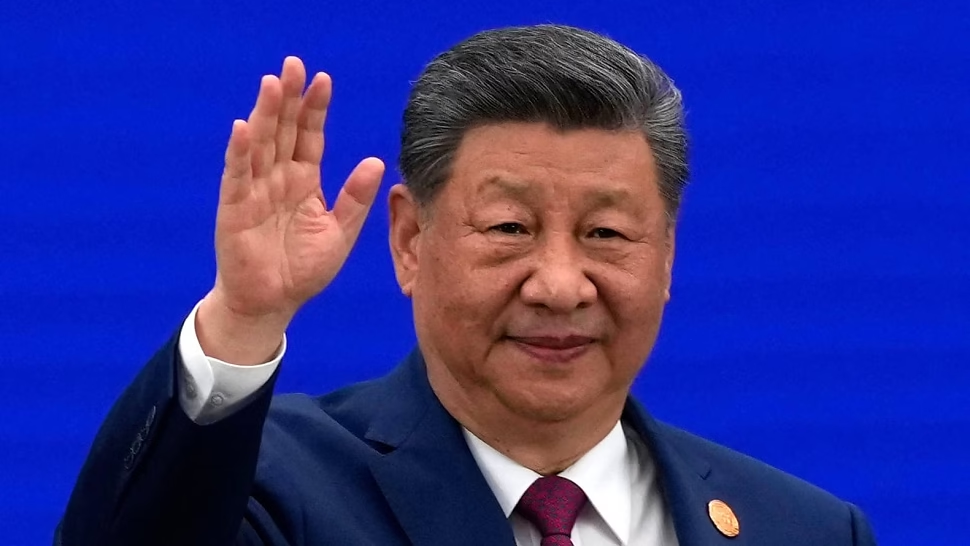
Chinese President Xi Jinping urged the promotion of global governance of artificial intelligence (AI) and stated that its development should not belong to a single country. During the opening of the World Conference on Artificial Intelligence in Shanghai, he questioned what he called an “overreach” of the concept of national security in this area, in clear reference to the technological restrictions imposed by the United States.

“Artificial intelligence must become a symphony of global cooperation, not an isolated competition between nations,” Xi said.

As part of its strategy, China will strengthen AI collaboration with organizations such as ASEAN, the Arab League, the African Union, CELAC and the BRICS countries. In addition, it will offer five thousand training opportunities for developing countries in the next five years.

Multilateral agreement in Shanghai

Before the event, 29 countries—including Russia, Pakistan and Kazakhstan—signed an agreement with Beijing to create a World Artificial Intelligence Cooperation Organization, based in Shanghai. Analysts interpret this initiative as China’s response to the US Pax Silica framework, which seeks to strengthen AI supply chains with its allies.

Continue reading