City at the center of tension
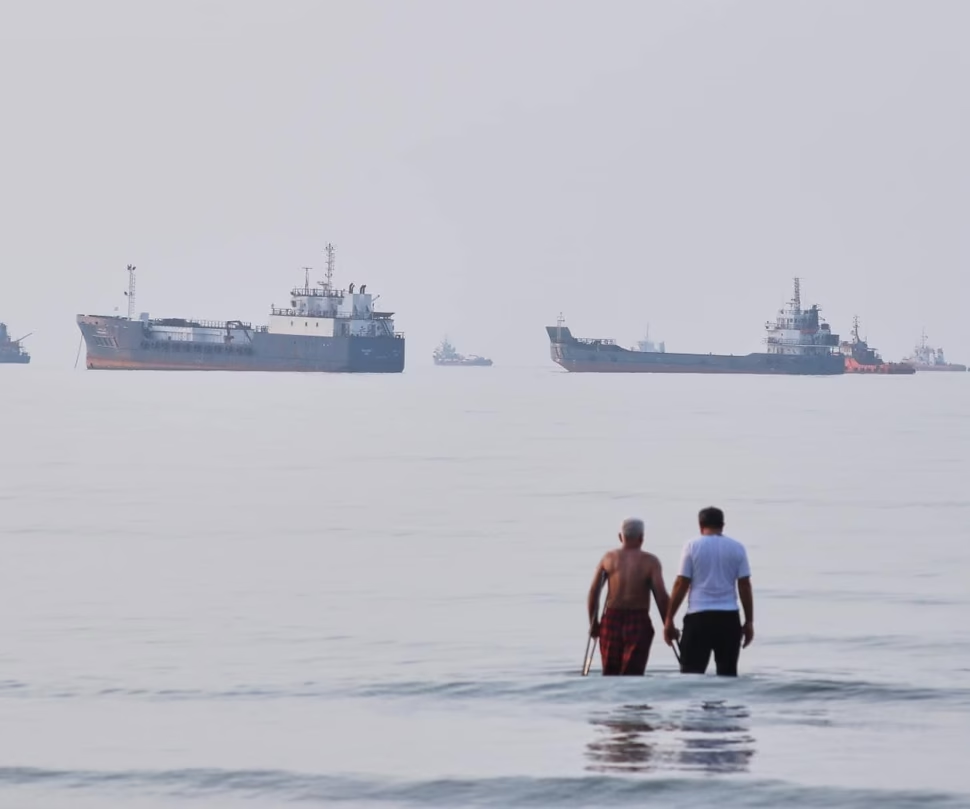
The US military confirmed this Wednesday the reestablishment of the blockade of Iranian ports in the Strait of Hormuz. The measure responds to Tehran’s attacks against vessels trying to cross the sea route through which a fifth of the planet’s crude oil and natural gas passes.
The escalation puts at risk the provisional ceasefire signed weeks ago. Now, retaliatory attacks threaten to tip the region back into open conflict.
What did the US do?
The blockade was originally imposed in April, but was lifted in June following a 60-day deal to negotiate Iran’s nuclear program. But talks stalled and fighting in the strait intensified.
President Donald Trump announced the return of the fence on Monday and also proposed a 20% tariff on ships crossing the strait. Hours later, he abandoned that rate, saying Gulf allies requested it.
“The export of oil and gas from the region will be for everyone or it will be for no one,” warned Iran’s Revolutionary Guard.
Iran’s reactions
The Iranian ambassador to the UN, Amir Saeid Iravani, called the United States “the aggressor, not the victim,” according to the state agency IRNA.
The United States carried out a new wave of attacks while reestablishing the blockade, according to Central Command. Missile alerts were activated in Bahrain and Kuwait. Admiral Brad Cooper noted that Iran launched dozens of missiles and drones against Gulf Arab countries.
“US forces are holding Iran accountable for unjustified aggression,” Cooper declared.
Military and economic scenario
There are at least 19 American warships in the Arabian Sea, including two aircraft carriers and an amphibious ship with more than a thousand Marines. Central Command reports “hundreds of military aircraft operating throughout the Middle East.”
Iran closed the crossing in February when the United States and Israel attacked it. That skyrocketed the price of oil, fertilizers and other goods. Now, Tehran has attacked ships near Oman, outside its control.
Trump said that kings and emirs of the Gulf proposed to him to invest billions in the US instead of paying tolls. “I don’t think anyone should charge a fee for the strait,” he said. Experts doubt Washington can forcibly reopen the passage without a much larger navy or tens of thousands of troops on the ground.