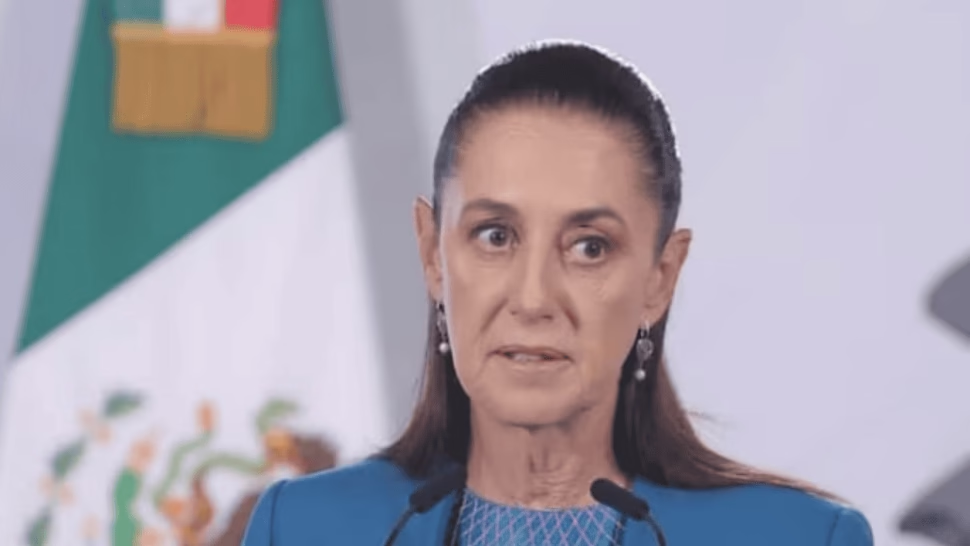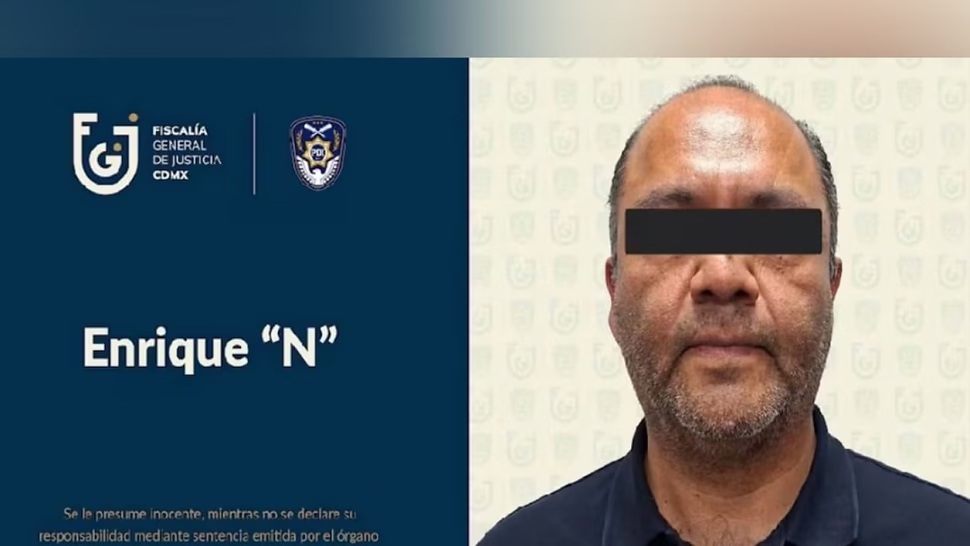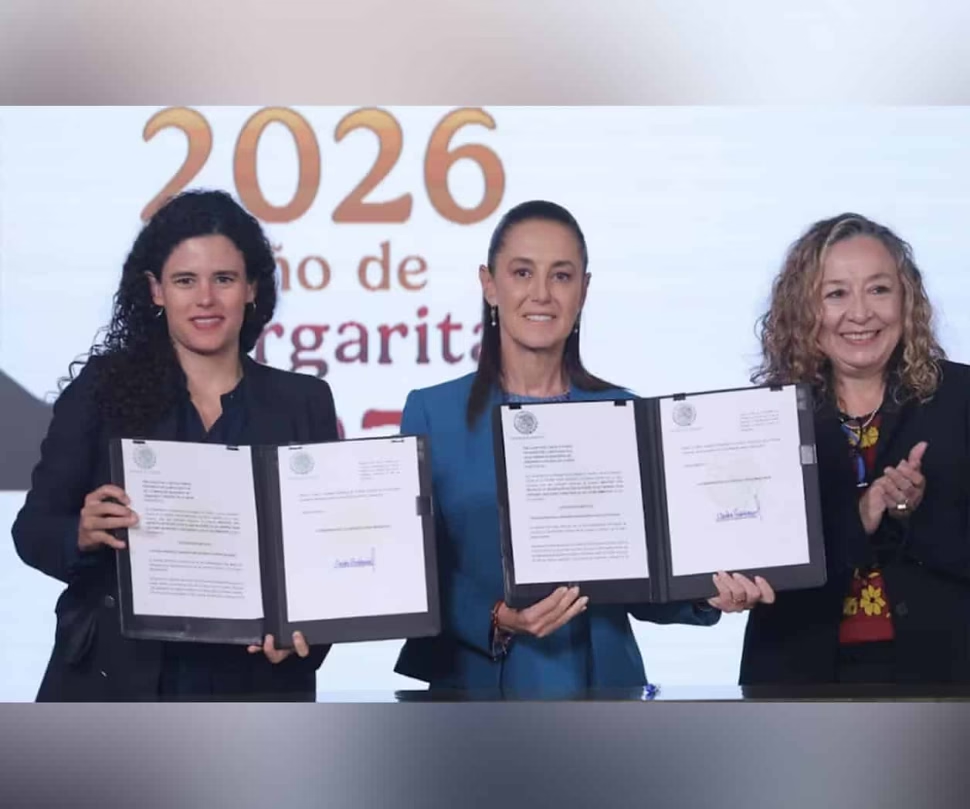
President Claudia Sheinbaum presented the General Law to Prevent, Investigate, Punish and Repair the Harm caused by the Crime of Femicide. The objective: zero impunity and a uniform investigation in all prosecutors’ offices in the country.
Details of the initiative
In her morning conference on July 15 at the National Palace, Sheinbaum stressed that this crime represents the worst form of discrimination and violence against women.
“The worst crime of violence against women… is death, feminicide, which means depriving a woman of her life for the sole reason of being a woman. It is a hate crime.”
He acknowledged that in some prosecutor’s offices it is still classified as suicide when the evidence points to a direct family member. The law seeks to avoid this misclassification and guarantee that all prosecutors’ offices work to the same standard.
Luisa María Alcalde, legal advisor to the Presidency, explained that the criminal type is homologated: “the person who deprives a woman of her life for reasons of gender commits the crime of feminicide.” 10 gender reasons are established, including signs of sexual violence, antecedents of violence and contexts of power asymmetry.
The penalty will be 50 to 70 years in prison throughout the country, with 19 aggravating circumstances that include when the victim is a child, adolescent, elderly, pregnant, disabled, journalist or human rights defender. The loss of inheritance rights, guardianship and parental authority is also contemplated, as well as dismissal and disqualification for public servants.
Sanctions and protocols
Maribel Bojorges Beltrán, head of the Special Prosecutor’s Office for Crimes of Violence against Women, indicated that the initiative establishes approved protocols with a gender perspective, reinforced due diligence and preservation of evidence. The specialized prosecutor’s offices must intervene in all stages of the criminal process.
Ingrid Gómez Saracibar, undersecretary of the Right to a Life Free of Violence, highlighted that the law guarantees victims access to truth, justice and emergency medical and psychological care. The comprehensive reparation of the damage will be transformative, adequate and rapid, with emphasis on the daughters and sons of the victims.
The initiative will be sent to Congress for discussion and approval.