The US returns letters to Mexico about actions of agents in its territory

Washington rejects Mexican diplomatic notes and asks to channel concerns through formal means.

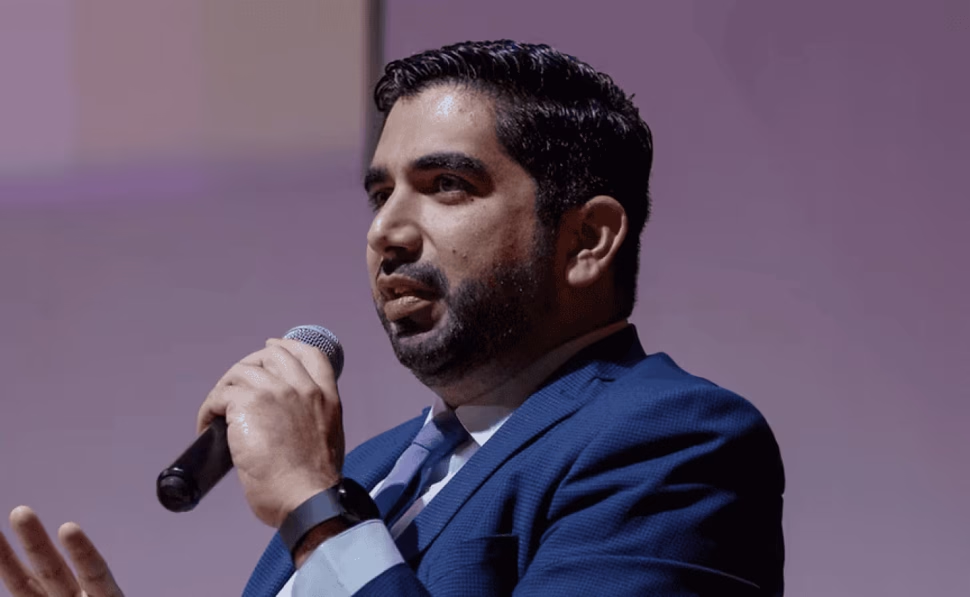
The United States Department of State returned to the Mexican ambassador in Washington, Roberto Lazzeri, the diplomatic notes that sought to direct the actions of US agents on North American soil.

“Kozak returned letters from Mexico intended to direct the actions of US government personnel operating in sovereign territory of the United States. He also recommended that Mexico express its concerns through diplomatic channels, as is customary,” the Office of Western Hemisphere Affairs reported in X.

The meeting was led by senior official Michael Kozak with the Mexican ambassador, according to the same agency.

RelatedSheinbaum confirms Roberto Lazzeri as ambassador to the US

Bilateral tension

Mexico had sent those letters as part of a series of protests over the treatment of migrants. President Claudia Sheinbaum stated that so far these letters “have not produced results.”

The relationship between both countries is going through a delicate moment. In addition to immigration differences, there is a suspicion that the FBI participated in the capture of an organized crime leader, which would have violated Mexican sovereignty.

The United States is Mexico’s main trading partner: 80% of its exports are destined for that country, with which it shares a free trade agreement.

Actions of the Foreign Ministry

The Ministry of Foreign Affairs (SRE) reported that, following what was announced by the president, the Embassy and the consulates presented requests to state prosecutors’ offices. This occurs after the death of 17 compatriots in custody or in operations of the Immigration and Customs Enforcement Service (ICE) was reported.

Foreign Minister Roberto Velasco explained that the procedures were carried out last Monday, although he did not specify the states where the complaints were filed.
Lula conditions his position on US tariffs

Brazil's president will wait for Trump to speak before responding to the tariff increase.

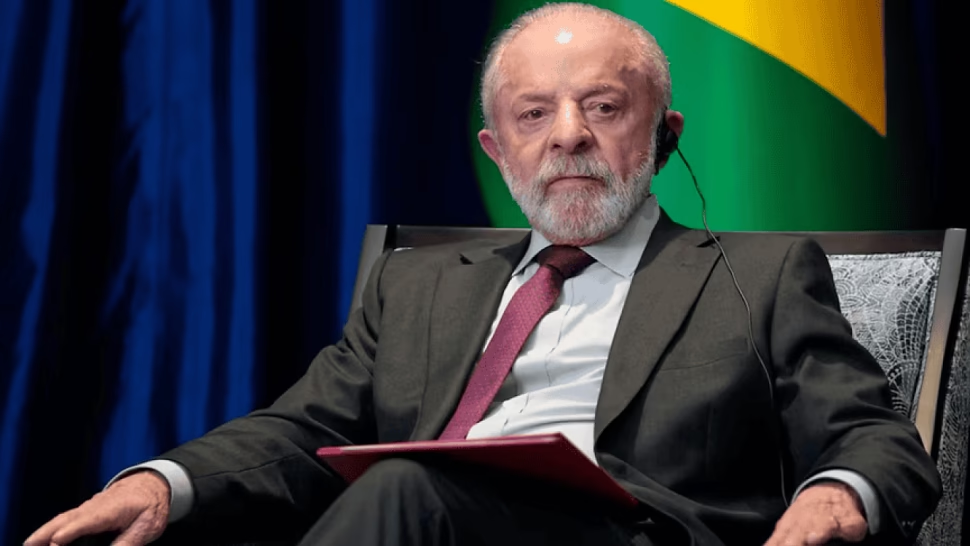
President Luiz Inácio Lula da Silva stated that Brazil does not accept being offended by any nation, in apparent reference to the tariff increase imposed by the United States. However, he warned that he will only comment on the measure after his colleague Donald Trump does so.

“This country must hold its head high because we do not accept that any other nation in the world wrongs Brazil. We want respect, in the same way that we will respect everyone,” he declared during an official event in Rio de Janeiro, accompanied by several ministers and Governor Ricardo Couto de Castro.

Strategic waiting

Lula added that he will wait for Trump’s statements before referring to the “increase in tariffs,” thus avoiding a direct exchange of accusations. “I’m going to wait to talk about the tariff when Trump speaks out. As long as he doesn’t speak, I won’t speak either, because we are going to show that no one beats Brazil with lies,” he said.

The Brazilian government, through its ministers, described as “unjustified” the 25% increase in the rates applied to the South American country’s exports. Washington’s decision has generated trade tension, although Lula opts for a prudent and conditional stance.

Regional context

The US measure impacts key sectors of the Brazilian economy, such as steel and aluminum. Brazil has historically maintained a complex trade relationship with the United States, alternating conflicts and agreements. Lula’s strategy seeks to avoid an escalation while evaluating possible retaliation or negotiations.

Analysts believe that the president’s momentary silence seeks to pressure Trump to take the first step, preventing Brazil from being seen as the initiator of a trade war. The international community is closely watching the development of this dispute between two of the largest economies on the continent.

Continue reading

China rejects Trump’s accusations of electoral interference

China rejects Trump's accusations and calls for stability in bilateral relations.

Accusations that strain the bilateral relationship

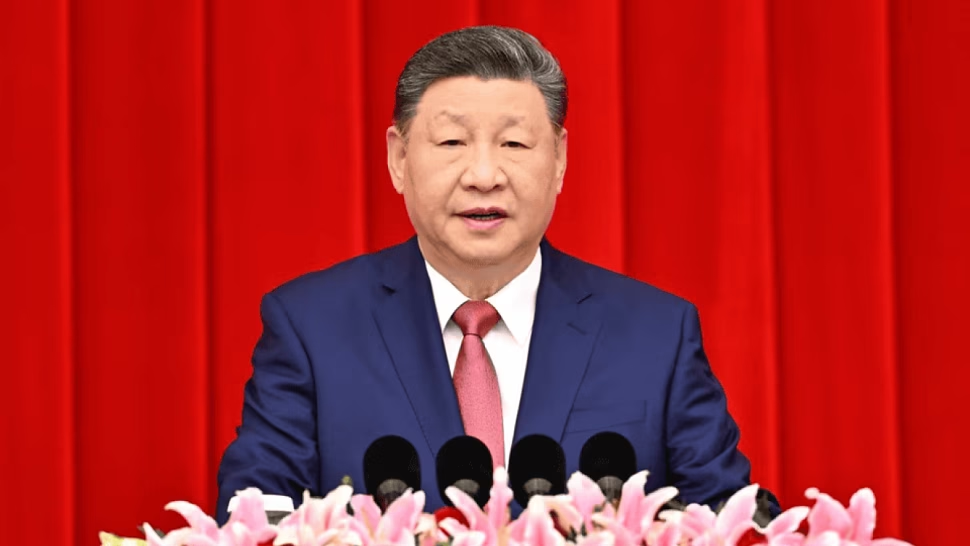
The president of the United States, Donald Trump, accused China of alleged interference in American electoral processes. The declaration conditions the diplomatic scenario between Washington and Beijing, just two months after Xi Jinping received Trump on a state visit.

The spokesperson for the Ministry of Foreign Affairs, Lin Jian, rejected the allegations, classifying them as fabrications and slander. He added that China has no interest in intervening in internal affairs or US elections, and urged maintaining communication channels under criteria of stability and mutual certainty.

The exchange occurs in a context of persistent commercial and technological rivalry. Washington maintains restrictions against Chinese technology firms, and Beijing has responded with regulatory countermeasures. Negotiations on semiconductors and foreign trade controls are at a standstill, threatening the rapprochement planned for Xi Jinping’s official visit to US territory in September.

Specialists consider that Trump’s accusations respond to internal political dynamics, since they were not accompanied by new sanctions or punitive measures. However, they move the dispute from the commercial sphere to that of national security, which increases the unpredictability in the relationship between both powers.

Continue reading

Iran hits desalination plant in Kuwait

An Iranian attack damaged a water and power plant in Kuwait, affecting drinking supplies.

Attack on strategic plant in Kuwait

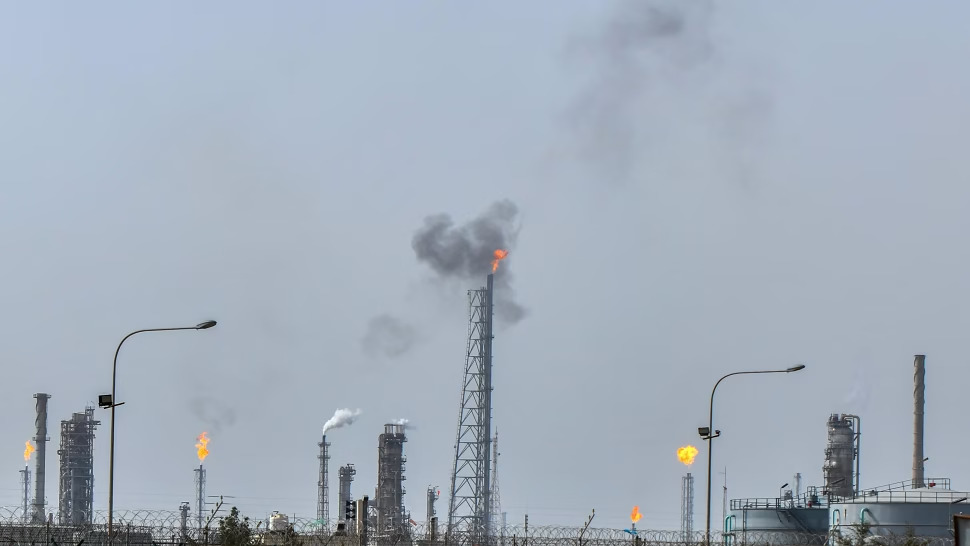
On Friday, an Iranian attack hit a power and desalination plant in Kuwait, causing damage to several power generation units and a fire that was controlled by emergency crews. Kuwaiti authorities activated contingency plans to maintain the supply of water and electricity.

Kuwait relies on desalination for about 90% of its drinking water, similar to other Gulf countries such as Oman and Saudi Arabia. Most of these facilities are on the Persian Gulf coast, making them vulnerable to missile or drone attacks.

This incident highlights the fragility of critical infrastructure in the Middle East amid regional escalation.

Continue reading