72 years later, the Constitution is updated (and finally puts on the violet glasses)
It seems like it was yesterday, but in reality it has been 72 years since women in Mexico were recognized with a basic right: that of voting and being voted for. To put it in perspective, in 1953 Elvis was just a teenager and no one dreamed of TikTok. This anniversary did not go unnoticed, and the Electoral Tribunal of the Judicial Power of the Federation (TEPJF) decided to celebrate it in style, not with a simple party with cake, but with an act of poetic justice: presenting the Political Constitution with a Violet Look. Basically, it’s like when you put a filter on an old photo and suddenly you notice all the details that you previously ignored.
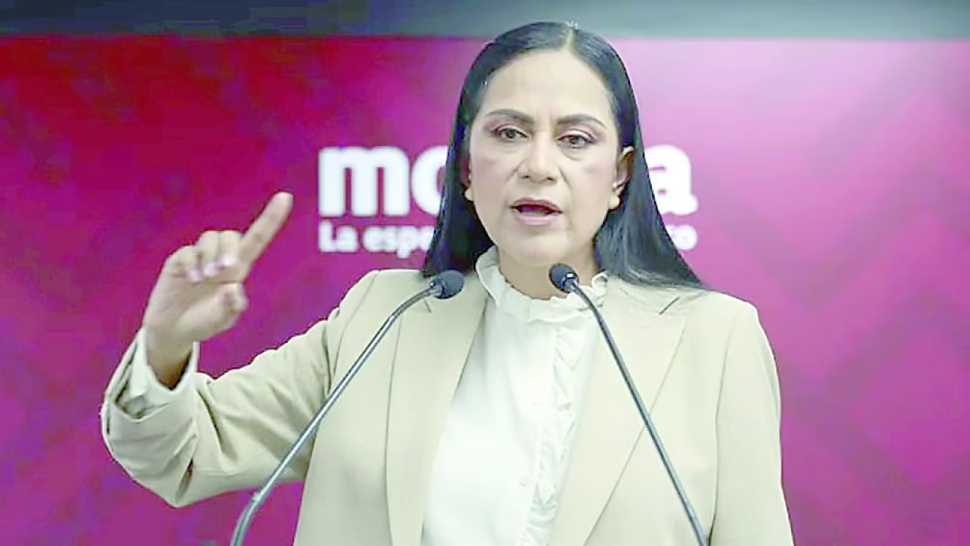
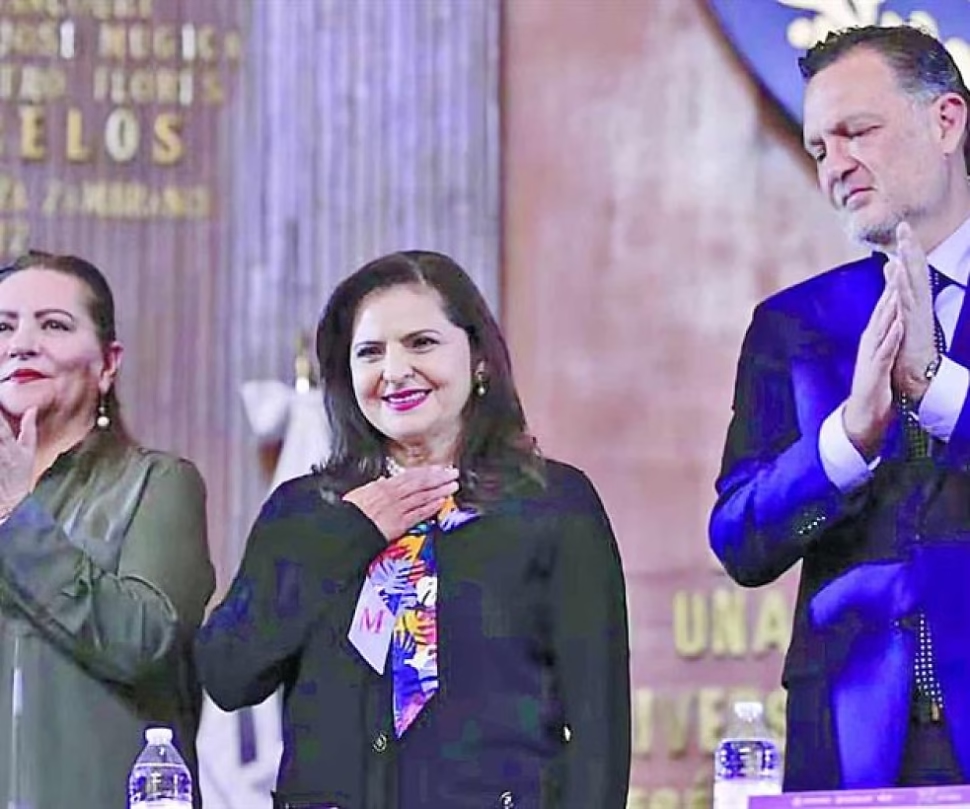
The presiding magistrate of the TEPJF, Mónica Aralí Soto Fregoso, our guide on this constitutional journey, released what is probably the phrase of the day: “without parity, democracy is not complete”. And boy is he right. It’s like putting together a puzzle with a thousand pieces and realizing that you were missing only half. In a packed auditorium in Querétaro, Soto Fregoso not only remembered the path he had traveled, but also put his finger on the sore spot: the real challenge is not to arrive, but to maintain it and make that participation real and effective, not just a salute to the flag.
From theory to sentence: when rights become reality
But what good is a beautiful Constitution if it is not applied? The judge was clear: the work does not end with a special edition. The court will continue to issue sentences that not only promote the political participation of women, but also ruthlessly sanction any conduct that violates gender equality in the public sphere. In other words, it is no longer enough to invite women to the democratic party; Now you have to make sure that no one steps on your dress or tries to take your microphone away.
And at this point, she couldn’t help but mention the elephant in the room (or rather, the boss in Los Pinos): the first female president of Mexico. Its existence is, in itself, a powerful symbol of citizen advancement. He is living proof that, even if the road has been slow and full of potholes, in the end you can reach the top. Although, let’s be honest, there is still a long way to go before this stops being news and becomes normal. The day that a woman in the presidency is no longer a headline, then we will be able to claim victory.
This special edition of the Constitution is not just another book to decorate the shelf. It is a pedagogical tool and a forceful reminder. Its objective is to make visible the importance of women’s human rights in the Magna Carta. It’s like highlighting with a fluorescent marker all the parts that we have historically ignored. Because the rights are there, written, but sometimes they need us to shine a violet light on them so that everyone can see them.
The event, like any good official event worth its salt, brought together a host of officials. They ranged from the judge of the Superior Court, Claudia Valle Aguilasocho, and the judge Gilberto Bátiz García, to the minister Yasmín Esquivel Mossa and the president of the INE, Guadalupe Taddei Zavala. The governor of Querétaro, Mauricio Kuri González, and the mayor of the city, Felipe Macías Olvera, also made an appearance. Come on, it was the fashionable place to be that day, the political equivalent of Vanity Fair.
Precisely, Governor Kuri contributed his reflection, describing this anniversary as “a call to action”. She stressed the need to recognize and promote the fundamental role of women as pillars of the public, democratic, institutional, economic and social life of the country. They are beautiful words, without a doubt. Now, the collective task is to transform that rhetoric into concrete actions and real budgets. Because it’s no use calling someone a pillar if you don’t give them the resources to support the roof.
This anniversary, more than a simple commemoration, works like a thermometer. It measures how much we have advanced since women were second-class citizens, and how far we still have to go to achieve real parity democracy. It is not just about quotas or laws, but about a profound cultural change. A change where women’s participation is not a concession, but an unquestionable fact. Where the “Violet Gaze” is not necessary because equality is simply the norm.
The fight for political-electoral rights is a marathon, not a sprint. And although we have gained important kilometers, the race is not over. Each ruling, each reform, each Constitution with a gender perspective is one more step towards a goal that, hopefully, future generations will not even have to consider.
Does this historical milestone seem relevant to you? Share this note on your social networks and help us make the fight for parity visible. And if you want to continue exploring content about advances in rights and democracy, be sure to check out our other publications.