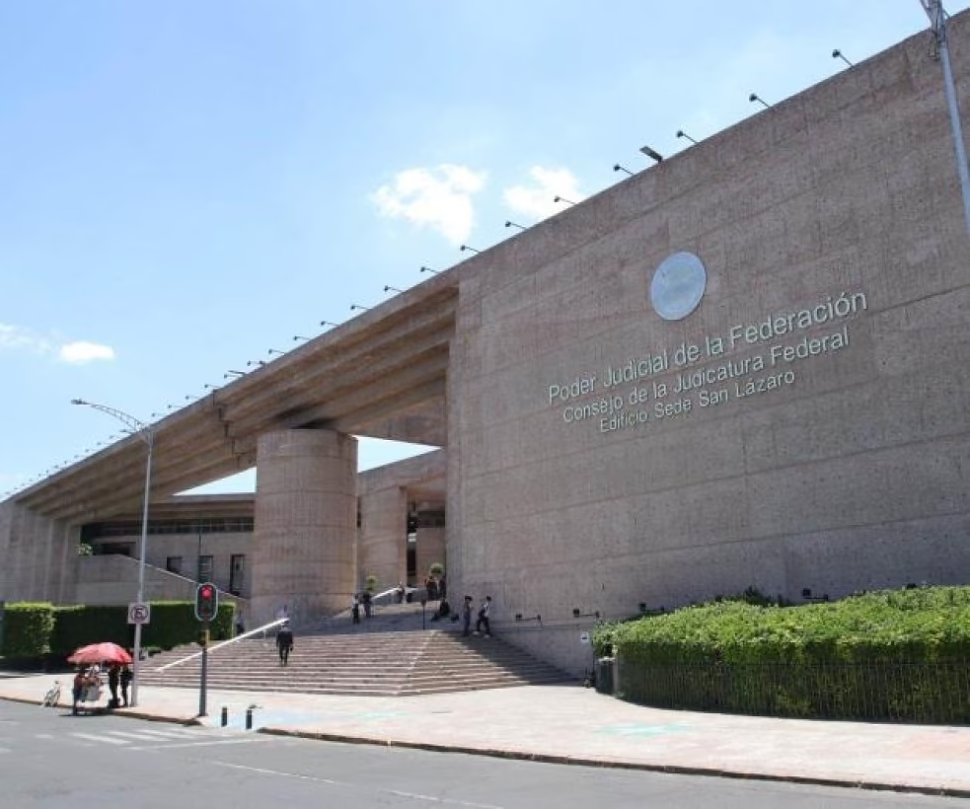
Failures in the supply of equipment and paper paralyze federal courts
Federal courts and tribunals in seven entities in the country—Mexico City, Nuevo León, Jalisco, Campeche, Veracruz, Tamaulipas and Coahuila—face an operational crisis due to the lack of basic supplies such as paper, toner and maintenance of multifunctional printers. According to internal documents, this situation has forced some courts to notify resolutions exclusively electronically, evidencing a critical dependence on obsolete or poorly managed systems.
CJF Decision: Change of supplier and redistribution of resources
The Council of the Federal Judiciary (CJF) announced the immediate replacement of the equipment maintenance provider, attributing the failures to logistical problems and not to budgetary limitations. In circular 2/2025-SEV, executive secretaries Amalia Fernández Barquín and María Fernanda Casanueva detailed that the deficiencies arise from errors in distribution and the shortage of components for repairs. In addition, they confirmed that the General Directorate of Information Technologies is working on reassigning underused equipment between administrative units.
Recently, the CJF awarded million-dollar contracts to alleviate the crisis: Tecnosolutions Mayoristas México will supply paper for $258 million, while Comercializadora DOPAJ will provide toner and consumables for $113 million. However, questions remain about the transparency of the process, since the circular omits details of the replaced supplier and the canceled items.
Impact and alternative measures
The disruption has accelerated the adoption of digital documentation, although experts point out that this does not solve structural problems, such as the technological gap in regions with less infrastructure. The CJF urged staff to optimize resources, but without a clear plan to prevent future failures, the measure seems reactive rather than preventive.
This case reflects recurring challenges in public administration: opacity in bidding, dependence on single contractors and lack of contingency protocols. Analysis of previous years shows that similar incidents have cost the treasury up to 400 million pesos in fines and compensation for procedural delays.
What’s next? The effectiveness of the actions will depend on independent audits and rigorous supervision. Meanwhile, federal justice operates in an emerging mode, with risks for access to fundamental rights.
Explore more about judicial modernization and share this analysis to make visible the challenges in the administration of justice. #TransparenciaCJF #DigitalJustice
Source: Circular 2/2025-SEV, CJF 2025 public tender data.