Centralization of protections in transparency and data protection
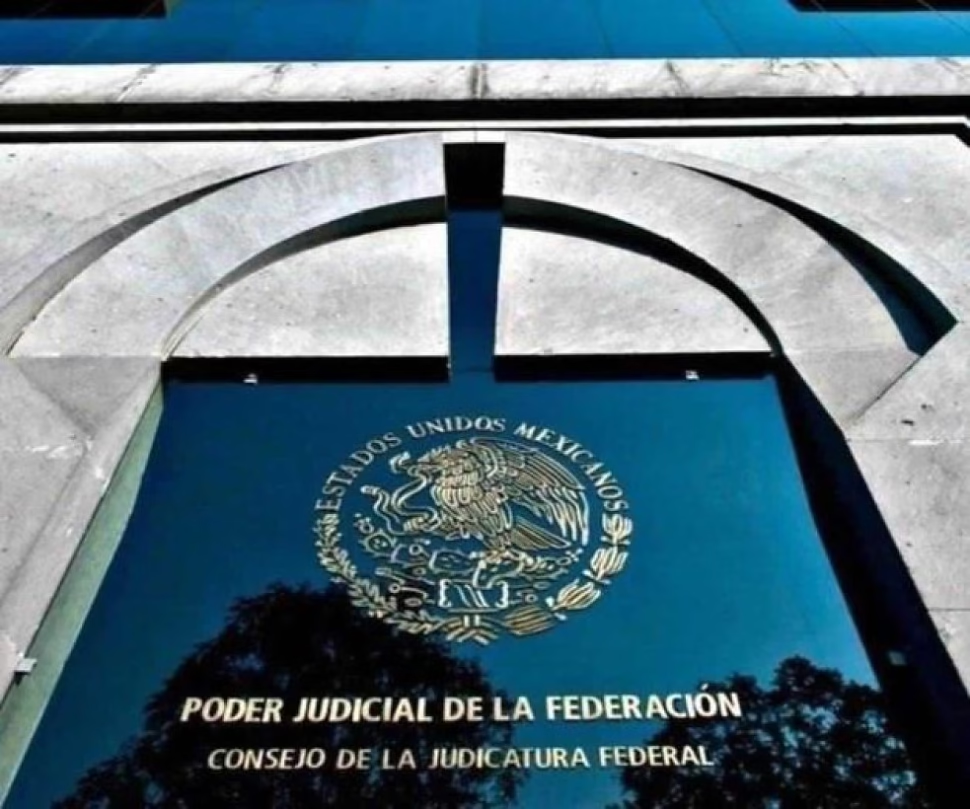
The Federal Judiciary Council (CJF) has designated the courts and tribunals of the state of Aguascalientes as responsible for resolving all appeals for protection related to transparency, access to public information and protection of personal data. This decision is part of compliance with the new General Transparency Law, promulgated on March 20, which gave the CJF a period of 120 days to establish specialized jurisdictional bodies in this matter. Until now, these cases were heard by judges distributed throughout the national territory, with a greater concentration in Mexico City.
Practical implications for citizens
Although the amparos can be presented digitally, any procedure that requires in-person interaction with secretaries, judges or magistrates will force the plaintiffs to travel to Aguascalientes from any other point in the country. This measure could represent an obstacle for citizens with limited resources, thus discouraging litigation against denials of government information. In addition, the reform established a six-month freezing period for the 469 lawsuits in process against resolutions of the extinct National Institute for Access to Information (INAI), which must now be redirected to the seven District Courts and two Collegiate Courts of the Thirtieth Circuit.
These bodies will also hear about the protections filed against Transparency for the People, the agency of the Anti-Corruption and Good Government Secretariat (SAGB) that assumed the functions of the INAI in relation to the institutions of the federal Executive Branch. Likewise, they will resolve controversies related to decisions of the guarantor authorities of the Legislative and Judicial Branches and autonomous bodies, resuming the scheme in force between 2003 and 2016, where each entity had its own review mechanism regarding access to information.
Justification and internal controversy
The CJF based the decision on a workload analysis at the national level, carried out by the Executive Secretariat for the Creation of New Bodies with the support of the General Directorate of Judicial Management. In its Agreement, published this June 30 but approved since the 11th of the same month, it is stated that Aguascalientes has the necessary operational capacity to assume this responsibility. However, the measure was not free of discrepancies: councilor Verónica de Gyvés registered her vote against, although the reasons for her opposition were not detailed.
This change represents a significant shift in the management of legal conflicts linked to transparency, concentrating in a single federal entity processes that were previously distributed in multiple jurisdictions. Experts in administrative law warn that, although specialization could speed up resolutions, physical centralization could create barriers to access to justice for vulnerable sectors.
Are you interested in learning more about how this reform affects the right to information? Share this analysis on your social networks and follow our content to stay up to date with the latest updates on transparency and accountability.