Strategies to financially strengthen Mexican SMEs

Legislators and experts design strategies to overcome the obstacles that limit the growth of the main national economic engine.

Analysis of the Structural Strengthening of Micro, Small and Medium Enterprises

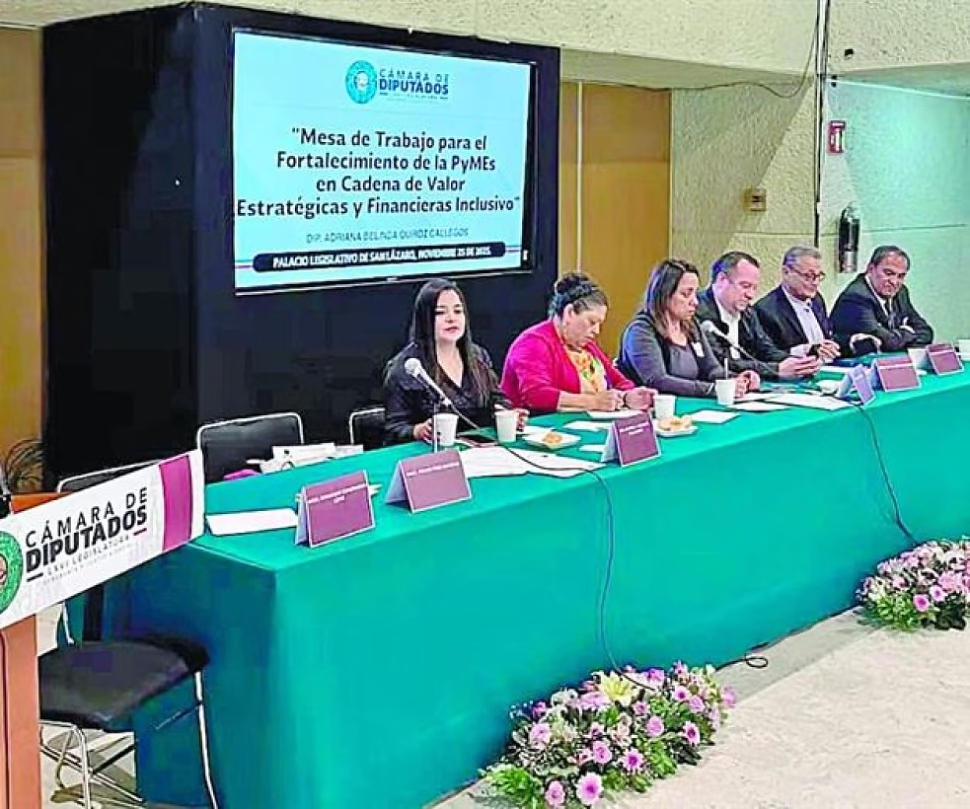
Recently, the Working Group “Strengthening SMEs in Strategic Value Chains and Inclusive Financing” was established in the Chamber of Deputies. This legislative initiative brought together specialists from the Secretariat of Finance and Public Credit (SHCP) and representatives from the Development Banking, with the fundamental purpose of diagnosing and proposing solutions to the structural challenges faced by this productive sector. The research focuses on identifying mechanisms to strengthen support aimed at micro, small and medium-sized businesses in Mexico, with a particular focus on accelerating their digital transformation and operational modernization, factors identified as critical to their competitiveness in the current economic environment.

The analysis of the situation reveals that the simplification of administrative procedures is an essential component to reduce operating costs and optimize management times. At the same time, there is an urgent need to guarantee financial inclusion in regions with less economic development, as well as to promote technical training programs aligned with the emerging demands of the industry. Representative Adriana Belinda Quiroz Gallegos, secretary of the Governance and Population Commission, served as convener of this working meeting, which brought together federal authorities, academics, representatives of the business sector and development banks, with the aim of building consensus that translates into tangible benefits for the country’s SMEs.

RelatedBanks will reduce interest rates for SMEs with state support

Economic Impact and Strategic Axes of Intervention

The quantitative data presented during the event underlines the national relevance of this business segment. MiPyMEs constitute 99.8% of the economic units in the national territory, adding up to more than 4.7 million companies that generate approximately 27 million jobs. These figures show that this business network is the pillar of the Mexican economy. As the representative Quiroz Gallegos stated: “Behind these figures there are life stories and projects that sustain Mexico with effort and resilience. The commitment of the Fourth Transformation is to ensure that no MSME is left behind due to lack of financing, structural inequality or absence of public support.” This declaration reflects the political approach that seeks to mitigate asymmetries in access to opportunities.

The work methodology was organized around five strategic axes of analysis, designed to address the problem in a comprehensive manner. These axes are: Industrial policy and strategic value chains; Specific tax and financial instruments for SMEs; Dual education and specialized technical training; Digitization and administrative simplification; and a space dedicated to “academic proposals for the design of public policies.” This structure allows for a deep exploration of each variable, from macroeconomic policy to the implementation of practical support tools, laying the foundation for more effective future legislation and a more dynamic and inclusive business ecosystem, capable of facing the challenges of globalization and the fourth industrial revolution.

Share this analysis on the future of SMEs on your social networks and explore more content related to national economic development.


Court analyzes whether decree on Frida Kahlo violates private property

The SCJN will review whether the 1984 decree that protects Kahlo's works is constitutional.

The SCJN reviews the decree that protects Frida Kahlo

The Supreme Court of Justice of the Nation (SCJN) will analyze the legality of the 1984 presidential decree that prevents the definitive export of works by Frida Kahlo. The plenary session admitted an injunction from the Ve por Más bank, owner of the oil painting Self-portrait with medallion, painted in 1948. The dispute pits the protection of cultural heritage against the right of private property.

Magistrate Giovanni Azael Figueroa promoted the case to establish whether the restrictions exceed the powers of the Executive. The Court will determine if the decree is constitutional.

Background: the Gelman collection

The review occurs in the midst of the debate over the Gelman collection, which includes 11 works by Kahlo loaned to Banco Santander. The Court’s resolution will set limits for future disputes over cultural property.

The ruling will be key to defining to what extent the State can intervene in the ownership of works considered national heritage.

Continue reading

IMSS and Fonacot update agreement to improve services for workers

IMSS and Fonacot renew their alliance until 2030 to streamline procedures and protect labor rights.

Strategic alliance for labor rights

The Mexican Social Security Institute (IMSS) and the National Fund for Workers’ Consumption (Fonacot) signed a collaboration agreement that updates their exchange of information and services. The objective: respond to the current operational, technological and regulatory needs of both agencies.

The agreement was signed by Wendolyne Retana Alarcón, general director of Fonacot, and Luisa Obrador Garrido Cuesta, director of Incorporation and Collection of the IMSS. It will be valid until September 30, 2030, with the possibility of extending it for two more years.

The relationship between both institutions dates back to 2007. Since then they have maintained a constant flow of data to facilitate procedures and guarantee better credit and social security conditions for working people.

With this update, the aim is to streamline processes, reduce response times and strengthen the protection of the rights of the country’s formal workers.

Continue reading

Energía Costa Azul makes first shipment of LNG in the Pacific

First shipment of liquefied natural gas from the Mexican Pacific marks an energy milestone.

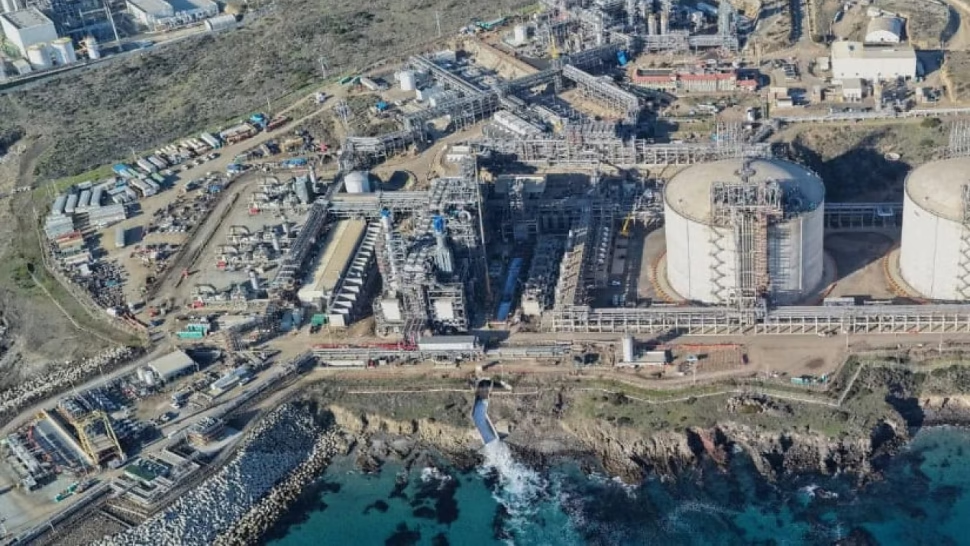
The Energía Costa Azul project, in Ensenada, Baja California, completed the first shipment of liquefied natural gas (LNG) from the Mexican Pacific coast. The Sempra Infrastructure company confirmed that the shipment is part of the tests prior to the start of commercial operations.

International context

This movement occurs in a context of high demand for energy security. Tensions in the Strait of Hormuz, through which nearly 20% of global LNG trade passes, have accelerated the search for new supply routes.

Strategic advantage

Sempra Infrastructure noted that phase 1 of the project will connect North American gas with Asian markets, taking advantage of the strategic location of the Mexican Pacific coast. Researcher Adrián Duhalt highlighted that the proximity to the gas-producing basins of the United States represents a competitive advantage for Mexico.

Continue reading