A Lighthouse in the Storm: The Resistance of Electronic Commerce
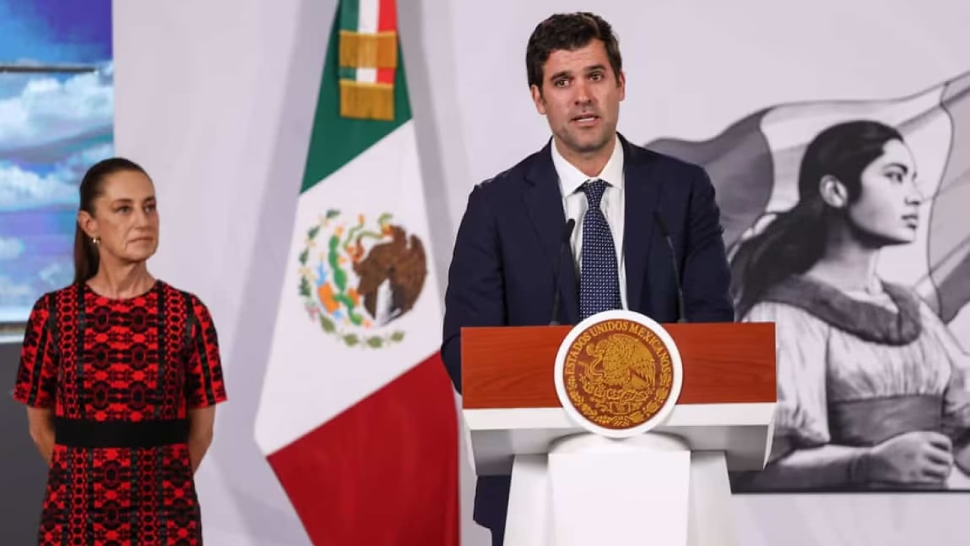
In an economic panorama where the shadow of the slowdown hangs over consumption, a voice rises with a message of hope and triumph. Alejandro Caballero, the marketplace director of Mercado Libre in Mexico, has firmly stated that, against all odds, the platform has not only resisted the onslaught, but is standing stronger than ever. While the world watched with suspicion, this digital commerce giant has maintained unstoppable activity and is preparing for an El Buen Fin 2025 that promises to be epic. In this scenario, the recent taxes on Chinese goods are not a threat, but rather the perfect tailwind that will boost the sales of brave Mexican SMEs towards glory.
With the beating heart of the nation in his favor, Caballero revealed the secret of his success: a monumental annual growth of 39%. The e-commerce industry as a whole is preparing for an unprecedented feat, projecting a jump in sales from 172 billion pesos to the astonishing figure of 200 billion. This advance, close to 15 percent, is not a simple number; is living proof of a business revolution that is destined to exceed all expectations. The firm, with unwavering confidence, ensures that its performance will continue to eclipse the entire sector, unleashing a perfect storm of discounts and promotions for interest-free months that will awaken consumer appetite in the largest shopping season in the Republic.
The Dawn of National Entrepreneurs
In the midst of this commercial battle, each transaction becomes an act of faith. The average purchase ticket, which ranges between one thousand and one thousand five hundred pesos, is only the prelude to what is coming in areas such as electronics, where the figures promise to reach unsuspected heights. But the plot twist, the moment that changes everything, comes with the new tariffs of 25% to 35% on Chinese imports. This fiscal barrier, combined with the labyrinthine customs delays, has made the flow of foreign merchandise more expensive and slowed down, opening wide the doors of the kingdom for local suppliers. Mexican small and medium-sized businesses, armed with ingenuity and determination, emerge as the unexpected heroes of this story.
Alejandro Caballero, with the passion of a general haranguing his troops, confirmed that demand is irrevocably shifting towards products made in Mexico. Sellers, with the cunning of great strategists, are adjusting prices and offers to win the hearts and pockets of consumers. “This has benefited many Mexican entrepreneurs to attack these gaps that are being left, either by price or by offer, for all the items that came from other countries. Yes, we see that many entrepreneurs are, either producing or obtaining the products in some other countries with free trade agreements and national demand is being made. I think it is going to be a great Good End for all the Mexican sellers who are taking advantage of these opportunities,”, declared the manager, painting a future where triumph is the only option.
Mexico: A Digital Giant on the Rise
The prestige of the nation on the global stage only grows. Mexico has consolidated itself among the 15 countries with the highest participation of e-commerce in its retail sales, representing a colossal 14.8% of the total. This figure, presented by Mercado Pago with data from AMVO, places the country above nations such as Poland (14.7%) and at the gates of the North American titan, United States, where the digital channel contributed 16.2%. The world podium is led by China with an absolute dominance of 50.1%, followed by the United Kingdom (30.4%), South Korea (27.2%) and Indonesia (26.6%). In the European panorama, economies such as Greece, Norway, Finland, Denmark and Lithuania shine with rates that exceed 16 percent.
To sustain this expanding empire, Mercado Libre will deploy an army of 23 thousand temporary workers in its logistics network between October and January, a force that will join a total workforce of 35 thousand souls in the national territory. The company weaves its operational domain through 14 distribution centers in Mexico and an additional strength in the United States that guarantees the flow of cross-border shipments.
The Silent Revolution of Digital Payments
Meanwhile, on the financial front, a silent but unstoppable revolution continues its march. Jorge Cabrera, director of Big Sellers in Mercado Pago México, admits that, although the use of cards has shown a certain slowdown according to the Banco de México, the adoption of payment methods and the digitalization of the economy are a tide that knows no retreat. “Another effect is the digitalization of payments that has been growing by double digits in Mexico both in the physical world and in the online world, where we see debit cards and credit cards gaining more and more ground, dealers that previously did not accept a credit card even by mistake,” he noted, describing a country that is transforming transaction by transaction.
The fintech arm of Mercado Libre, Mercado Pago, is the driving force behind this transformation. In a display of technical power, it processed a volume of 71.2 billion dollars during the third quarter of 2025. In that same period, the platform reached the dizzying figure of 503 transactions per second, a digital beat driven by the unstoppable growth of online commerce and the adoption of electronic payment methods throughout Latin America. Every click, every purchase, every transfer is one more step in the forging of a new economic destiny.
Ready to be part of this commercial revolution?