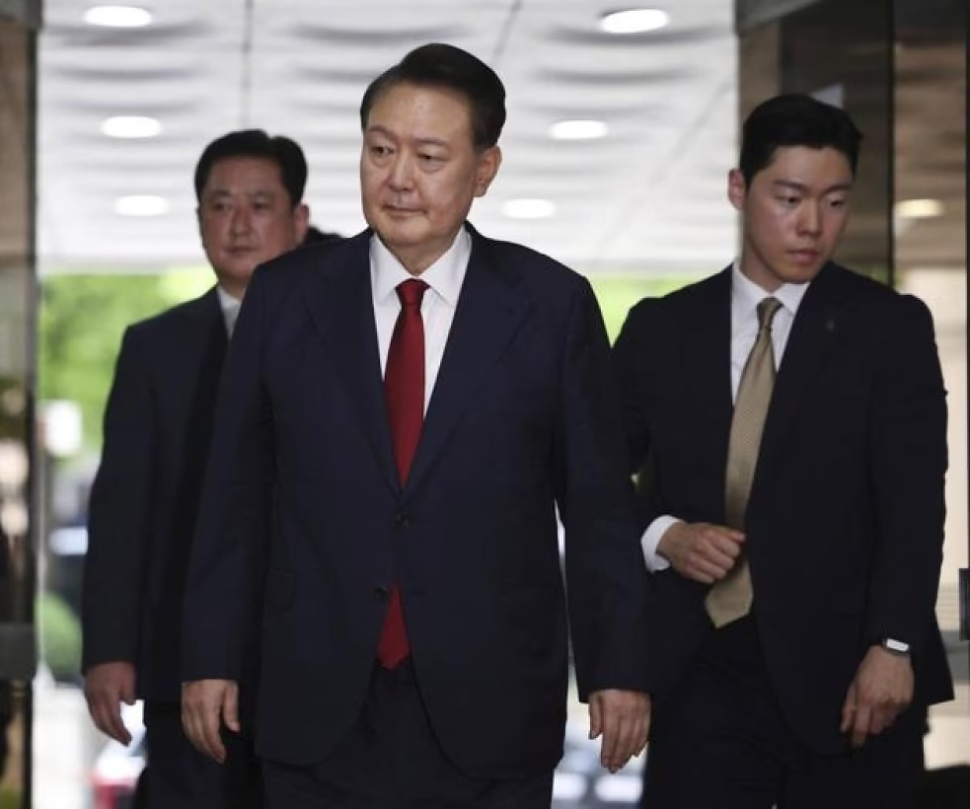
A new chapter in the Yoon case: justice in motion
Justice in South Korea has taken a decisive step by approving the new arrest of former President Yoon Suk Yeol, marking a crucial moment in this case that has captured international attention. The Seoul Central District Court determined that there are risks of destruction of evidence, thus supporting the request of special prosecutor Cho Eun-suk. This judicial shift not only reflects the legal system’s commitment to transparency, but also sends a clear message: no one is above the law.
Key details of the judicial process
Yoon, who had regained his freedom in March, now faces prolonged detention while additional charges are investigated, including abuse of power, obstruction of official duties and falsification of documents. His legal team described the measure as “excessive”, but the court considered it a priority to guarantee the integrity of the process. The former president could remain in custody for up to six months before an initial verdict, a critical period to define his future.
This case dates back to December, when Yoon declared martial law in a controversial attempt to rein in his political opponents, accusing them of “anti-state” activities. However, the measure lasted just hours thanks to the quick action of legislators, who lifted the decree. This episode, along with allegations of using the security forces as a private army, led to his dismissal in April and could now culminate in a historic conviction.
Political and legal implications
The current president, Lee Jae Myung, has launched exhaustive investigations into Yoon’s actions, including alleged irregularities by his administration. This case not only defines the legacy of a leader, but also sets a precedent for the balance of power in South Korea. The charges, which include the death penalty or life imprisonment, underscore the seriousness of the allegations.
As Yoon waits in the detention center, the country watches this unprecedented judicial process unfold. Every hearing, every testimony, and every decision reinforces the importance of accountability in a strong democracy. This is a powerful reminder that institutions, when functioning independently, can correct even the deepest imbalances.
What do you think about this historic case? Share this article to keep the conversation about justice and democracy going. Explore more content on international politics on our site.
#Justice #Democracy #SouthKorea