Sinkhole in Ecatepec reveals failures in hydraulic infrastructure

A road collapse in Ecatepec exposes critical failures in the hydraulic network after intense rains.

Road incident due to soil collapse in Ecatepec

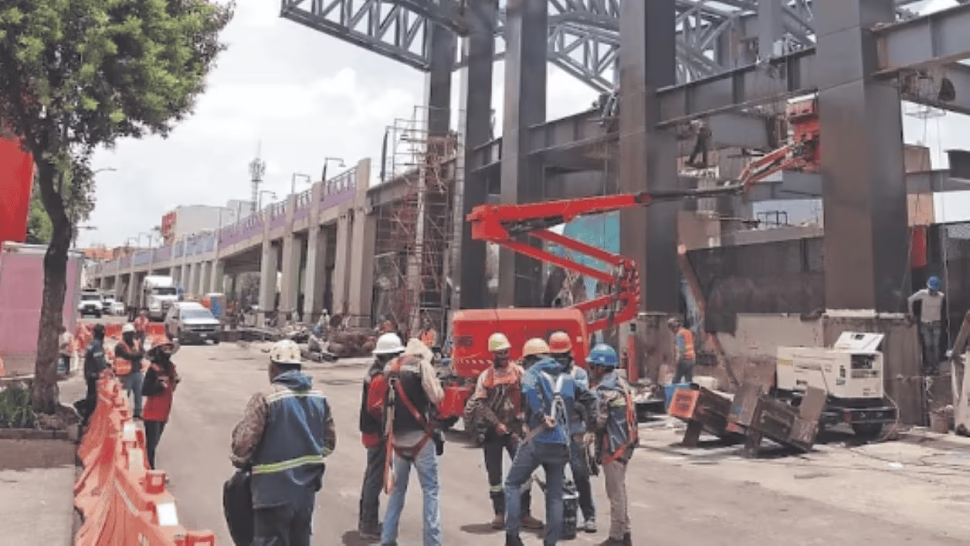
A sinkhole approximately 6 meters wide and 3 meters deep originated at the intersection of Avenida R1 Adolfo López Mateos and Avenida Gobernador Gustavo Baz, located in the Granjas Valle de Guadalupe neighborhood, within the municipality of Ecatepec, State of Mexico. The collapse directly affected vehicular circulation and exposed serious deficiencies in the local drainage network.

Technical causes of collapse

Witnesses reported that the phenomenon occurred during the afternoon of Wednesday, after the passage of a heavy vehicle (pipe type) that fractured the pavement previously weakened by an underground water leak. This condition was aggravated by the intense precipitation recorded in the metropolitan area during the last week, which saturated the subsoil and accelerated the erosion process. When inspecting the site, fractured drainage pipes and a constant flow of wastewater were identified, evidencing systemic failures in the maintenance of the infrastructure.

RelatedSegiagua concludes repair of sinkhole in Calzada Ignacio Zaragoza

Specialized personnel from SAPASE (Ecatepec Drinking Water, Sewage and Sanitation System) and the Directorate of Urban Services began priority repair work, which includes:

  • Stabilization of the affected perimeter
  • Replacing damaged hydraulic lines
  • Reconstruction of the pavement base layers

Impact and technical analysis

This incident reflects a recurring pattern in municipalities with high population density and aging service networks. Civil engineering experts point out that the combination of factors such as unattended leaks, vehicle overload and extreme weather conditions generate a latent risk of road collapses. Ecatepec, in particular, records a history of 12 similar events in the last 24 months, according to state Civil Protection data.

Municipal authorities announced a preventive inspection program in 58 critical points identified for their vulnerability to subsidence, prioritizing areas with previous reports of leaks or deformations in the pavement.

Are you worried about the state of the streets in your area? Share this article to make visible the importance of urban maintenance and explore more content on infrastructure in our specialized section.

Profeco warns about fraud in offers for the 2026 World Cup

The agency detected fake sites with unrealistic prices for tickets and tourist packages.

The Federal Consumer Prosecutor’s Office (Profeco) warned about misleading promotions related to the 2026 FIFA World Cup. In a statement, it noted that offers with very low prices for tickets, exclusive experiences, tourist packages and accommodation are circulating on social networks. These come from accounts without verifiable means of contact or clear change or cancellation policies.

Protection measures

Profeco explained that it has identified sites that appear to be trustworthy, but do not comply with electronic commerce requirements to guarantee secure transactions. Therefore, it recommended purchasing products and services only from official or authorized suppliers, and avoiding secondary markets.

In addition, the agency constantly monitors digital platforms and responds to complaints to punish those who spread misleading advertising. It urged consumers to report any suspicious practices, which allows unsubstantiated ads to be modified or removed. Citizen collaboration is key to protecting their rights in large-scale events such as the World Cup.

Continue reading

CIEP: 2026 World Cup mobility should not be isolated

The CIEP warns that mobility projects for the 2026 World Cup must be integrated into a strategic mass transportation plan.

Investment in public transport: beyond the World Cup

The Center for Economic and Budgetary Research (CIEP) presented the study “Mobility at the subnational level: Investment in public transportation within the framework of the 2026 World Cup.” Its conclusion is clear: mobility projects for the 2026 World Cup should not be isolated events. They must be part of a strategic plan that contemplates the construction of more mass transportation lines and connectivity between the host cities.

The CIEP emphasizes that investment in public transport must guarantee the right to mobility beyond the World Cup celebration. The benefits cannot be limited to visitors. They have to be the beginning of a more modern, efficient and inclusive transportation system for the entire population.

The study also diagnoses the current state of public transportation in Mexico. The urban development model is dispersed and is disconnected from territorial planning policies. As a result, the existing service is old, lacks adequate maintenance, and insecurity within units and stations reduces user confidence.

Headquarters cities and use of transportation

In 2026, the World Cup will be held in three cities: Mexico City, Guadalajara and Monterrey. In these cities, different mobility projects have been implemented to facilitate the movement of visitors. But the CIEP insists: these works must be the foundation of a long-term public transportation system.

The key fact: in the country’s main metropolitan areas, 40% of the population uses public transportation to go to work. In Mexico City, the figure rises to 49.2%; in Guadalajara, 38.6%; and in Monterrey, 33.4%. Not counting travel on foot or by bicycle, public transportation is the most used motorized means in Mexico.

Continue reading

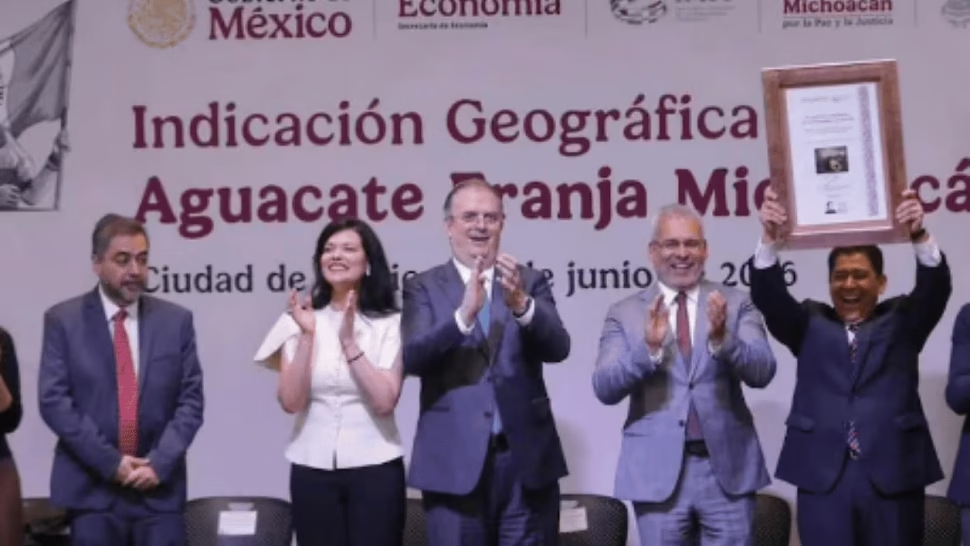
Michoacán obtains Geographical Indication for its avocado

Recognition that benefits 48 thousand producers and opens new international markets.

The Mexican Institute of Industrial Property (IMPI) granted the declaration of Geographical Indication (GI) to the avocado produced in the Michoacan strip. Governor Alfredo Ramírez Bedolla described the event as a step that strengthens consumer confidence and competition in the market.

A quality seal for avocado

In a press conference with the federal Secretary of Economy, Marcelo Ebrard, the state president explained that this designation recognizes the work of 48 thousand producers, 94 packing plants and an agribusiness that generates more than 150 thousand direct and indirect jobs. The GI allows the Michoacan product to be differentiated in national and international markets.

Ebrard confirmed that, on instructions from President Claudia Sheinbaum, projects are being developed to enhance the growth of Michoacán. He assured that support for the state and the productive sector will continue.

The general director of IMPI, Vidal Llerenas Morales, highlighted the joint effort of the state government and producers to obtain this certification, which adds value to avocado abroad.

The Secretary of Economic Development of Michoacán, Claudio Méndez, also participated in the event; and the presidents of APEAM, Raúl Martínez Pulido; from UDECAM, Miguel Melgoza Radillo; and of the Board of Directors of Avocado Producers and Packers A.C., Rafael Paz Vega.

Continue reading