The move behind the stain: an observatory to monitor the Gulf
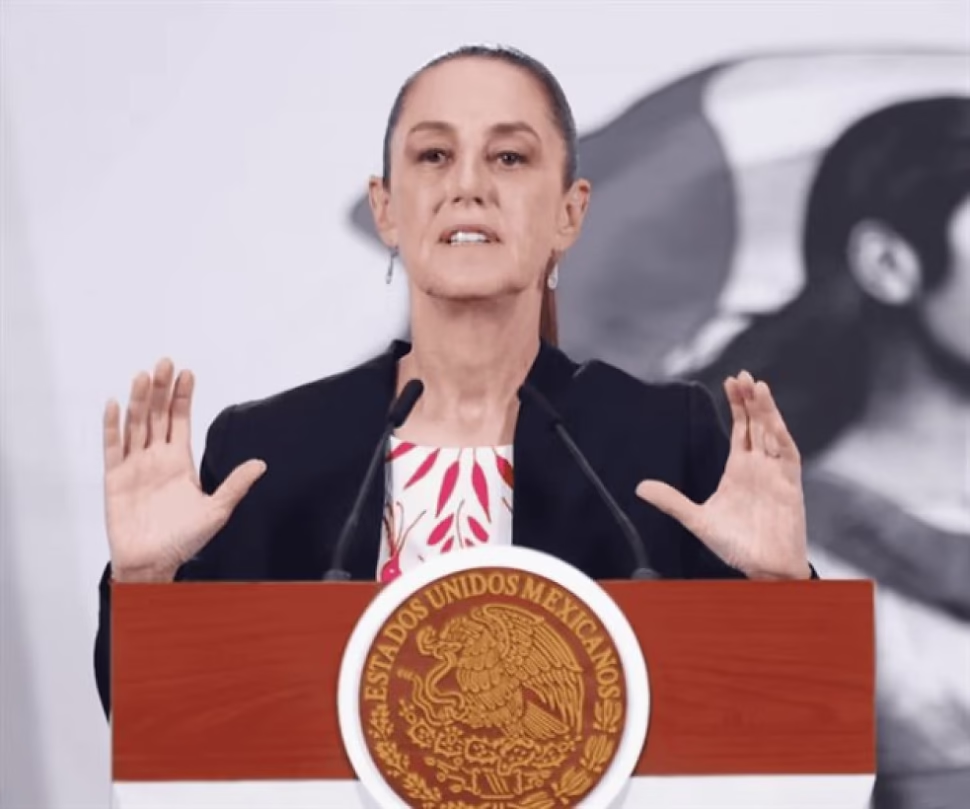
After weeks with the beaches of Veracruz marked by a fuel spill, President Claudia Sheinbaum pulls a card out of her sleeve. His government is preparing the creation of a Gulf Observatory. The idea is to have scientific eyes on the sea, all the time.
This Tuesday, an interdisciplinary team of experts and officials will meet with her. Their mission: to present a comprehensive analysis of what happened and how it has been cleaned up. “The intention is that they can provide a comprehensive review of the causes… and how they have been working,” explained the president.
“The intention is that they can provide a comprehensive review of the causes of the spill or the different causes of spills and how work has been done to clean the ocean”
Sheinbaum defended the immediate response. He assured that from the first moment the Navy, environmental authorities and Pemex were coordinated. But beyond finding culprits, the final objective is that new permanent monitoring system.
The other front: defending the tourist season
Meanwhile, on the political scene, there was another fire to put out: the image of the Gulf as a vacation destination. The president came out to defend economic success with data.
He assured that, against all forecasts and versions, beach destinations had hotel occupancy close to 80% during Easter. Including Veracruz, Mazatlán and Acapulco.
“If the sea had been in different conditions, we would not have had the number of tourists that there were,” he stated forcefully.
It is a statement that seeks to close public debate. The Tourism Secretary will present a detailed report next week to support these figures.
This is how the board moves. On the one hand, a technical proposal for the future to calm the waters (literally). On the other, a forceful economic message to calm spirits. The post-spill script is already underway.