Sheinbaum’s second act
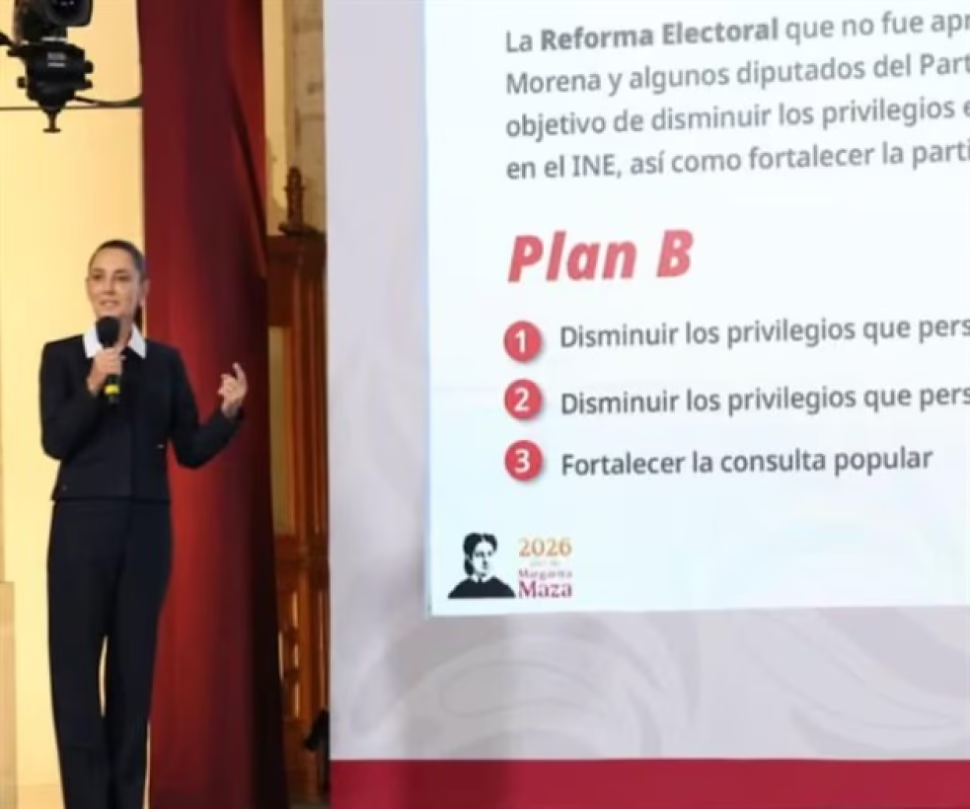
The performance did not end with the first rejection. After seeing how the Chamber of Deputies rejected its electoral reform, President Claudia Sheinbaum already has the script ready for the second act. This Tuesday he will send to Congress what he calls his “Plan B.”
And she doesn’t go alone. Morena and the Green Party, their allies in this political work, agree with the new move. The curtain rises again.
What is this new script about?
In her morning conference from the National Palace, Sheinbaum was clear: this is about money. About “the reorientation of the budget” in local congresses, the Senate and municipal councilors.
The idea is simple but powerful: that these resources do not remain in the legislative structures, but rather come down to earth. That they finance public works in municipalities and states. Let them reach the people.
“We continue to fight against privileges,” she declared with that intensity that characterizes her. And he released the numbers that justify his battle.
“It cannot be that a Congress of a state has 25 deputies, another Congress will have 25 deputies and one Congress has an amount per deputy of 39 million pesos and another has five million pesos.”
For her, this disparity is an unsustainable excess. A privilege that bleeds resources that should have another destination.
“And that resource is not taken by the federation, but the objective is for it to remain for the people, to help improve the public services of municipalities and states.”
The curious thing is that not even she herself knows where she will present this new initiative. In Deputies again? Or will he try his luck in the Senate? That uncertainty adds suspense to the drama.
But Sheinbaum made it clear that this is not a tactical retreat. It is a strategic rethinking. A change of scenery while maintaining the same central conflict: the fight against what is considered unjustified privileges.
“We are going to continue, in any case, insisting that there must also be a reduction in the privileges of political parties and the election of all deputies.”
The message is clear: if they could not handle the entire electoral package, at least they will make progress on this budgetary flank. It’s pure politics: when they close a door on you, you look for a window.
Meanwhile, the spotlight is on her. The political audience is waiting to see if this second act will be better received than the first.