Sheinbaum’s move after the first setback
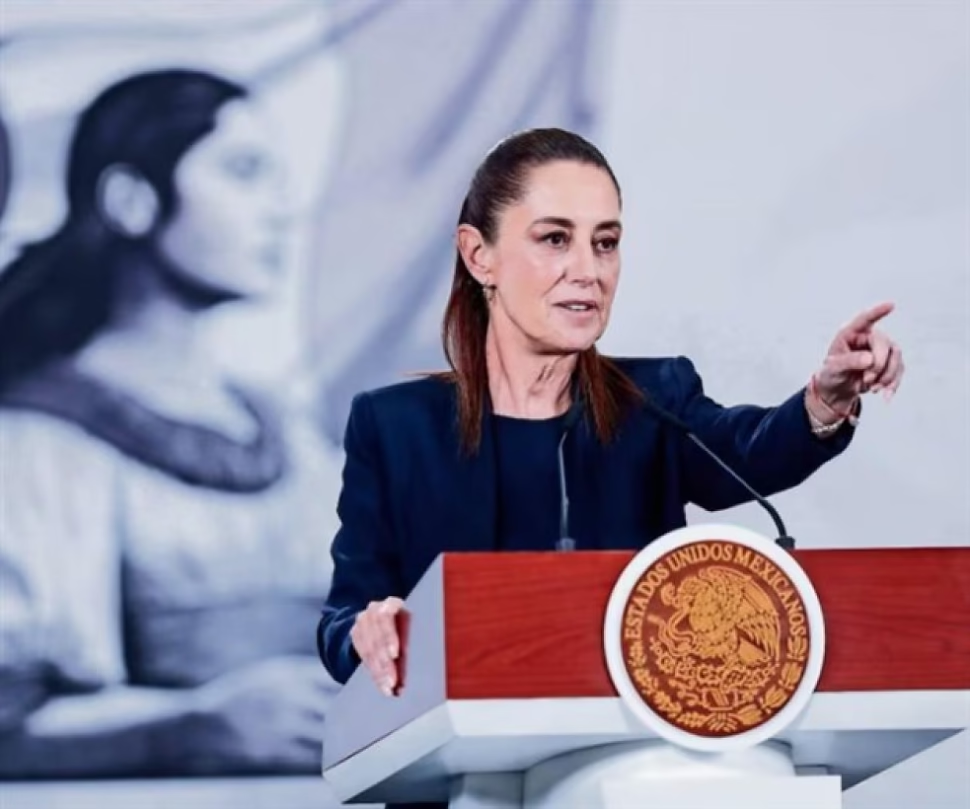
President Claudia Sheinbaum did not remain with her arms crossed. After the Chamber of Deputies rejected his star proposal for electoral reform, he already has an alternative movement ready. He calls it, with all the creativity of the official world, his “Plan B.”
And according to her, Morena and the Green Party are already aligned. Because in politics, when plan A fails, there is always a plan B waiting in the drawer.
What does this new attempt consist of?
In his morning conference yesterday, Sheinbaum dropped the bomb: it has to do with money. Specifically, with “the reorientation of the budget” in local Congresses and the Senate.
The idea, as he explained, is that the resources allocated to things such as the number of councilors stay in municipalities and states. The supposed final destination: public works. A classic argument to move funds.
“…so that the resource stays in the municipalities and states for public works,” he said from the National Palace.
This Tuesday he announced that the package is already on its way to the Senate for discussion. The legislative machine starts up again.
Here’s the interesting thing: changing budget allocations is shaky ground. Legally, it smacks of a maneuver to circumvent the frontal rejection of the original reform. It is redirecting the battle to another front where control can be easier.
Memory is short, but precedents are long. Every time a government talks about “reorienting” budgets between powers, you have to read the fine print. Who defines the priorities? Who ensures that this money for “public works” does not end up being something else?
Sheinbaum learned quickly. If you can’t change the rules of the game through the front door, try modifying the board through the back window. The question now is whether senators will buy the new speech or whether they will remember why they knocked down the first attempt.