“How come you can’t talk?”
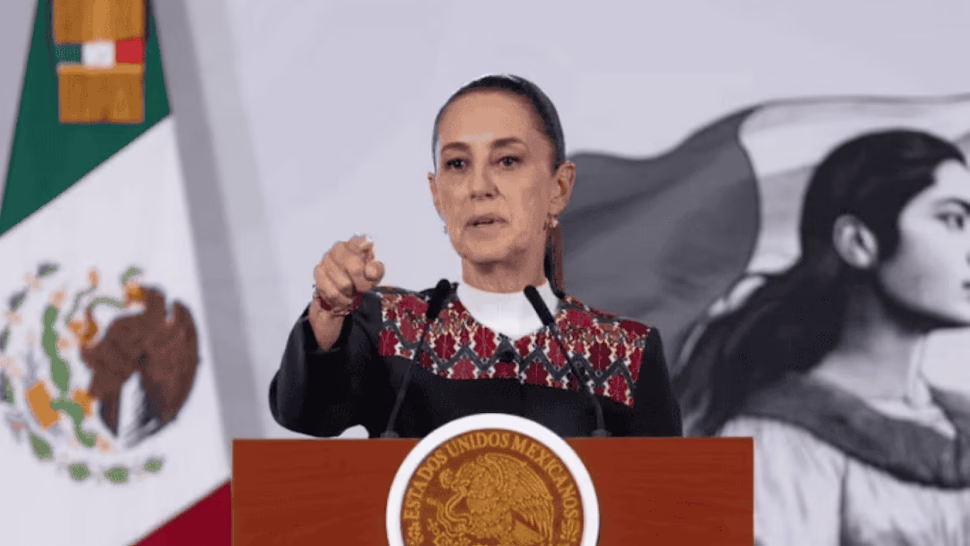
Claudia Sheinbaum launched her most passionate defense. In the morning, with that mixture of indignation and calculation that characterizes her, she justified her controversial electoral reform initiative. They call it Plan B.
Its central argument is simple, but it has profound implications. He says it is “absurd” that a president subject to revocation cannot rule on the process. AMLO lived it firsthand.
“I sent the initiative, right? How come it’s subject to revocation and you can’t speak?”
Here is the crux of the matter. Sheinbaum insists that he only seeks to remove that ban. No using radio, television or campaigning with public money. The current electoral rules, according to her, would remain intact.
Two specific changes
The reform proposes adjusting two main things. First, better define when the consultation could be held: in the middle of the six-year term or a year later. Second, and this is the controversial thing, allowing the president to speak.
“The only thing that is proposed is that, if there is going to be a revocation, the head of the Executive can talk about it”
Sheinbaum connects this to the very origins of Morena. Remember that from the beginning they talked about people deciding. It is pure narrative of popular power.
But be careful: there is no set date yet. It could be 2027 or 2028, depending on the constitutional procedure. And it will be the INE who sets the specific limits on what can and cannot be said.
The president plays a delicate role here. On the one hand, he presents himself as a victim of an unfair restriction. On the other hand, he knows perfectly well that any word he says about a possible revocation would have enormous political weight.
This is not just a technical reform. It is a strategic move to redefine the rules of the democratic game while still on the court.