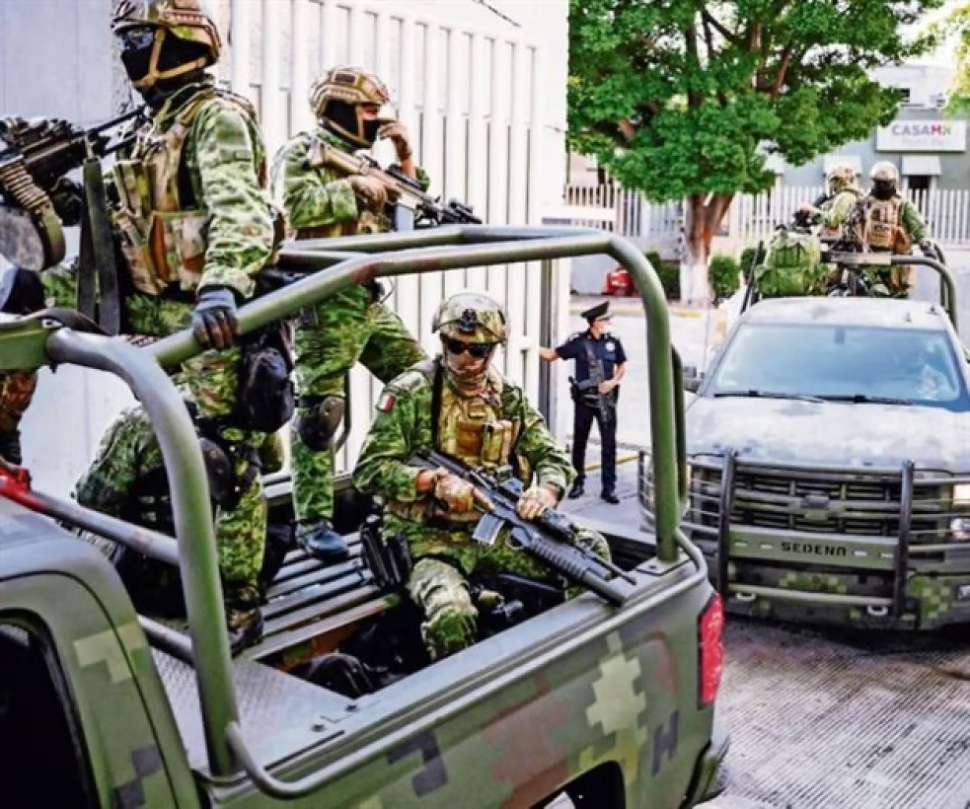
Analysis of the Authorization for the Training of the Mexican Navy in the United States
The plenary session of the Senate of the Republic has granted, through an accelerated legislative procedure and unanimously, the constitutional authorization required for a special operations unit of the Mexican Navy to carry out a training exercise on US territory. This permit, addressed to the head of the Federal Executive Branch, constitutes an administrative-legislative act of great relevance in the field of bilateral cooperation in matters of defense and security.
The decision, made without debate in the legislative body, is part of the mechanisms established for the departure of national troops abroad, a procedure that underlines the principle of sovereignty and parliamentary control over the Armed Forces. The approval reflects a political consensus around the need to strengthen the capabilities of the elite units of the Ministry of the Navy (SEMAR).
Operational and Logistical Details of the Training Mission
The specific authorization includes the movement of 60 troops belonging to the Special Operations Unit of the Mexican Navy. According to the technical details provided, the personnel will travel equipped with their tactical clothing and weapons, although significantly, without carrying ammunition, a standard protocol in this type of exchanges that prioritizes security and conforms to logistical agreements between nations.
The transfer will be carried out by a military cargo plane C-130 Hercules of the United States Air Force, which demonstrates the high degree of coordination and interoperability between both military institutions. The destination will be the Camp Shelby military base, located in the state of Mississippi, a prestigious training center for special forces.
The central objective of the mobilization is participation in the so-called SOF Event No. 9, whose official name is “Increasing the Operational Capacity of the Special Operations Unit.” This exercise is scheduled to take place over an extended six-week period, from October 1 to November 15, 2025. The duration of the event suggests a comprehensive and deeply specialized training program.
Strategic Implications and the Commitment to Accountability
From a strategic perspective, this collaboration reinforces the ties of security cooperation between Mexico and the United States. The participation of elite units in joint exercises allows the exchange of tactics, techniques and procedures, standardizing standards and improving the ability to respond to common threats. These types of initiatives are essential for building trust and effectiveness in operations that may require coordinated cross-border action.
A crucial element of the senatorial resolution is the condition of accountability. The legislators formally requested the President of the Republic, through the Secretary of the Navy, to present a detailed report on the results obtained during the Navy’s participation in the aforementioned event. This report must be delivered to the Senate within thirty business days after the return of the personnel, thus guaranteeing parliamentary oversight and transparency over the use of resources and the concrete benefits derived from the mission.
This reporting requirement is not a mere procedure; It is a democratic control mechanism that allows evaluating the effectiveness of the investment in external training and assessing the real impact on the institutional strengthening of SEMAR. The data collected in said document will be vital for future defense policy decisions and to gauge the value of international cooperation in this area.
In conclusion, the authorization of the Mexican Senate for the training of its naval special forces in the United States represents a significant step in military professionalization. This analysis highlights the meticulousness of the process, from unanimous approval to strict logistical protocols and the commitment to subsequent transparency. The decision, far from being a simple protocol news, is an active component in the national security strategy and in the evolution of bilateral defense relations, the fruits of which must be rigorously scrutinized at its conclusion.
Do you think this type of international cooperation is crucial for modern security?Share this analysis on your social networks to expand the conversation and explore more defense strategy content on our site.