


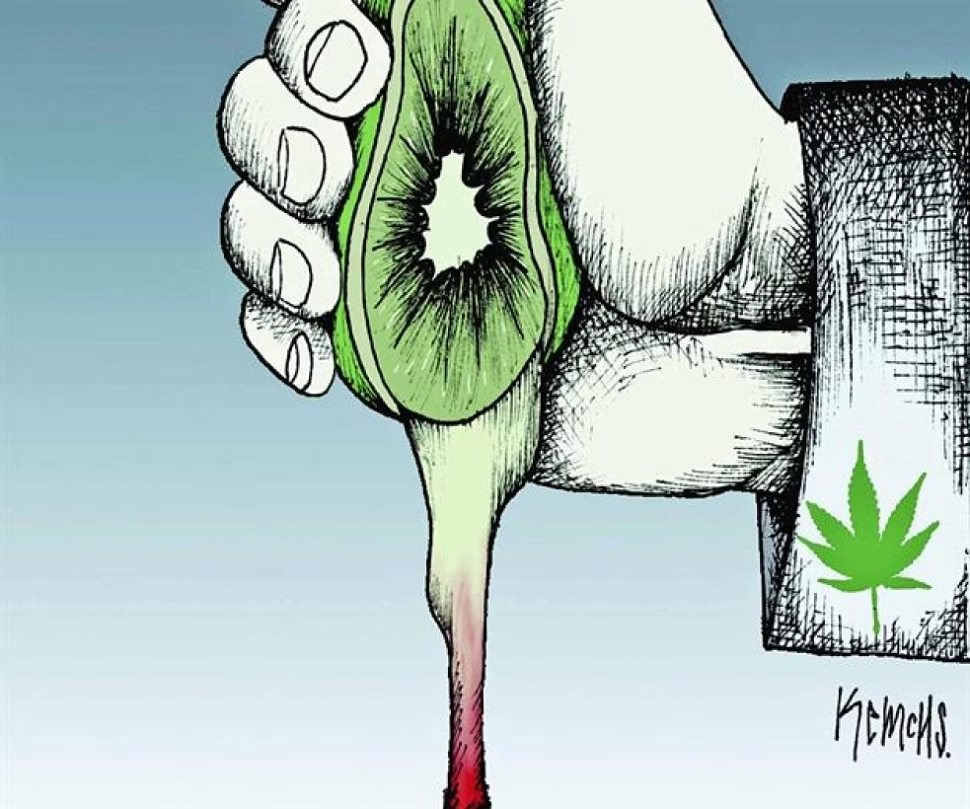
An analysis of the operational cessation of financial institutions in Mexico
A meticulous investigation of the facts reveals that the cessation of operations of CIBanco, Intercam and Vector Casa de Bolsa constitutes a significant episode in the evolution of the Mexican financial system. This event was directly triggered by the public accusations and economic sanctions imposed by the United States Department of the Treasury. According to the statements of the vice president of the Association of Banks of Mexico (ABM), Jorge Arce, the process has concluded with the complete inactivity of the aforementioned firms, marking the outcome of a far-reaching regulatory intervention.
The bank manager characterized the procedure as “very orderly”, highlighting the coordination and effective communication by the supervisory authorities. Arce, who was interviewed within the framework of the inauguration of the National Financial Education Week 2025, stressed that the transition was managed with a high degree of organization. The resolution mechanism implemented ensured that the financial assets of these entities were comprehensively transferred to other institutions in the sector, guaranteeing the protection of clients. In the specific case of CIBanco, the institution is currently in an advanced phase of formal liquidation, a legal process that permanently dissolves the entity.
Lessons and reconfiguration of risk management
As an immediate consequence of this episode, the vice president of the ABM has emphasized the imperative need for banks and financial entities in Mexico to strengthen their compliance protocols and reevaluate their risk frameworks. The core learning, according to his analysis, lies in the obligation to maintain constant vigilance, strictly adhere to regulations and develop a deep understanding of the operating environment. This implies the creation of a solid risk culture, not only within each institution, but collectively throughout the financial community. Investment in monitoring systems and continuous training are emerging as critical elements to prevent future vulnerabilities.
The investigation corroborates that the banking sector in Mexico has intensified its institutional dialogue with all competent financial authorities. The strategic objective of this engagement is to collaborate in the design and implementation of more robust measures for the prevention and detection of illicit operations. These types of transactions are under increasingly rigorous international scrutiny, particularly by US regulatory agencies. The ABM affirms that there is continuous collaborative work to lay better operational foundations that allay the concerns of international trading partners and strengthen confidence in the local financial market.
This structural analysis demonstrates that, although the closure of these institutions represents a disruptive event, their controlled management and the lessons learned are driving a profound re-evaluation of the sector’s standards. Precision in regulatory compliance and proactive risk management are consolidated as the fundamental pillars for the stability and credibility of the Mexican financial system in the global context.
Did you find this detailed analysis useful?Share this research on your social networks to inform your community and explore more specialized content in our economics and finance section.


