Rainy season 2026 in Mexico: dates and risks

Rains and cyclones arrive: key dates and how to prepare.

Waters! The rainy season already has a date

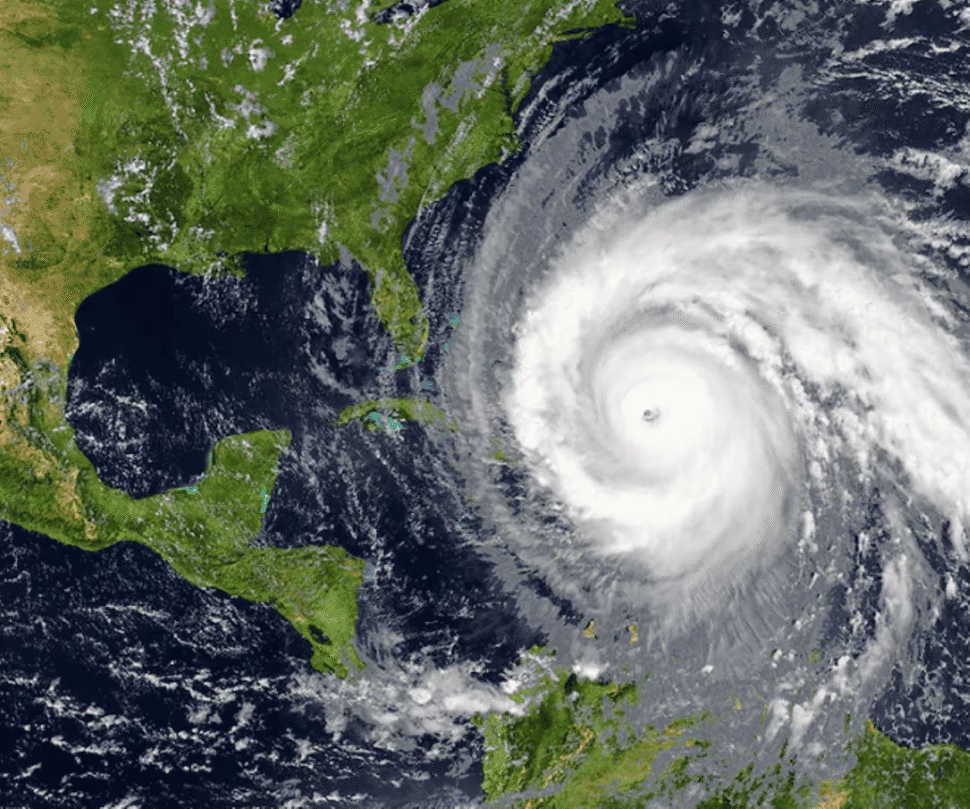
Get ready, because the water is not going to ask permission. The National Meteorological Service (SMN) has already issued the alert: the 2026 rainy and tropical cyclone season starts on May 15 in the Pacific and on June 1 in the Atlantic. No joke, this is serious.

The experts from the UNAM Institute of Atmospheric Sciences explain it simply: the heat of the ocean and low pressure systems come together and boom! water season. And be careful, this is not just for those who live on the coast, because the Mexican monsoon hits hard in the northwest during July and August.

RelatedGiant freshwater aquifer discovered under the Atlantic Ocean

How are things going?

  • Pacific first: since mid-May, the west coast states begin to feel the first drops. CENAPRED is already with its eye on low areas.
  • Gulf and Caribbean: since June 1, tropical waves are activated and recharge the aquifers of the southeast. The IMTA says that that is where the wells fill up the most.
  • Mexican monsoon: in July and August, the northwest gets wet like never before. The CICESE assures that this is key for arid areas.

And what do the authorities do?

The National Civil Protection Coordination (CNPC) is already in alert mode. They monitor dams and rivers, and they never tire of repeating: “prevention is the most effective tool to minimize damage.” It’s not just a speech, it’s reality.

Those from the UNAM also warn: climate change is making the rains more intense. So urban planning has to get its act together.

Tips to avoid drowning in problems

  • Clean drains and drains. Don’t throw garbage on the street, because that then covers everything.
  • Just pay attention to the official CONAGUA and Civil Protection bulletins. Forget the rumors.
  • If you live in a risk area, have an emergency backpack ready.

The rainy season is not something to be scared of, but it is something to be ready for. As my dad says: “water gives life, but it can also take away what is not right.”

UN and Mexico discuss regulation of artificial intelligence

The UN analyzes in Mexico the impact of AI on human development.

Regulation of AI in Mexico

The United Nations Organization holds the second meeting on Artificial Intelligence and Human Development in Mexico. The objective: analyze how this technology redefines human progress.

Under the leadership of the UN Deputy Secretary General, Amina J. Mohammed, the dialogue takes place in collaboration between the UN Office for Partnerships and the Government of Mexico. It continues the first meeting held in Cairo.

At the former Colegio de la Santa Cruz de Tlatelolco, Chancellor Roberto Velasco highlighted the urgency of discussing how to regulate AI, govern it and reduce its risks. He noted that Mexico supports the initiative of the deputy secretary general, “Artificial Intelligence and Human Development”, because it coincides with national priorities. “From the vision of Mexican humanism, the answer is ethical,” he stated.

Velasco cited Pope Leo He also reflected on what AI is doing with human beings and what we must rescue from our humanity as technology advances.

Government actions on AI and childhood

President Claudia Sheinbaum reported that discussions have already begun on the use of social networks and AI in childhood, adolescence and youth in Mexico. In his conference on July 20 at the National Palace, he highlighted these forums to develop a proposal “for guidance and regulation.”

“When we hand it over to Congress, let Congress itself make its forums open, its debate, its discussion, and that we can protect girls and boys from this that can become an addiction,” said the president.

Foreign Minister Velasco stressed: “The regulatory challenge that lies ahead of us is pressing and Mexico is ready to face it through our multilateral diplomacy.”

Continue reading

Sheinbaum begins delivery of Welfare homes in Morelos

Sheinbaum delivers 43 houses and hundreds of deeds in Morelos as part of the federal plan.

Delivery of homes in Xoxocotla

President Claudia Sheinbaum led in Xoxocotla, Morelos, the delivery of 43 new houses from the National Housing Commission (Conavi), 348 settlement certificates from Fovissste and 79 deeds from Insus. It’s all part of the Housing for Wellbeing Program.

During the event, the president explained that the federal plan contemplates the construction of 1.8 million new homes. It also includes the restructuring or forgiveness of unpayable loans for 5 million families and the regularization of one million property titles.

“Those from before took from the people and we give to the people; in other words: those from before governed for a few, the governments of the Transformation govern by the people and for the people of Mexico,” stated Sheinbaum.

Details of the day

The head of Sedatu, Edna Elena Vega Rangel, reported that in Morelos the construction goal was expanded to 24 thousand homes. Governor Margarita González Saravia confirmed that the state already has the necessary land for these urban developments.

The event is part of the federal strategy to guarantee the right to housing, prioritizing historically marginalized sectors. The delivery of deeds and settlements seeks to resolve decades of delay in land ownership.

Continue reading

They secure 3,366 toys that imitated Lego in Querétaro

The IMPI secured more than 3 thousand sets of toys that imitate Lego designs at the Querétaro Customs.

Operation against piracy in Querétaro

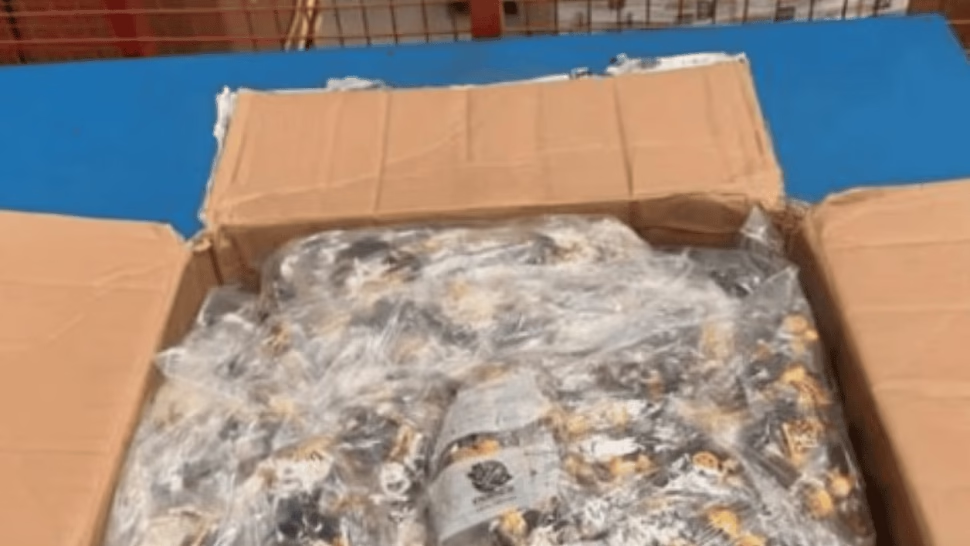
The Mexican Institute of Industrial Property (IMPI) secured 3,366 sets of buildable toys of Asian origin at the Querétaro Customs Office. The authority considers that these products allegedly violate industrial property rights related to the three-dimensional designs registered by LEGO Holding A/S.

The proceedings took place on July 21 at the Terminal Logistics, S.A. audited facility. de C.V., in the municipality of Colón. In the first inspection, IMPI personnel located 2 thousand sets with similarities to the protected ones. The suspension of its free circulation and the seizure of the merchandise were ordered.

In a second review on the same day, another 1,366 sets with similar characteristics were identified. In total, the 3,366 toys remain under protection at the facility while the procedure continues.

Surveillance at entry points

The general director of IMPI, Vidal Llerenas, reported that these actions are part of provisional measures provided for in the Federal Law for the Protection of Industrial Property. The agency maintains coordination with the Ministry of Economy and other authorities to prevent the marketing of products that infringe these rights.

These types of operations seek to protect intellectual property at points of entry into the country. No arrests have been reported and no criminal proceedings have been initiated so far.

Continue reading